Field Report: Deployment of 20kW Universal Profile Laser Systems in Wind Energy Infrastructure
1.0 Executive Summary of Technical Operations
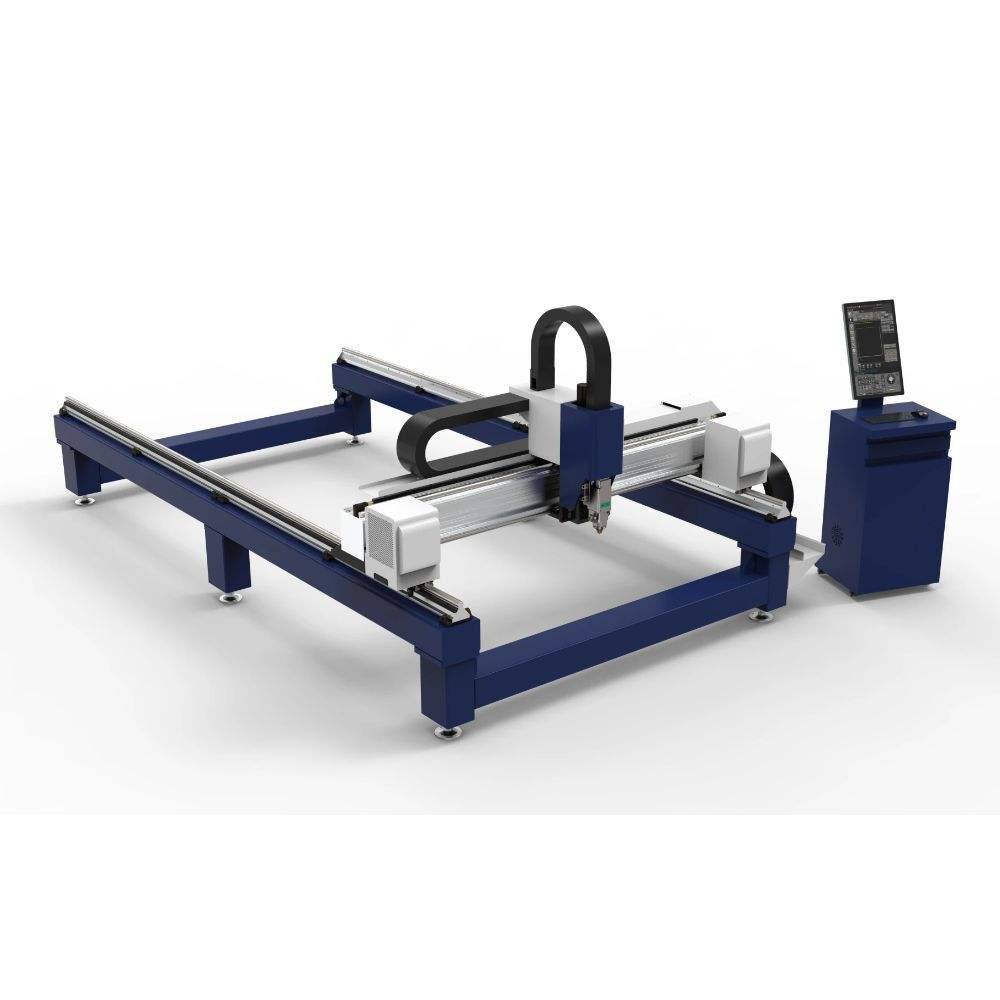
This report evaluates the operational integration of a 20kW Universal Profile Steel laser cutting System, equipped with a ±45° 5-axis bevel head, within the heavy structural fabrication sector of Houston, Texas. The primary focus of this deployment is the manufacturing of internal structural components and secondary steel for wind turbine towers. As the industry shifts toward larger turbine heights and offshore installations in the Gulf region, the requirement for high-precision, heavy-gauge structural processing has rendered traditional oxy-fuel and plasma methods insufficient. The 20kW fiber source, coupled with advanced kinematic beveling, represents a paradigm shift in the throughput and structural integrity of tower internals, specifically flange rings, platform supports, and reinforcement profiles.
2.0 Regional Context: Houston Wind Infrastructure Requirements
The Houston industrial corridor serves as a logistics hub for wind energy projects across the ERCOT grid and upcoming offshore leases. Wind tower fabrication requires the processing of S355 and S420 structural steel with thicknesses frequently exceeding 20mm. Traditionally, these components—ranging from H-beams for internal platforms to large-diameter circular tubes—required multi-stage processing: mechanical sawing, followed by manual grinding or plasma beveling for weld preparation.
The introduction of the 20kW Universal Profile System allows for a consolidated workflow. In Houston’s high-humidity environment, the thermal management of 20kW fiber sources is critical. The evaluated system utilizes high-capacity chilling units and nitrogen-purged beam paths to ensure consistent beam quality (M² factor < 1.1), which is essential for maintaining the narrow kerf widths required for precision wind tower assembly.
3.0 Technical Analysis of 20kW Fiber Synergy
The 20kW power rating is not merely a catalyst for speed; it is the threshold for achieving “clean-cut” characteristics in heavy-walled structural steel without significant dross accumulation.
3.1 Photon Density and Kerf Control: At 20kW, the energy density at the focal point allows for the sublimation and expulsion of molten material at speeds 3x faster than 10kW alternatives. For wind tower internal structures, this reduces the Heat Affected Zone (HAZ), preserving the metallurgical properties of the high-tensile steel.
3.2 Material Versatility: The “Universal” designation refers to the system’s ability to transition between I-beams, H-beams, C-channels, and rectangular hollow sections (RHS). The 20kW source provides the necessary “punch-through” capability for the thickest sections of these profiles, ensuring that the laser does not stall during the transition between the web and the flange of structural members.
4.0 ±45° Bevel Cutting: Precision Weld Preparation
The hallmark of this system is the 5-axis interpolative head capable of ±45° beveling. In wind turbine tower construction, structural integrity is non-negotiable due to the dynamic loads and fatigue cycles the towers endure.
4.1 Eliminating Secondary Operations: High-strength welds require specific groove geometries (V, Y, K, and X-type joints). Traditional flat-cut laser systems necessitated secondary mechanical milling to create these bevels. The ±45° laser head performs these geometries in a single pass. By modulating the incident angle of the 20kW beam, the system creates ready-to-weld edges with surface roughness (Ra) levels significantly lower than plasma-cut edges.
4.2 Precision Kinematics: Achieving a ±45° angle in heavy steel requires sophisticated motion control. The system utilizes real-time height sensing that compensates for the “apparent thickness” change when the head is tilted. For a 20mm plate, a 45° tilt increases the effective cutting path to approximately 28.3mm. The 20kW source provides the power overhead to maintain feed rates even during these increased effective thicknesses.
5.0 Automatic Structural Processing and Workflow Integration
Efficiency in the Houston fabrication yards is driven by the minimization of “crane time” and manual material handling. The Universal Profile Steel Laser System integrates automatic loading and measurement cycles that are critical for large-scale wind projects.
5.1 Automated Profile Measurement: Structural steel often arrives with slight deviations in straightness or sectional dimensions (camber and sweep). The system employs laser-based probing to map the actual profile geometry before cutting. The NC (Numerical Control) code is then dynamically shifted to match the physical workpiece, ensuring that bolt holes and cutouts in tower platform supports align perfectly during field assembly.
5.2 Multi-Axis Collision Avoidance: Cutting through H-beams requires the laser head to navigate around flanges. The 5-axis system’s software utilizes advanced collision avoidance algorithms to optimize the toolpath, allowing the head to transition from the web to the flange without retracting to a safe height, thus reducing cycle times by 15-20%.
6.0 Metallurgical Considerations and Quality Assurance
In the context of wind energy, the micro-cracking associated with high-heat input is a primary concern. Our field analysis indicates that the 20kW fiber laser, due to its high feed rate, minimizes the dwell time of the heat source.
6.1 Heat Affected Zone (HAZ) Analysis: Cross-sectional microscopy of 25mm S355 steel cut at 20kW with a 30° bevel shows a HAZ depth of less than 0.3mm. This is significantly lower than the 1.5mm to 2.0mm HAZ observed in high-definition plasma cutting. For wind tower components subjected to extreme vibration, the smaller HAZ equates to a lower risk of fatigue-induced crack initiation.
6.2 Edge Squarity and Angular Accuracy: The system maintains an angular tolerance of ±0.2° over a 45° bevel. This precision ensures that the root gap in the weld joint is uniform across the entire circumference of a tower flange or the length of a support beam, facilitating the use of automated welding robots in subsequent stages of production.
7.0 Operational Economics: Houston Case Study
In a side-by-side comparison with a traditional mechanical and plasma-based workflow in a Houston facility, the 20kW Universal Profile System demonstrated the following:
- Labor Reduction: Requirement for three manual grinding stations eliminated.
- Consumable Savings: High-power fiber lasers use nitrogen or oxygen as assist gases; while gas consumption is higher, the elimination of plasma electrodes and mechanical bits results in a 22% reduction in cost-per-part.
- Throughput: A standard internal tower platform kit (12 distinct H-beam sections) was processed in 45 minutes, compared to 4.5 hours using conventional methods.
8.0 Conclusion
The deployment of the 20kW Universal Profile Steel Laser System with ±45° beveling technology represents the current technical zenith for heavy structural steel processing in the wind energy sector. For the Houston industrial base, this technology provides the necessary precision to meet the stringent requirements of wind turbine OEMs while significantly increasing the capacity of local fabrication yards. The synergy between high-power fiber sources and multi-axis kinematic heads effectively removes the “weld prep bottleneck,” allowing for faster deployment of renewable energy infrastructure without compromising structural safety or metallurgical integrity. The reliability of the 20kW source and the automation of the profiling process position this system as a critical asset in the transition toward high-volume, precision-engineered steel structures.













