
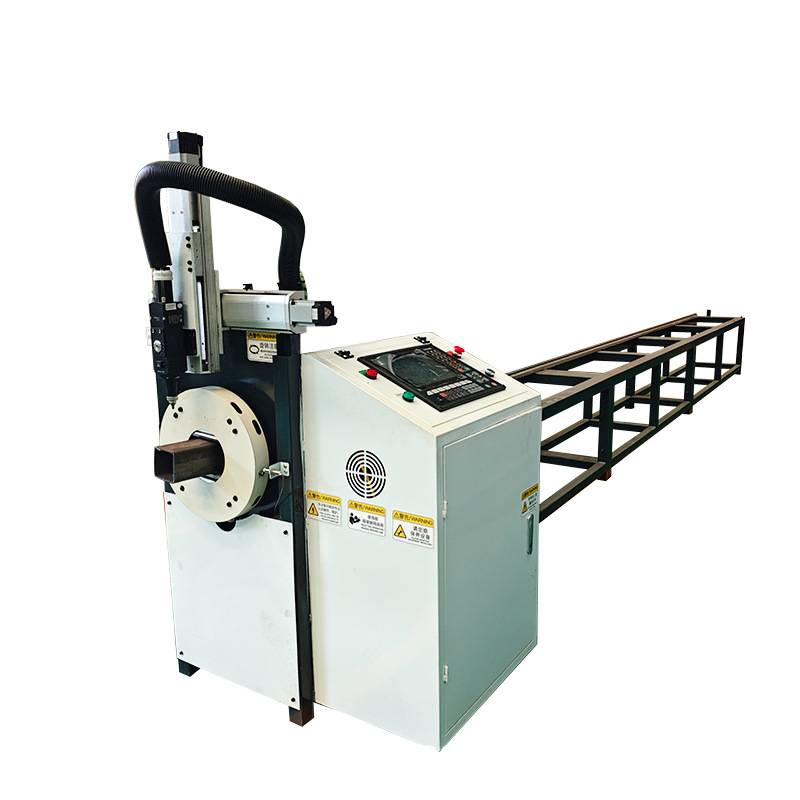
Technical Field Report: 20kW Universal Profile Steel Laser System Integration
1.0 Executive Summary and Site Context
This report details the operational deployment and performance validation of a 20kW Universal Profile Steel Laser System equipped with ±45° 5-axis beveling capabilities. The installation was conducted in Dammam, Saudi Arabia, a primary industrial hub where the demand for heavy-duty storage racking systems has surged due to regional logistics expansions. The objective was to replace conventional mechanical sawing, drilling, and manual oxy-fuel beveling with a singular, high-density energy source to process structural I-beams, H-beams, and C-channels.
The technical evaluation confirms that the transition to a 20kW fiber source, coupled with high-speed kinematic beveling, addresses the critical bottlenecks of edge preparation and volumetric throughput in high-tensile structural steel processing.
2.0 Industrial Application: Storage Racking in the Dammam Sector
In the Dammam industrial landscape, storage racking systems are subject to rigorous load-bearing requirements, often necessitating the use of thick-walled profile steel (Grade S275JR to S355J2). Traditional fabrication methods involve multiple stages: mechanical cutting, secondary CNC drilling for bolt patterns, and manual grinding for weld preparation.
The 20kW system consolidates these processes. For uprights and cross-beams used in high-bay racking, the precision of the laser allows for “slot-and-tab” assembly designs, which significantly reduces the reliance on heavy jigging. In the context of Dammam’s climate—characterized by high ambient temperatures—the system’s localized heat input (low HAZ) ensures that the structural integrity of the cold-formed and hot-rolled profiles remains within the specified yield strength tolerances.
3.0 Technical Analysis of the 20kW Fiber Laser Source
The 20kW fiber laser source represents a significant shift in photon density compared to the previous 10kW or 12kW industry standards.
3.1 Kerf Control and Gas Dynamics:
At 20kW, the energy density allows for high-pressure nitrogen or oxygen-assisted cutting at feed rates exceeding 4.5 m/min on 12mm structural steel. The primary advantage observed in the field is the stability of the laminar flow through the nozzle. High-wattage sources allow for a wider kerf width when necessary, facilitating easier dross ejection in thick-walled profiles, which is critical for the internal radii of H-beams.
3.2 Power Modulation:
During the processing of profile steel, the laser must maintain consistent penetration while navigating the varying thickness of the flange versus the web. The 20kW system utilizes real-time power modulation, synchronized with the CNC drive system, to prevent over-burning at corners while maintaining maximum velocity on straight trajectories.
4.0 ±45° Bevel Cutting: Solving Precision and Weld Prep
The core technical differentiator of this system is the 5-axis 3D cutting head, capable of ±45° beveling. In heavy steel structures, a square edge is rarely sufficient for load-bearing joints.
4.1 Elimination of Secondary Processing:
Before the implementation of this system, beveling for V-groove, Y-groove, or K-groove welds was performed via manual plasma or grinding. This introduced human error and inconsistent root gaps. The ±45° laser beveling allows for the creation of precise weld preparations directly on the profile ends during the initial cut. This ensures a “fit-up” precision within ±0.3mm, which is essential for automated robotic welding cells downstream.
4.2 Kinematic Complexity:
The 5-axis head must compensate for the “twist” and “bow” inherent in structural steel. Using integrated touch-probing or laser-sensing technology, the system maps the actual surface of the profile in Dammam’s facility before initiating the bevel. This ensures that the bevel angle remains constant relative to the material surface, rather than the theoretical CAD plane, maintaining the integrity of the throat thickness in the subsequent weld.
5.0 Synergy Between High Power and Automatic Structural Processing
The 20kW system is not a standalone tool but an integrated processing center. The synergy between the power source and the material handling automation is what drives the ROI in heavy industrial applications.
5.1 Material Handling and Sensing:
The Universal Profile system utilizes a 4-chuck or 3-chuck rotation system that supports the weight of heavy profiles (up to 300kg/m). The 20kW source allows for the rapid piercing of thick sections, reducing the overall cycle time per part. When processing 20mm thick base plates for racking uprights, the pierce time is reduced to under 0.5 seconds, compared to the 3-5 seconds required by lower-wattage systems.
5.2 Nesting and Yield Optimization:
The software integration allows for “Common Cut” logic even on complex profiles. By utilizing the 20kW’s ability to maintain a stable cut over long durations, the system can nest multiple components with minimal skeleton waste. In the Dammam installation, material utilization improved by 12% through the implementation of tighter nesting allowed by the precision of the laser beam compared to mechanical saws.
6.0 Metallurgical Considerations and Edge Quality
A critical concern in structural engineering is the Heat Affected Zone (HAZ). Excessive heat can lead to local hardening, making the steel brittle and prone to cracking under seismic or heavy static loads—a major factor in large-scale storage racking.
6.1 HAZ Mitigation:
The high feed rates enabled by the 20kW source result in a significantly lower heat input per millimeter of cut. Microstructural analysis of the cut edges on S355 steel shows a HAZ depth of less than 0.2mm. This eliminates the need for post-cut edge tempering or annealing.
6.2 Surface Roughness (Rz):
The use of 20kW power allows for a “smooth-cut” finish on thick sections. The striation frequency is optimized to produce a surface roughness (Rz) that meets or exceeds ISO 9013 Class 2 standards. This is particularly important for the Dammam racking sector, where components are often powder-coated; a smoother edge ensures better coating adhesion and corrosion resistance in the humid, saline environment of the Eastern Province.
7.0 Efficiency Gains and Throughput Data
Field data collected over 30 days of operation in Dammam indicates the following:
- Throughput Increase: 250% increase in tons processed per shift compared to conventional CNC plasma/sawing lines.
- Labor Reduction: Reduction from 4 operators (sawing, drilling, grinding) to 1 system supervisor.
- Weld Preparation: 95% of parts bypassed the grinding station and moved directly to the welding department.
- Accuracy: Total deviation over a 12-meter profile remained within ±0.5mm, surpassing the industry standard of ±2.0mm for structural steel.
8.0 Conclusion
The deployment of the 20kW Universal Profile Steel Laser System with ±45° beveling represents the current ceiling of structural steel fabrication technology. For the storage racking industry in Dammam, the system solves the dual challenge of high-volume production and stringent structural precision. By integrating high-wattage fiber laser sources with multi-axis kinematic heads, manufacturers can achieve a level of geometric complexity and metallurgical integrity that was previously unattainable with mechanical or plasma-based methods. This report recommends the continued scaling of this technology across all heavy structural fabrication tiers to maintain competitive edge and structural safety standards.
















