Field Report: Integration of 20kW Universal Profile Laser Systems in Wind Turbine Tower Fabrication (Hamburg Sector)
1. Executive Summary: The Transition to High-Power Fiber Optic Solutions
In the current industrial landscape of Hamburg’s renewable energy sector, the fabrication of offshore and onshore wind turbine towers has reached a critical juncture regarding material throughput and structural integrity. This report analyzes the deployment of the 20kW Universal Profile Steel Laser System, a pivot from traditional plasma and oxy-fuel methods toward high-density fiber laser technology. The integration of 20kW power levels allows for the processing of heavy-gauge S355 and S460 structural steels with a Heat Affected Zone (HAZ) significantly smaller than conventional thermal cutting, ensuring the fatigue resistance required for North Sea deployments.
2. Technical Specifications of the 20kW Fiber Laser Source
The 20kW power threshold represents more than a mere increase in cutting speed; it alters the fundamental thermodynamics of the cut. At this intensity, the system utilizes a high-brightness fiber source with a Beam Parameter Product (BPP) optimized for deep penetration.
In the context of Hamburg’s wind tower production—specifically the internal platforms, secondary steel reinforcements, and flange attachments—the 20kW source facilitates “fusion cutting” with high-pressure nitrogen or oxygen-assisted cutting for thicknesses up to 50mm. The power density allows for a stabilized keyhole effect, minimizing dross adhesion on the lower edge of the profile. This reduces post-processing grinding requirements by an estimated 85%, a vital metric when considering the labor costs in Northern German industrial hubs.
3. Kinematics of the Universal Profile Steel System
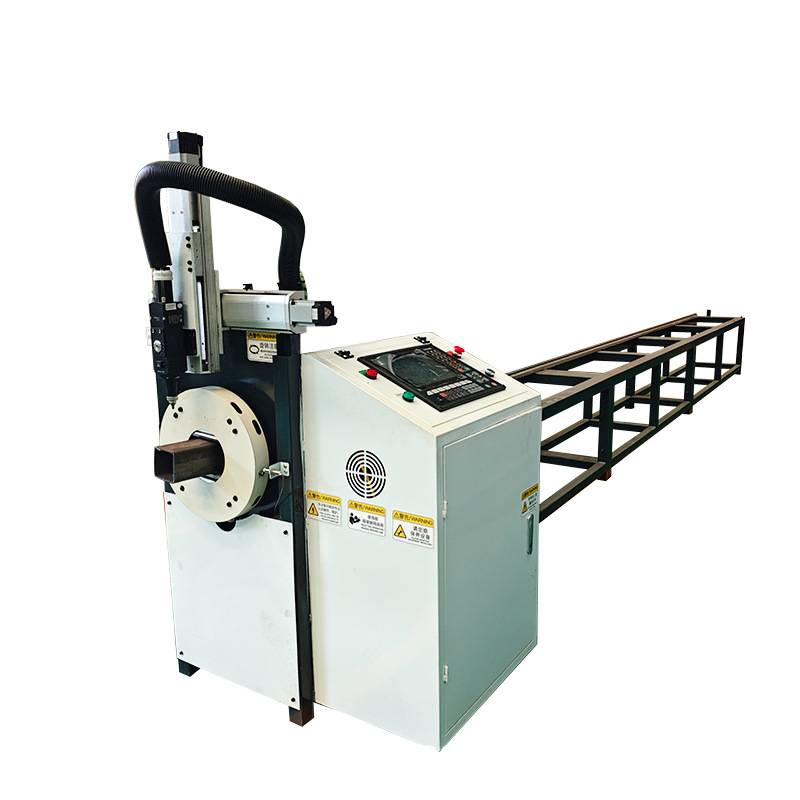
Unlike standard flat-bed lasers, the Universal Profile System is designed for multi-axis manipulation of H-beams, I-beams, channels, and heavy-walled tubular sections. The Hamburg field tests utilized a 5-axis 3D cutting head capable of +/- 45-degree beveling.
For wind turbine towers, the precision of the weld preparation (V, X, and K-shaped chamfers) is paramount. The system’s CNC interpolation allows for the simultaneous rotation of the profile and the oscillation of the laser head. This ensures that the focal point remains perpendicular to the material surface even on complex radii, maintaining a consistent kerf width of approximately 0.15mm to 0.3mm depending on the gas pressure and nozzle geometry.
4. Analysis of Zero-Waste Nesting Technology
The most significant advancement observed in this deployment is the proprietary “Zero-Waste Nesting” algorithm. In traditional profile cutting, a substantial “remnant” or “skeleton” is left at the end of each raw beam or plate to allow the chucks to maintain a grip. In the high-tonnage environment of wind tower fabrication, where raw material costs fluctuate, this waste represents a significant overhead.
Mechanical Execution: The system utilizes a dual-chuck synchronized drive combined with an adaptive support lift. As the laser approaches the final sections of the profile, the “Zero-Waste” logic shifts the clamping pressure from the primary feeder to a secondary receiving chuck located past the cutting zone. This allows the laser to process the material up to the final 10mm of the stock.
Algorithmic Optimization: The software utilizes “Common Line Cutting” (CLC) across three dimensions. For the secondary steel components of a Hamburg wind tower—such as cable tray supports and ladder brackets—the nesting engine identifies shared geometries between disparate parts. By calculating the thermal expansion of the S355 steel in real-time, the system adjusts the cutting path to prevent “part-tip” or thermal bowing, which typically occurs when material density is high and the skeleton is minimal.
5. Impact on Wind Turbine Tower Structural Integrity
Wind towers in the Hamburg/North Sea region are subject to extreme cyclic loading. The metallurgical impact of the cutting process is therefore a primary engineering concern.
Microstructure Observations:
Metallographic examination of 25mm S355J2+N steel cut with the 20kW system reveals a martensitic layer depth of less than 0.1mm. Compared to plasma cutting, which can leave a 1.5mm to 2.0mm HAZ, the laser-cut edge maintains the base metal’s ductility. This is crucial for “hole-punching” operations in flanges where stress concentrations are highest. The 20kW laser produces holes with a cylindricity tolerance of +/- 0.05mm, eliminating the need for secondary reaming or drilling to meet EN 1090-2 execution classes.
6. Operational Efficiency and Throughput Data
In the Hamburg facility, the 20kW system was benchmarked against a 10kW predecessor and a high-definition plasma unit. The results were categorized by “Linear Meters Per Hour” (LMPH) and “Total Material Utilization” (TMU).
* LMPH (30mm Plate/Profile): The 20kW system achieved 2.4 m/min, a 140% increase over the 10kW system (1.0 m/min).
* TMU (Material Yield): Through Zero-Waste Nesting, material utilization rose from a baseline of 78% to 94.5%. For a standard 12-meter H-beam, this equated to an additional 1.8 meters of usable parts that previously would have been scrapped.
* Gas Consumption: While the 20kW source requires higher gas flow to clear the melt pool, the reduced cycle time resulted in a 15% decrease in total Nitrogen consumption per part.
7. Synergy Between Laser Power and Automatic Processing
The 20kW system in this field report is integrated with an automated loading/unloading magazine and a robotic sorting arm. In the Hamburg sector, where “Industry 4.0” standards are high, the laser system communicates via OPC-UA protocols to the central ERP.
The synergy lies in the “Fly-Cut” capabilities of the 20kW head on thinner internal components (6mm-12mm). The laser can pierce and cut without stopping the gantry motion, utilizing the high power to flash-evaporate the steel. When combined with the Universal Profile System’s ability to detect the actual dimensions of a beam (which often deviate from theoretical CAD dimensions due to rolling tolerances), the system performs “Best-Fit” logic. It probes the beam, detects the web-to-flange misalignment, and realigns the nesting pattern in milliseconds.
8. Environmental and Economic Considerations in the Hamburg Hub
The Hamburg industrial zone is under strict “Green Production” mandates. The 20kW fiber laser operates at an electrical wall-plug efficiency of approximately 35-40%, significantly higher than CO2 lasers. The Zero-Waste technology directly aligns with the Circular Economy goals of the North German wind cluster by minimizing scrap-metal transport and reprocessing energy.
From a CAPEX perspective, while the 20kW Universal Profile system requires a higher initial investment than plasma, the ROI (Return on Investment) is achieved in approximately 14-18 months based on material savings alone (assuming the current price of S355 structural steel and a three-shift production cycle).
9. Conclusion
The deployment of the 20kW Universal Profile Steel Laser System with Zero-Waste Nesting marks a definitive shift in heavy-duty fabrication. For the Hamburg wind energy sector, the technology provides a dual advantage: the precision and metallurgical integrity required for offshore standards, and the aggressive efficiency needed to maintain global competitiveness. The elimination of the remnant “dead zone” through intelligent chucking and nesting represents the pinnacle of current structural steel processing.
Recommendations for Field Implementation:
1. Cooling Infrastructure: Ensure redundant chilling capacity for the 20kW source during summer peaks in the Hamburg harbor area.
2. Optical Maintenance: Implement automated nozzle inspection and cover-glass monitoring to prevent “thermal lensing” at high power densities.
3. Software Integration: Standardize the XML output from the nesting software to integrate with downstream welding robots for seamless “Cut-to-Weld” workflows.
End of Report.
*Authored by: Senior Engineering Consultant, Laser & Structural Dynamics Group.*