The Dawn of 20kW Fiber Laser Technology in Edmonton
Edmonton has long been the heartbeat of Canada’s heavy industrial manufacturing, serving as the primary staging ground for energy projects across the continent and into the Arctic. However, the demands of offshore platform construction—requiring high-strength structural steel, immense thicknesses, and absolute geometric accuracy—have traditionally pushed local fabricators to their limits. The introduction of the 20kW Universal Profile Steel Laser System changes this dynamic.
A 20kW fiber laser is not merely a “faster” version of its 5kW or 10kW predecessors; it represents a fundamental change in the physics of material interaction. At 20,000 watts, the energy density of the laser beam allows for the vaporization of thick-section carbon steel and high-tensile alloys with minimal heat-affected zones (HAZ). For Edmonton-based shops, this means the ability to cut through 50mm plate and heavy-walled structural profiles with a finish that requires zero secondary grinding. In the context of offshore platforms, where weld integrity is a matter of life and death, the reduction of HAZ and the precision of the cut edge are critical advantages.
Universal Profile Processing: Beyond Flat Sheets
Offshore platforms are not built on flat sheets alone. They are intricate skeletons of H-beams, I-beams, C-channels, and hollow structural sections (HSS). Traditional fabrication of these profiles involves a fragmented process: mechanical sawing to length, manual layout, drilling or punching for bolt holes, and manual oxy-fuel cutting for complex copes and weld preparations.
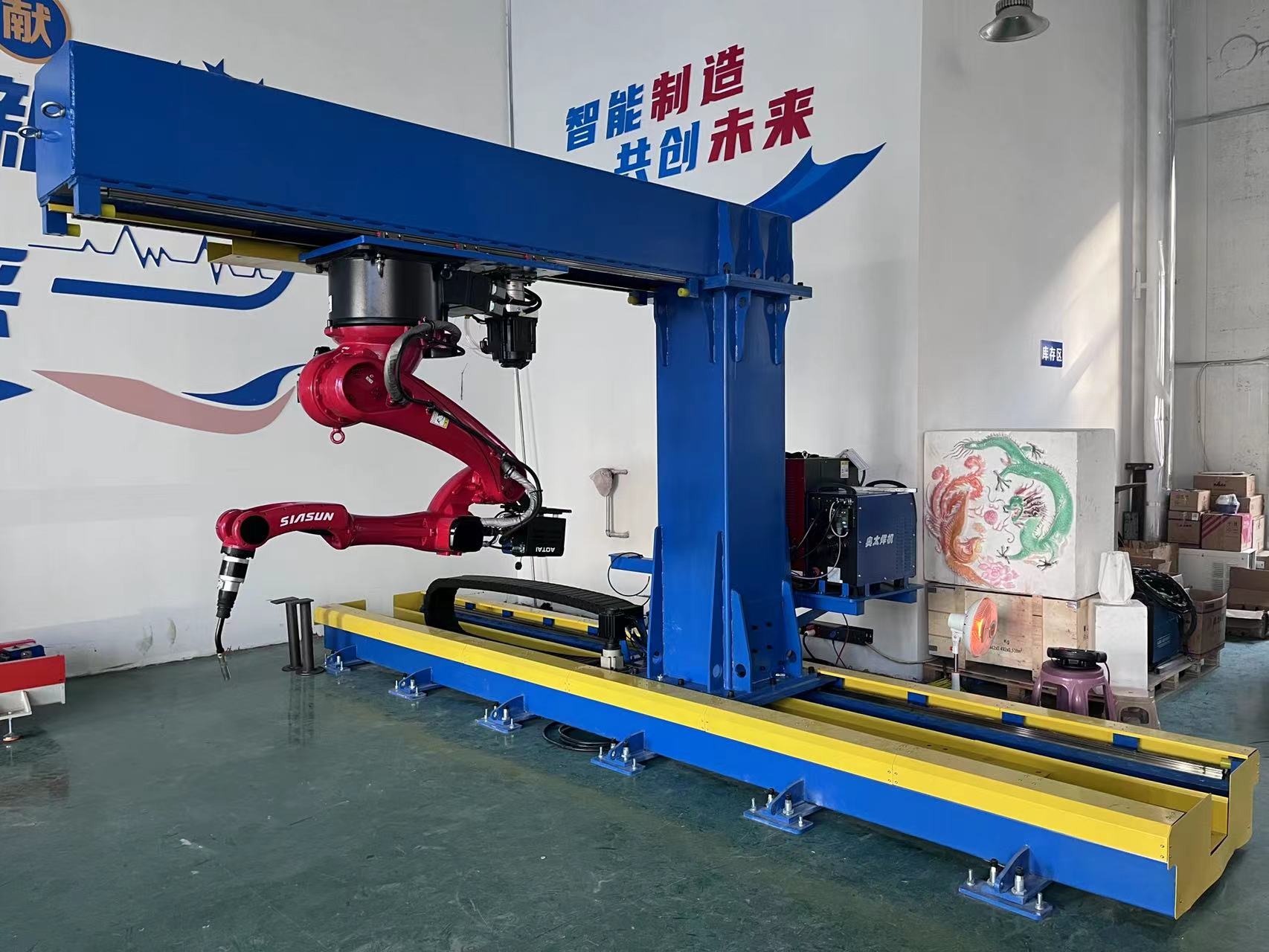
The “Universal Profile” capability of the 20kW system integrates all these steps into a single automated cell. Utilizing a 3-dimensional cutting head—often mounted on a multi-axis robotic arm or a high-speed gantry—the laser can rotate around a stationary or rotating beam. This allows for complex 3D geometries, such as miter cuts, saddle joints for piping, and intricate “rat holes” for drainage and weld access, to be executed in a single pass. For an Edmonton fabricator supplying a project in the North Sea or the Atlantic, this consolidation of tasks reduces lead times from weeks to days.
The Economics of Zero-Waste Nesting
In the offshore sector, materials are expensive. High-yield steels like S355 or S460, often specified with Charpy V-notch toughness testing for cold-weather performance, carry a premium price tag. Traditional nesting—the arrangement of parts on a raw material sheet or beam—often results in significant “drop” or scrap.
Zero-waste nesting, powered by advanced CAD/CAM algorithms, optimizes the arrangement of parts to an extreme degree. In profile cutting, this involves “common-line cutting,” where a single laser pass creates the edges of two adjacent parts simultaneously. Furthermore, the software can nest smaller components—such as gussets, stiffeners, or pipe supports—within the “windows” or scrap areas of larger structural members.
In Edmonton’s competitive bidding environment, the ability to squeeze 10% to 15% more parts out of a single shipment of steel can be the difference between winning and losing a contract. Moreover, the environmental impact is reduced, aligning with the growing demand for “Green Steel” fabrication processes in the global energy transition.
Engineering for the Offshore Environment
Offshore platforms operate in some of the most corrosive and mechanically demanding environments on Earth. Every cut made by a 20kW laser must contribute to the long-term structural integrity of the vessel or jacket.
1. **Minimized Heat-Affected Zone (HAZ):** High-power fiber lasers move at such high velocities that the heat doesn’t have time to dissipate into the surrounding metal. This preserves the grain structure and mechanical properties of the high-strength steel, preventing the brittleness that can lead to stress-corrosion cracking in saltwater environments.
2. **Verticality and Taper Control:** At 20kW, the laser maintains a highly collimated beam over a longer distance. This ensures that even in thick 40mm or 50mm sections, the “taper” (the difference between the top and bottom of the cut) is negligible. This is vital for the modular construction of offshore topsides, where sections must align perfectly for automated welding.
3. **Complex Weld Preps:** The system can perform beveling (V, X, Y, and K cuts) during the initial cutting phase. This allows for immediate fit-up and welding of massive structural nodes, which are the high-stress points of any offshore platform.
The Edmonton Advantage: Logistics and Local Expertise
Why Edmonton? The city acts as a critical node in the global supply chain. With its proximity to major rail lines and a workforce that understands the rigors of the “patch,” Edmonton is uniquely positioned to adopt 20kW laser technology. Local fabricators are familiar with the stringent QA/QC (Quality Assurance/Quality Control) requirements of the offshore industry, including NDT (Non-Destructive Testing) and material traceability.
By implementing 20kW systems, Edmonton shops move from being “service providers” to “technology partners.” They can offer “Kit-Based Fabrication,” where every piece of an offshore module is laser-cut, etched with a tracking code, and delivered as a ready-to-assemble kit. This reduces the need for on-site “stick-building” at coastal shipyards, which is significantly more expensive than controlled shop fabrication in Alberta.
Integration with Industry 4.0
The 20kW Universal Profile system does not operate in a vacuum. It is the centerpiece of a digital ecosystem. Modern systems in Edmonton are being integrated with Building Information Modeling (BIM) and Tekla Structures. This means that a design engineer in Houston or St. John’s can upload a 3D model, and the nesting software in Edmonton automatically generates the toolpaths, calculates the gas consumption (Nitrogen or Oxygen), and estimates the cycle time.
Furthermore, the “Zero-Waste” philosophy extends to data. Every cut is logged, providing a “digital twin” of the fabricated part. For offshore operators, this traceability is invaluable for lifecycle maintenance. If a specific structural member shows signs of fatigue twenty years from now, the original laser-cut parameters and material heat numbers are available in the digital archive.
Overcoming Challenges: The Human Element
While the technology is transformative, it requires a shift in the local labor force. Running a 20kW laser isn’t just about pushing a button; it requires “Laser Technologists” who understand beam focal points, gas dynamics, and the nuances of different steel grades. Edmonton’s technical colleges and industry associations are already pivoting to train the next generation of fabricators in these high-tech disciplines.
Safety is also paramount. A 20kW beam is an invisible, high-energy hazard. The systems being installed in Edmonton feature Class 1 light-tight enclosures, interlocked doors, and advanced fume extraction systems to handle the particulate matter generated by high-speed vaporization. This creates a cleaner, safer work environment compared to the smoke-filled bays of traditional plasma cutting shops.
Conclusion: Setting a Global Standard
The deployment of 20kW Universal Profile Steel Laser Systems with Zero-Waste Nesting is more than a local upgrade; it is a statement of Edmonton’s capability on the world stage. As offshore platforms move into deeper waters and more extreme climates, the components that support them must be stronger, more precise, and more efficiently produced.
By marrying the raw power of 20kW fiber lasers with the intelligence of modern nesting software, Edmonton fabricators are redefining the limits of what is possible in steel construction. They are providing the offshore industry with a roadmap for sustainable, high-precision manufacturing that minimizes waste and maximizes structural integrity. In the high-stakes world of offshore energy, where there is no room for error, the precision of the fiber laser is becoming the new gold standard.