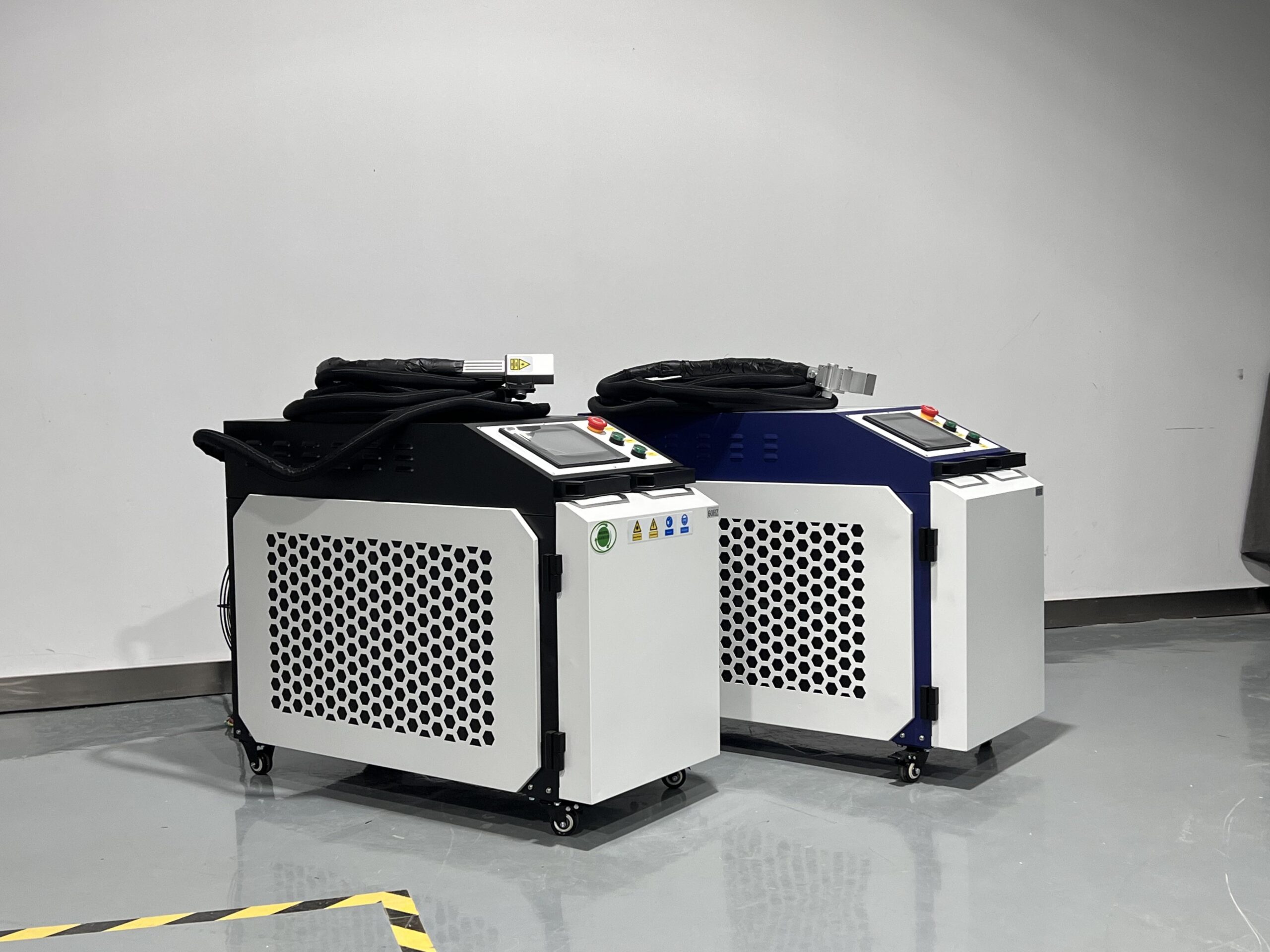
The Dawn of High-Power Fiber Technology in Upper Silesia
Katowice has long been the pulse of Polish heavy industry, but the transition from traditional coal and steel processing to high-tech manufacturing is now reaching its zenith. The deployment of a 20kW fiber laser system for structural profiles is a signal to the global construction market that Silesia is ready for the most complex engineering challenges of the 21st century.
A 20kW fiber laser is not simply “faster” than its 6kW or 10kW predecessors; it represents a fundamental shift in material science application. At this power level, the laser creates a high-energy density beam capable of vaporizing thick-walled structural steel (up to 50mm in some configurations) with a heat-affected zone (HAZ) so minimal that the structural integrity of the steel remains uncompromised. For stadium construction, where massive cantilevered roofs and complex truss systems must support thousands of tons of weight and withstand dynamic wind loads, the purity of the cut is paramount.
The Mechanics of Infinite Rotation: The 3D Advantage
The centerpiece of this system is the Infinite Rotation 3D Head. Traditional 5-axis laser heads often suffer from “cable tangling” or software-imposed rotation limits, requiring the head to “unwind” after a 360-degree rotation. In a high-volume production environment in Katowice, these seconds of downtime add up.
The Infinite Rotation technology utilizes advanced slip-ring connectors and sophisticated optical paths that allow the cutting head to spin indefinitely. This is critical when processing “Universal Profiles”—the I-beams and H-channels that form the skeleton of a stadium. When the laser must transition from cutting the flange of an I-beam to the web, and then perform a complex 45-degree bevel for a weld preparation, the infinite rotation ensures a continuous, fluid motion. This results in a “Class A” surface finish on the cut, which is often a prerequisite for the high-strength welds required in stadium “nodes” (the points where multiple structural members converge).
Architectural Geometry and the 20kW Advantage
Stadiums are no longer simple rectangular structures; they are architectural masterpieces characterized by sweeping curves, organic shapes, and immense spans. The 20kW Universal Profile system allows for the precision cutting of “complex intersections.”
Consider the junction of a primary rafter and a secondary purlin in a stadium roof. Traditionally, these would be cut using plasma or mechanical sawing, followed by hours of manual grinding to create the necessary bevels for welding. The 20kW laser, guided by the 3D head, can execute these bevels (V, Y, K, and X-cuts) in a single pass. The precision is so high—often within +/- 0.1mm—that the “fit-up” on the construction site becomes a matter of assembly rather than adjustment. In the context of Katowice’s logistics, this means steel can be processed in the factory and shipped to the site ready for immediate, high-integrity robotic welding.
Versatility Across Universal Profiles
The “Universal” designation of this system refers to its ability to handle an exhaustive range of steel geometries. While many systems are limited to round or square tubing, the Katowice installation is designed for the heavy-duty profiles that stadiums demand:
- Wide Flange Beams (H-Beams): Essential for vertical support columns.
- I-Beams: The standard for horizontal spans.
- C-Channels and Angles: Used in the secondary bracing and seating supports.
- Large Diameter Circular Hollow Sections (CHS): Often used for the aesthetic, soaring arches of modern arenas.
The system uses a sophisticated multi-chuck synchronization process. As a 12-meter I-beam is fed through the machine, the chucks rotate the heavy mass in perfect synchronization with the 3D head’s movements. This “dance” of heavy machinery and light-speed photons allows for holes, slots, and complex notches to be cut into the thickest sections of the profile with surgical precision.
Impact on Stadium Structural Integrity and Safety
Safety is the non-negotiable pillar of stadium engineering. Thousands of lives depend on the structural honesty of the steel overhead. Traditional thermal cutting methods like plasma can introduce significant heat into the material, potentially altering the grain structure of high-tensile steels (like S355 or S460).
The 20kW fiber laser minimizes this risk. Because the cutting speed is so high, the “dwell time” of the heat is incredibly short. This results in a narrow kerf and a microscopic heat-affected zone. Furthermore, the 3D head allows for the creation of “interlocking joints”—where profiles are notched to fit into one another before welding. This mechanical interlocking, made possible only by the precision of 3D laser cutting, provides an additional layer of structural redundancy that is highly valued by modern structural engineers.
Software Integration: From BIM to Beam
In Katowice, the 20kW system does not operate in a vacuum. It is the physical manifestation of Digital Twin technology. Stadium designers use Building Information Modeling (BIM) software like Tekla Structures or Autodesk Revit. The 20kW laser system’s software can import these 3D models directly.
The “BIM-to-Beam” workflow eliminates human error in translation. The exact coordinates of every bolt hole and the precise angle of every bevel are fed into the laser’s CNC controller. This digital continuity ensures that the complex geometry designed in an architect’s office in London or Warsaw is executed perfectly in the Katowice workshop. For stadium projects, which often involve thousands of unique parts, this automated nesting and processing are the only way to stay on schedule and under budget.
Economic and Environmental Sustainability in Silesia
The adoption of fiber laser technology is also a victory for the “Green Silesia” initiative. Compared to CO2 lasers, fiber lasers are significantly more energy-efficient, converting a much higher percentage of wall-plug power into laser light. Furthermore, the precision of the 20kW beam allows for tighter nesting of parts, drastically reducing steel scrap.
For the Katowice region, this investment creates a center of excellence. It attracts high-tier engineering contracts from across the European Union, as few facilities can match the combination of 20kW power and infinite 3D rotation. It transforms the local labor market, requiring highly skilled technicians and engineers to oversee the sophisticated CAD/CAM and robotic systems.
Conclusion: Building the Future of Sport and Industry
The 20kW Universal Profile Steel Laser System with Infinite Rotation 3D Head is more than just a machine; it is a catalyst for a new era of construction. As Katowice continues to evolve, this technology stands as a testament to the region’s industrial resilience and its embrace of the future.
For the stadiums of tomorrow—structures that must be lighter, stronger, and more visually stunning than ever before—this laser system provides the necessary tools. It allows architects to dream without the constraints of traditional fabrication and ensures that the spectators sitting beneath those massive steel spans are protected by the highest standards of precision engineering. The marriage of 20,000 watts of light and infinite mechanical rotation has arrived in Katowice, and the world of structural steel will never be the same.