The Dawn of High-Power Fiber Lasers in Structural Engineering
For decades, the structural steel industry relied on oxygen-fuel cutting and high-definition plasma systems to process the massive members required for stadium construction. While effective, these methods often left a significant “heat-affected zone” (HAZ) and required extensive manual labor for beveling and cleaning. As a fiber laser expert, I have witnessed the transformative power of the 20kW fiber source. In Charlotte’s competitive fabrication market, the jump from 6kW or 12kW to 20kW is not merely a marginal improvement; it is a fundamental shift in capability.
At 20kW, the laser density is sufficient to pierce through thick-walled structural steel almost instantaneously. This power level allows for “high-speed nitrogen cutting” on materials that previously required slower oxygen-assisted processes. For stadium builders, this means faster turnaround times on thousands of tons of steel. The fiber laser’s beam quality—measured by its ability to maintain a tight focus over a long distance—ensures that the kerf remains narrow even when cutting through the thick flanges of an H-beam. This precision is vital when the structural safety of thousands of spectators is on the line.
The Infinite Rotation 3D Head: Overcoming Geometric Constraints
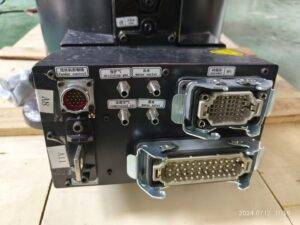
The “Universal Profile” designation refers to the machine’s ability to handle various shapes—I-beams, C-channels, angles, and rectangular hollow sections (RHS). However, the true “brain” of this system is the Infinite Rotation 3D Head. Traditional 3D laser heads are often limited by internal cabling, requiring the head to “unwind” after a certain degree of rotation. In a high-stakes stadium project involving complex tubular trusses, these seconds of “rewind time” add up to hours of lost productivity.
An infinite rotation head utilizes slip-ring technology or advanced fiber management to allow the cutting nozzle to rotate indefinitely. When combined with a 5-axis motion system (X, Y, Z, A, and B axes), the laser can approach a steel profile from any angle. This is critical for creating “saddle cuts” in pipe-to-pipe connections or complex miter joints for the sweeping curves of a stadium’s exterior skin. The 3D head can tilt up to 45 or even 60 degrees, allowing for V, X, and K-style bevels that are ready for the welding robot immediately after leaving the laser bed.
Precision for Charlotte’s Stadium Steel Requirements
Stadiums are unique architectural beasts. Unlike a standard warehouse, a stadium features massive cantilevered sections, varying elevations, and Architecturally Exposed Structural Steel (AESS). In Charlotte, where the skyline is constantly evolving with sports and entertainment complexes, the aesthetic quality of the steel is just as important as its strength.
Using a 20kW laser system ensures that the edges of the steel are incredibly smooth. In AESS applications, where the steel is visible to the public and often painted or galvanized, the “laser-quality” edge eliminates the need for post-processing. Furthermore, the accuracy of the 3D head ensures that bolt holes—often numbering in the tens of thousands for a single stadium—are perfectly aligned. When a 40-foot beam is hoisted 150 feet into the air, there is no room for a hole to be 2mm out of place. The 20kW system delivers the repeatability that ensures every connection fits the first time, significantly reducing “fit-up” time on the construction site.
The Universal Profile Advantage: Consolidating the Shop Floor
Traditional fabrication shops in the Carolinas typically use a “broken” workflow: a saw for length cutting, a drill line for holes, and a manual torch for bevels or coping. The 20kW Universal Profile Laser consolidates these four or five steps into a single workstation.
The machine’s “universal” nature is supported by advanced chucking systems that can hold a 12-meter I-beam with the same stability as a small square tube. For stadium projects, which require a mix of heavy primary structural members and lighter secondary bracing, this versatility is invaluable. The software (CAD/CAM) takes a 3D model of the stadium’s steel skeleton and automatically nests the parts, calculates the 3D toolpaths, and optimizes the cutting sequence to minimize heat distortion. This level of automation reduces the reliance on highly skilled manual layout experts, who are increasingly difficult to find in today’s labor market.
Structural Integrity and Weld Preparation
In high-stress environments like stadium seating bowls or roof supports, the quality of the weld is paramount. The 20kW laser’s ability to perform precise beveling is its most significant contribution to structural integrity. By creating a perfect “land” and “groove” on the edge of a thick steel plate or beam, the laser ensures 100% weld penetration.
Moreover, fiber lasers produce a much smaller heat-affected zone compared to plasma. In structural steel, excessive heat can change the grain structure of the metal, potentially making it brittle. The 20kW laser moves so quickly that the heat is dissipated almost instantly, preserving the mechanical properties of the steel. This is a critical factor for engineers in Charlotte who must sign off on the safety of structures designed to withstand high winds and the dynamic loads of a cheering crowd.
Economic Impact on the Charlotte Construction Sector
Charlotte has positioned itself as a hub for logistics and manufacturing in the Southeast. By adopting 20kW 3D laser technology, local fabricators can bid on national-scale stadium projects that were previously reserved for a few massive firms. The efficiency of the 20kW source reduces electricity consumption per cut compared to older CO2 lasers, and the speed of the 3D head triples the throughput of a standard shop.
The reduction in scrap material is another economic driver. With the precision of laser nesting, fabricators can “chain cut” parts and utilize remnants that would otherwise be discarded. In an era where steel prices are volatile, saving 5-10% on material costs can be the difference between a winning bid and a loss. Furthermore, by finishing parts “ready-to-weld,” the fabricator saves on labor costs and shortens the overall project timeline, a benefit that developers and city planners in Charlotte highly value.
The Future: Toward Smart Fabrication
The 20kW Universal Profile Steel Laser System is more than just a cutting tool; it is a data-driven manufacturing center. Modern systems are equipped with sensors that monitor the health of the protective window, the temperature of the cutting head, and the consistency of the gas pressure. For a Charlotte-based fabricator, this means “Industry 4.0” integration. The machine can report back to the office exactly how many beams were processed, the exact gas consumption, and the estimated time to completion for the next phase of the stadium build.
As we look toward the next generation of stadium designs—featuring retractable roofs, integrated LED facades, and complex organic shapes—the 20kW laser with infinite rotation will be the cornerstone of production. It bridges the gap between the architect’s wildest visions and the engineer’s requirements for safety and feasibility.
Conclusion
For the steel fabricators of Charlotte, the investment in a 20kW Universal Profile Laser System with an Infinite Rotation 3D Head is a commitment to the future of the city’s skyline. By mastering the physics of high-power fiber lasers and the geometry of 5-axis motion, these shops are not just cutting steel; they are engineering the foundations of our community’s most iconic gathering places. The precision, speed, and versatility of this technology ensure that Charlotte remains at the forefront of the global structural steel industry, ready to build the stadiums of tomorrow with the highest standards of excellence.