
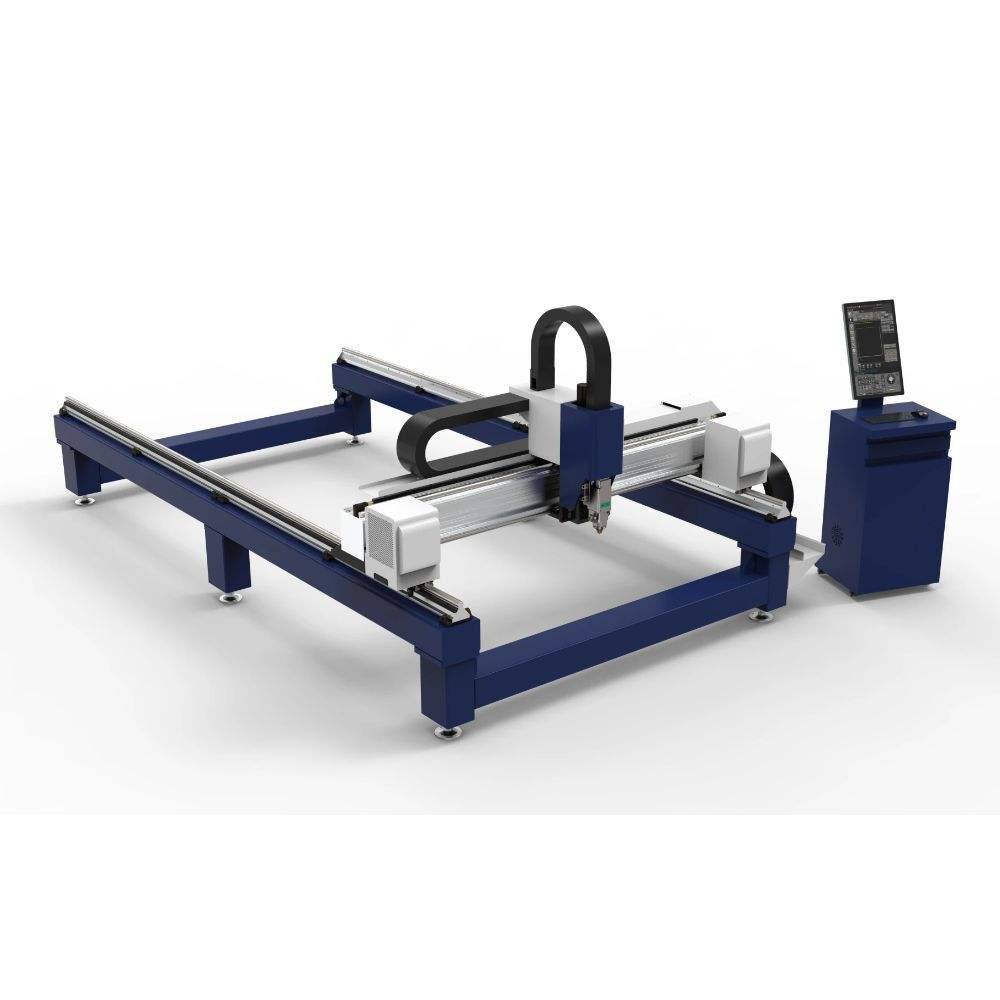
Technical Field Report: Implementation of 20kW Universal Profile Steel Laser Systems in Edmonton’s Offshore Fabrication Sector
1. Executive Summary
This report evaluates the operational integration and metallurgical impact of 20kW high-power fiber laser systems equipped with Infinite Rotation 3D heads within the heavy structural steel environment of Edmonton, Alberta. As a primary fabrication hub for offshore platform components destined for Arctic and Atlantic environments, Edmonton’s manufacturing sector requires extreme precision in heavy-wall profile processing. The transition from conventional plasma and mechanical processing to 20kW laser technology represents a fundamental shift in structural integrity management and throughput efficiency.
2. The Edmonton Context: Geometrical and Environmental Constraints
Edmonton serves as a critical nexus for the Canadian energy corridor, specializing in the pre-fabrication of modular offshore platform components. These structures utilize high-tensile carbon steels (e.g., CSA G40.21, ASTM A572 Grade 50) and thick-walled tubular sections designed to withstand cryogenic temperatures and high-fatigue loading.
Traditional fabrication involves multi-stage processing: mechanical sawing, CNC drilling, and manual oxy-fuel or plasma beveling. The 20kW Universal Profile Steel Laser System consolidates these processes into a single-pass operation. In the Edmonton context, where labor costs are high and shop floor space is optimized for modular assembly, the reduction in secondary handling is mathematically significant for project timelines.
3. 20kW Fiber Laser Source: Thermal Dynamics and Piercing Kinetics
The utilization of a 20kW fiber source is not merely an exercise in raw power; it is a requirement for the “Universal” processing of heavy-gauge H-beams, I-beams, and large-diameter hollow structural sections (HSS).
3.1. Photon Density and Kerf Quality: At 20kW, the photon density allows for a significantly reduced Heat Affected Zone (HAZ) compared to plasma arc cutting. This is critical for offshore platforms where the metallurgical properties of the steel must remain unaltered to prevent stress corrosion cracking in saline environments.
3.2. Piercing Efficiency: The 20kW source utilizes high-frequency pulsing to pierce 25mm to 50mm structural steel in sub-second intervals. This minimizes the “volcano” effect of slag buildup, ensuring that the 3D head can immediately commence a contour cut without height sensor interference.
3.3. Dross-Free Processing: For the offshore sector, the elimination of dross (re-solidified metal) on the underside of flange cuts is a technical prerequisite. The 20kW source provides sufficient vapor pressure within the kerf to eject molten material cleanly, even at complex angles.
4. Infinite Rotation 3D Head: Kinematic Analysis
The core innovation of this system is the “Infinite Rotation” 3D head. In standard 5-axis laser heads, the rotation (C-axis) is limited by internal cabling and gas lines, requiring a “rewind” move after 360 or 720 degrees.
4.1. N×360° Continuous Motion: The infinite rotation capability utilizes advanced slip-ring technology and internal gas routing. In the processing of offshore “Saddle” or “Fish-mouth” joints for tubular trusses, the head can orbit the profile indefinitely. This eliminates dwell marks and start/stop points that occur during head rewinding, which are often sites of structural weakness or crack initiation in offshore applications.
4.2. Precision Beveling (±45°): The system achieves high-accuracy V, X, K, and Y-type weld preparations. By utilizing a 20kW source, the effective cutting depth at a 45-degree tilt remains sufficient to penetrate the thick flanges of heavy H-beams (up to 30mm or more) without slowing the feed rate to critical levels that would cause thermal deformation.
4.3. Dynamic Height Compensation: The 3D head integrates ultra-fast capacitive sensing. Given that heavy structural profiles often possess mill-scale irregularities or slight longitudinal bowing, the head maintains a constant stand-off distance of ±0.1mm, ensuring a consistent focal point and kerf width.
5. Structural Integrity and Weld Preparation
For offshore platforms, the weld is the most vulnerable point. Conventional plasma cuts often leave a nitrogen-enriched layer on the cut edge, which can lead to porosity in the weld bead.
5.1. Surface Finish: The 20kW laser produces a surface roughness (Ra) significantly lower than 12.5 μm, meeting the stringent requirements for offshore structural joints without secondary grinding.
5.2. Tolerance Tightness: The system operates with a positional accuracy of ±0.05mm over the entire length of the profile. When assembling 40-meter modular platform segments, this cumulative precision reduces the need for “gap filling” during welding, leading to higher-quality radiographic (RT) and ultrasonic (UT) testing results.
6. Automation and Profile Versatility
The “Universal” aspect of the system refers to its ability to handle varied geometries (H, I, L, U, C, and T profiles) through a specialized chucking and conveyor system.
6.1. Automatic Loading and Clamping: In the Edmonton facility, the system integrates with heavy-duty infeed cross-transfers. The system’s sensors automatically detect the profile’s cross-section, adjusting the 3D head’s pathing logic to account for the radius of the beam’s inner fillets.
6.2. Software Integration (BIM/TEKLA): The system bypasses manual programming. Direct ingestion of .STP or .XML files from TEKLA Structures allows for the automatic generation of nested cutting paths. This creates a “Digital Twin” of the offshore module, ensuring that every bolt hole and bevel angle in the physical world matches the engineering model.
7. Operational Efficiency and ROI in the Edmonton Market
The capital expenditure of a 20kW system is high, but the ROI is driven by the compression of the production cycle.
7.1. Throughput Benchmarking: A standard offshore deck leg requires approximately six different processes if handled traditionally. The 20kW laser system completes the sawing, hole-drilling, and beveling 85% faster.
7.2. Consumable Savings: Unlike plasma, there are no electrodes or nozzles to change every few hours. The fiber laser’s solid-state design ensures uptime exceeding 95%, which is vital during the “winter push” in Edmonton’s fabrication season when production must meet tight spring shipping windows for Arctic waters.
8. Challenges and Mitigation
Despite the technological advantages, two primary challenges persist:
8.1. Reflectivity: While carbon steel is not highly reflective, some offshore components use stainless or specialty alloys. The 20kW source must be equipped with back-reflection isolators to protect the resonator.
8.2. Material Handling Logistics: The speed of the 20kW system often outpaces the shop’s ability to clear finished parts. Implementation of an automated outfeed sorting system is recommended to prevent the laser system from becoming “starved” for material.
9. Conclusion
The integration of the 20kW Universal Profile Steel Laser System with Infinite Rotation 3D technology is a transformative advancement for Edmonton’s offshore fabrication industry. By solving the dual issues of precision beveling and multi-process consolidation, the system ensures that structural components meet the extreme safety and durability standards of the offshore sector while significantly reducing the cost-per-ton of fabricated steel. This technology is no longer an optional upgrade but a strategic necessity for high-latitude energy infrastructure projects.
















