The Dawn of Ultra-High Power in Maritime Fabrication
For decades, the shipbuilding industry relied almost exclusively on oxy-fuel and plasma cutting for the fabrication of structural skeletons. While effective for thickness, these methods introduced significant Heat Affected Zones (HAZ) and required extensive post-processing. As a fiber laser expert, I have witnessed the transition to 20kW systems as the definitive turning point. At 20,000 watts, the energy density of the laser beam allows for “vaporization cutting” on materials that previously required slow, melting processes.
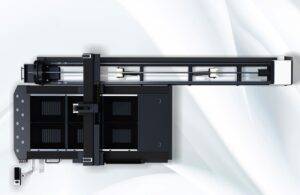
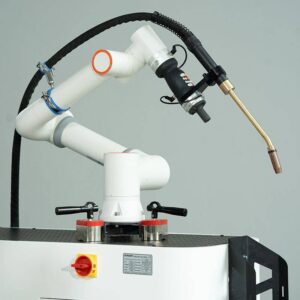
In a shipbuilding yard, where structural integrity is non-negotiable, the 20kW fiber laser offers a level of precision that eliminates the need for edge grinding. The “Universal Profile” designation means this system is not limited to flat sheets; it is equipped with a 5-axis 3D cutting head and a specialized chuck system capable of rotating and maneuvering massive steel profiles—angles, channels, and bulb flats—that form the ribs of a vessel.
Technical Superiority of the 20kW Fiber Source
The heart of this system is the 20kW fiber laser source. Unlike CO2 lasers of the past, the fiber laser’s wavelength (typically 1.07 microns) is absorbed much more efficiently by steel. When cutting 50mm carbon steel or 40mm stainless steel—standard gauges for ship bulkheads and engine mounts—the 20kW source maintains a stable keyhole effect.
This power level allows for the use of high-pressure air or nitrogen cutting on thicker sections than ever before. For a shipyard in Mexico City, this means faster cycle times. Where a 6kW laser might struggle or require slow oxygen-assisted cutting (which leaves an oxide layer), the 20kW system blasts through 20mm plate at speeds that were previously unthinkable, all while maintaining a kerf width so narrow that nesting efficiency is improved by up to 15%.
The Universal Profile Advantage: Beyond Flat Sheets
Shipbuilding is a three-dimensional puzzle. A vessel isn’t just made of plates; it is built on a lattice of profile steel. Traditional yards often have separate machines for plate cutting and profile sawing. The Universal Profile Steel Laser System integrates these workflows.
Equipped with a large-scale rotary axis and a specialized bed, the system can transition from cutting a 12-meter hull plate to notched I-beams for internal decking in a single setup. The software integration is key here; the system uses advanced CAD/CAM interfaces that can “unfold” complex maritime parts, calculating the necessary compensations for weld prep bevels. The 5-axis head can cut V, Y, and K-shaped bevels in real-time, preparing the steel for immediate robotic welding. This “ready-to-weld” output is the holy grail of shipyard efficiency.
Automatic Unloading: Solving the Heavy-Duty Bottleneck
In the context of 20kW cutting, the speed of the laser often outpaces the ability of human operators to clear the table. A 20kW laser can process a full sheet of 12mm steel in a fraction of the time it takes a crane to lift the finished parts. This is why the Automatic Unloading System is not an “optional” luxury but a core component.
The unloading system utilizes a combination of vacuum lifters and heavy-duty magnetic grippers specifically rated for the thick-gauge steel used in maritime applications. As the laser completes a part, the automated gantry identifies the component via the nesting software, secures it, and moves it to a designated palletized zone. This occurs while the laser is already moving to the next part. For the shipyard, this translates to 24/7 operation with minimal labor intervention, drastically reducing the “floor-to-floor” time and mitigating the safety risks associated with moving heavy, sharp-edged steel manually.
Operating in Mexico City: Altitude and Environmental Factors
Deploying a 20kW system in Mexico City presents unique engineering challenges that an expert must address. At an elevation of approximately 2,240 meters, the atmospheric pressure is significantly lower than at sea level. This affects the cooling capacity of the chillers and the behavior of the assist gases.
The cooling system for a 20kW laser must be over-engineered for high-altitude environments. Thinner air is less efficient at carrying away heat. Therefore, we implement high-capacity, dual-circuit chillers with pressurized reservoirs to prevent cavitation and ensure the laser diodes remain at a constant 22°C. Furthermore, the air filtration systems must be robust; Mexico City’s industrial dust and ambient humidity levels require multi-stage HEPA filtration to protect the sensitive delivery optics from contamination, which could otherwise lead to thermal lensing and catastrophic lens failure at 20kW power levels.
Logistical Synergy: From the Capital to the Coast
While Mexico City is inland, it serves as the technological and logistical heartbeat for the country’s maritime industry. Components fabricated in the capital are transported to major shipyards in Veracruz, Tampico, or Mazatlán. By centralizing the high-precision laser cutting in Mexico City, companies can leverage the city’s robust infrastructure and skilled engineering pool.
The Universal Profile system allows for “Kit Cutting.” Instead of sending raw beams and plates to the coast, the Mexico City facility can ship complete, numbered kits. Every rib, bulkhead, and bracket is cut to sub-millimeter precision, beveled, and ready for assembly. This reduces the footprint required at the coastal shipyard and turns the shipbuilding process into an assembly-line operation rather than a fabrication-heavy one.
Economic Impact and Return on Investment (ROI)
The capital expenditure for a 20kW Universal Profile system is significant, but the ROI in a shipbuilding context is rapid. Total Cost of Ownership (TCO) is reduced through several avenues:
1. **Gas Consumption:** Modern 20kW heads use “gas-saving” nozzle technology, reducing nitrogen consumption by up to 40% compared to older high-power models.
2. **Secondary Operations:** By producing beveled edges and clean holes in a single pass, the system eliminates hundreds of man-hours previously spent on manual grinding and drilling.
3. **Material Yield:** Advanced nesting algorithms possible with laser precision mean less scrap. In an era of fluctuating steel prices, saving 5-8% on raw material can equate to hundreds of thousands of dollars per hull.
Safety and Environmental Standards
Finally, we must consider the environmental and safety benefits. Traditional shipbuilding fabrication is loud, dirty, and dangerous. The 20kW laser system is fully enclosed with OD6+ rated safety glass, protecting workers from reflected radiation. The integrated dust extraction system captures 99.9% of the particulates generated during the vaporization of steel, a critical factor for compliance with Mexico’s increasingly stringent environmental regulations (SEDEMA).
Conclusion: Setting a New Standard
The installation of a 20kW Universal Profile Steel Laser System with Automatic Unloading in Mexico City is more than a machinery upgrade; it is a strategic move toward “Shipbuilding 4.0.” By mastering the complexities of high-altitude operation and leveraging the raw power of a 20kW fiber source, Mexican fabricators can produce world-class vessels with unprecedented efficiency. As an expert in the field, I view this specific configuration as the benchmark for any modern yard looking to dominate the structural steel and maritime sectors in the coming decade. The precision of the laser, combined with the brawn of automated unloading, ensures that the future of maritime fabrication is not just bigger, but smarter.