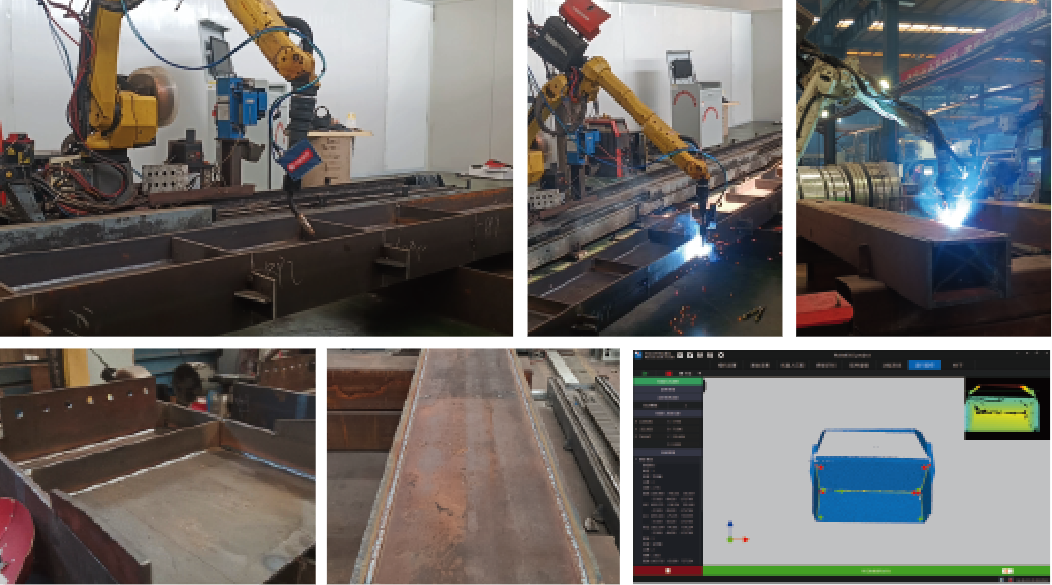
The Industrial Context: Casablanca as a Manufacturing Hub
Casablanca has long been the beating heart of Morocco’s industrial sector, but the current decade has seen it transition from traditional fabrication to high-tech manufacturing. With the nation’s aggressive pursuit of renewable energy projects—such as the Noor Ouarzazate Solar Complex and expansive wind farms—the demand for power transmission infrastructure has skyrocketed. Power towers, the towering steel sentinels that carry high-voltage lines across rugged terrain, require massive quantities of structural steel, including angles, channels, and H-beams.
Traditional methods of fabricating these towers—involving mechanical punching, sawing, and manual drilling—are no longer sufficient to meet the volume or the tolerances required by modern engineering. The introduction of the 20kW Universal Profile Steel Laser System in Casablanca addresses this bottleneck, providing a localized solution that reduces reliance on imported pre-fabricated components and bolsters the “Made in Morocco” initiative.
The Power of 20kW: Redefining Cutting Capabilities
In the world of fiber lasers, 20kW represents a “sweet spot” for heavy industrial applications. While 10kW systems were revolutionary a few years ago, the jump to 20kW provides more than just a speed increase; it fundamentally changes the physics of the cut.
For power tower fabrication, which utilizes thick-walled carbon steel and specialized alloys, the 20kW source allows for high-speed nitrogen cutting or high-quality oxygen cutting on materials exceeding 25mm in thickness. The power density of a 20kW beam ensures a smaller heat-affected zone (HAZ), which is vital for maintaining the structural integrity of the steel. In power towers, where vibration and environmental stress are constant, a clean, laser-cut edge prevents the micro-cracking often associated with mechanical shearing or lower-power thermal cutting.
Universal Profile Processing: Beyond Flat Sheets
The “Universal Profile” designation is what sets this system apart. Power towers are rarely built from flat plates; they are complex assemblies of L-shaped angles, U-channels, and hollow structural sections (HSS). A universal system utilizes a multi-axis 3D cutting head and a sophisticated chuck system to rotate and position these irregular shapes.
In Casablanca’s fabrication facilities, this means a single machine can handle the notched ends of a cross-arm, the bolt holes in a main leg member, and the complex bevels required for welding gusset plates. The 3D head can tilt up to 45 degrees, allowing for countersinks and weld preparations to be cut in a single pass. This eliminates the need for secondary machining, drastically shortening the production cycle for a single tower segment.
The Game Changer: Automatic Unloading Systems
One of the most significant challenges in heavy steel fabrication is material handling. A 12-meter steel beam is heavy, dangerous, and difficult to maneuver. The inclusion of an Automatic Unloading System in the Casablanca installation transforms the laser from a standalone tool into a fully automated production line.
The unloading system utilizes a series of hydraulic lifters and chain conveyors that synchronized with the laser’s movements. As the cutting head completes the final profile of a beam, the system supports the workpiece to prevent “droop” or “snagging” that could damage the nozzle. Once the cut is complete, the finished part is automatically transported to a sorting area, while the scrap is diverted to a separate collection bin. This allows for “lights-out” manufacturing during night shifts, where the machine can process an entire rack of profiles without human intervention, significantly lowering the cost per part.
Precision Engineering for Power Grid Reliability
The structural integrity of a power tower depends on the precision of its connections. In the past, manual layout and drilling could lead to “hole hunting” during field assembly—where workers struggle to align bolts because of millimetric deviations.
With a 20kW laser system, the precision is down to ±0.05mm. Every bolt hole, slot, and notch is exactly where the CAD model dictates it should be. For Casablanca-based contractors, this means faster field assembly and lower insurance risks. Furthermore, the software integration of these systems allows for “nesting” of parts within a single profile. The laser can optimize the layout of different tower components on a single beam to minimize “kerf” waste, which is a major cost-saving factor given the fluctuating prices of raw steel.
Adapting to the Moroccan Environment
Implementing high-power fiber lasers in Casablanca requires specific technical considerations. The coastal environment introduces humidity and salinity, which can be detrimental to sensitive optical components. The 20kW systems deployed here feature pressurized, climate-controlled cabinets for the laser source and the cutting head.
Furthermore, the local power grid stability is addressed through high-capacity industrial chillers and voltage stabilizers. Fiber lasers are remarkably efficient—converting about 35-40% of electrical energy into light—but at 20kW, the cooling requirements are substantial. The systems in Casablanca utilize closed-loop water cooling to ensure the laser diode banks remain at a constant temperature, even during the peak heat of a Moroccan summer.
The Economic Impact and Labor Evolution
The shift toward automation often raises questions about labor. However, in Casablanca, the deployment of 20kW laser systems is seen as an upskilling opportunity. The fabrication plants are moving away from dangerous manual labor toward high-value technical roles. Workers are being trained in CNC programming, laser path optimization, and automated system maintenance.
Economically, this technology allows Moroccan firms to bid on international infrastructure projects across the Maghreb and Sub-Saharan Africa. By reducing the lead time for a power tower from weeks to days, Casablanca becomes a competitive export hub for energy infrastructure. The “Universal” nature of the machine also means that if the demand for power towers fluctuates, the same system can be pivoted to fabricate frames for commercial vehicles, mining equipment, or architectural steel.
Future-Proofing Power Tower Fabrication
As we look toward the future of energy, the structures supporting our grids must become more sophisticated. We are seeing a move toward “smart towers” that incorporate sensors and communication equipment. The 20kW Universal Profile Steel Laser System is uniquely suited for this future. It can easily cut the specialized mounting points and internal conduits required for these high-tech additions.
Moreover, as global standards for “Green Steel” and sustainable manufacturing tighten, the efficiency of the fiber laser becomes a selling point. Compared to CO2 lasers or plasma cutting, the fiber laser has a significantly lower carbon footprint per meter of cut, aligning with Morocco’s national sustainability goals.
Conclusion
The installation of a 20kW Universal Profile Steel Laser System with Automatic Unloading in Casablanca represents the pinnacle of modern structural fabrication. It is a fusion of raw power and delicate precision, designed to meet the grueling demands of power tower production. For the engineers and manufacturers in Morocco, this technology is more than just a tool; it is a gateway to industrial independence and a cornerstone of the region’s energy future. By mastering the 20kW threshold and embracing full automation, Casablanca is ensuring that the towers that light up Africa are built with the highest standards of modern technology.