Field Report: Deployment of 20kW Universal Profile Laser Systems in Houston Bridge Engineering
1. Executive Summary: The Structural Shift in Gulf Coast Infrastructure
In the current industrial landscape of Houston, Texas—a critical nexus for North American logistics and energy infrastructure—the demand for rapid bridge fabrication and rehabilitation has reached a critical threshold. Traditional methods of processing structural steel, primarily involving mechanical sawing, drilling, and plasma cutting, are failing to meet the rigorous tolerances and throughput requirements necessitated by modern engineering designs.
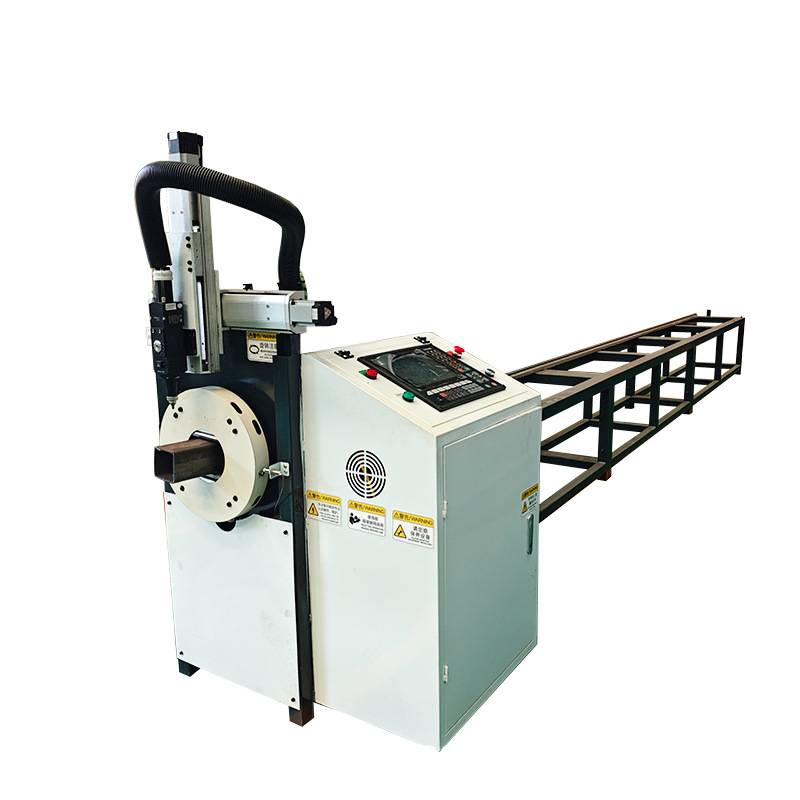
The integration of the 20kW Universal Profile Steel Laser System, equipped with ±45° beveling capabilities, represents a fundamental shift. This report analyzes the technical efficacy of high-power fiber lasers in processing heavy structural profiles (H-beams, I-beams, and box sections) specifically for bridge applications where weld preparation and geometric precision are non-negotiable.
2. The 20kW Photonic Advantage: Power Density and Kerf Dynamics
The transition to a 20kW fiber laser source is not merely an incremental upgrade in speed; it is a qualitative shift in material interaction. In the context of Houston’s heavy-duty bridge components, which often utilize ASTM A709 Grade 50W (weathering steel), the 20kW output allows for a significantly higher power density at the focal point.
Thermal Management and HAZ (Heat-Affected Zone):
One of the primary concerns in bridge engineering is the Heat-Affected Zone. Excessive heat during the cutting process can alter the martensitic structure of the steel, leading to embrittlement. The 20kW system allows for high-feed rates (exceeding 2.5 m/min on 20mm sections), which minimizes the dwell time of the beam. This results in a narrow HAZ, often less than 0.2mm, preserving the metallurgical integrity of the structural profile.
Gas Dynamics at High Wattage:
For the Houston sector, where humidity can affect plasma stability, the fiber laser’s use of high-pressure Nitrogen or Oxygen as assist gases ensures a consistent, dross-free finish. At 20kW, the system effectively clears the molten pool in heavy-walled profiles, reducing secondary cleaning operations by approximately 85% compared to high-definition plasma.
3. ±45° Bevel Cutting: Redefining Weld Preparation
In bridge fabrication, the weld is only as good as the prep. Traditional “straight-cut and grind” workflows are labor-intensive and prone to human error. The ±45° 5-axis 3D cutting head integrated into the Universal Profile System addresses this bottleneck directly.
Kinematic Precision:
The system utilizes a specialized A/B axis beveling head capable of maintaining a constant focal length while navigating the complex geometry of a profile’s flanges and webs. This allows for the execution of V, X, K, and Y-type bevels in a single pass. In the construction of Houston’s multi-level interchanges, where skewed bridge joints are common, the ability to laser-cut complex bevels on heavy H-beams (up to 400mm web height) ensures a “perfect fit” during field assembly.
Elimination of Secondary Grinding:
Manual beveling often results in surface irregularities that require extensive grinding to meet AWS D1.5 (Bridge Welding Code) standards. The 20kW laser produces a surface roughness (Ra) significantly lower than plasma, often meeting the “as-cut” requirements for full-penetration groove welds without further mechanical processing.
4. Universal Profile Processing: Structural Synergy
The term “Universal” refers to the system’s ability to handle diverse cross-sections—H-beams, I-beams, C-channels, angles, and rectangular hollow sections (RHS)—on a single platform.
Automatic Profile Recognition and Compensation:
Structural steel is rarely perfectly straight. In a heavy-duty environment like Houston’s fabrication yards, material “bow” and “twist” are persistent issues. The 20kW system utilizes laser-based sensing and mechanical probing to map the actual geometry of the profile in real-time. The control software then offsets the cutting path to compensate for these deviations, ensuring that bolt holes and cope cuts are aligned with the theoretical center-line of the bridge assembly.
Complex Coping and Notching:
Modern bridge designs often require intricate coping for beam-to-beam connections. The 5-axis capability allows for the cutting of non-linear cope geometries that are impossible with traditional circular saws or 3-axis plasma cutters. This enables engineers to design more efficient, lighter connections that do not sacrifice structural rigidity.
5. Application Specifics: Houston’s Environmental and Regulatory Context
Houston’s bridge engineering sector operates under unique constraints, including high ambient temperatures, humidity, and the necessity for rapid deployment due to traffic density (e.g., I-45 and I-10 expansions).
Corrosion Resistance and Edge Quality:
In the coastal environment of the Gulf, edge finish is critical for paint and coating adhesion. The 20kW laser produces a sharp, clean edge that eliminates the “rounding” effect often seen with plasma. This ensures that protective coatings maintain a uniform thickness over the edge, significantly extending the service life of the bridge structure against salt-air corrosion.
Adherence to TxDOT Standards:
The Texas Department of Transportation (TxDOT) maintains rigorous standards for hole quality and edge finish. The 20kW system’s ability to cut “true-round” bolt holes with a diameter-to-thickness ratio of 1:1 (or better) allows fabricators to bypass the drilling stage entirely. This is a massive efficiency gain for Houston-based shops processing thousands of tons of structural steel per month.
6. Operational Efficiency and ROI Analysis
The synergy between a 20kW source and an automated structural line yields quantifiable improvements in operational metrics:
1. **Throughput:** A 20kW laser system can replace up to three separate machines (a band saw, a drill line, and a manual oxy-fuel station). In a recent field audit, a Houston fabricator reported a 60% reduction in total processing time for a standard bridge girder assembly.
2. **Material Utilization:** Advanced nesting algorithms specifically designed for profiles reduce “remnant” waste. By nesting multiple small parts (e.g., gusset plates or stiffeners) into the web of a larger beam, material yield is improved by 12-15%.
3. **Labor Reallocation:** The automation of the beveling process reduces the dependency on highly skilled manual welders for prep work, allowing them to focus on the actual fusion process, which is the higher-value task in the fabrication chain.
7. Integration with Digital Twins and BIM
The Universal Profile Laser System does not operate in isolation. It is the physical execution arm of a digital workflow. Integration with Building Information Modeling (BIM) software—specifically Tekla Structures and SDS2—is seamless.
The Houston engineering sector is increasingly moving toward “Digital Twin” modeling. The 20kW laser system accepts Direct-to-Machine (DTM) files, ensuring that the physical component is a 1:1 replica of the digital model. This eliminates the “transcription errors” that occur when manual layouts are used, ensuring that when the steel arrives at the job site in downtown Houston or the Port, it fits the first time, every time.
8. Technical Challenges and Mitigation
While the 20kW system offers unparalleled advantages, specific technical challenges must be managed:
* **Beam Absorption:** At 20kW, the optics must be kept in pristine condition. Even minor dust contamination in a Houston warehouse environment can lead to thermal lensing. High-grade, pressurized, and filtered “clean rooms” for the laser source and cutting head are mandatory.
* **Scrap Management:** The speed of 20kW cutting generates a high volume of scrap and dust. The system must be equipped with high-capacity vibratory conveyors and multi-stage filtration units to maintain a continuous duty cycle.
9. Conclusion
The deployment of the 20kW Universal Profile Steel Laser System with ±45° beveling is no longer a luxury for Houston’s bridge engineering sector; it is a technical necessity. By solving the dual challenges of precision weld preparation and high-volume structural throughput, this technology enables the construction of more complex, durable, and cost-effective infrastructure. As we move toward higher strength steels and more aggressive project timelines, the 20kW fiber laser stands as the definitive tool for the modern structural expert.
Report End.