
The Strategic Imperative of 20kW Laser Technology in Queretaro’s Aerospace Sector
The aerospace manufacturing landscape in Queretaro, Mexico, has undergone a radical transformation over the last decade. As a global hub for Tier 1 and Tier 2 suppliers, the region demands manufacturing tolerances and material integrity that exceed standard industrial requirements. In this high-stakes environment, the 20kW Tube Laser Cutter has emerged as a cornerstone technology, particularly for the processing of high-grade stainless steel components. For engineering directors and factory owners, the transition from lower-wattage systems to a 20kW platform is not merely an upgrade in speed; it is a fundamental shift in structural capability and metallurgical precision.
Stainless steel, widely utilized in aerospace for its corrosion resistance and high-temperature stability, presents unique challenges during thermal cutting. The reflectivity of the material and its tendency for thermal expansion require a machine that offers both extreme power and unwavering structural stability. The integration of 20kW fiber laser sources allows for the processing of thick-walled tubes and complex profiles with a precision that minimizes secondary finishing operations, directly impacting the bottom line of Queretaro’s competitive aerospace cluster.
Structural Integrity: The Engineering Behind the Plate-welded Heavy Duty Bed
At the heart of a 20kW tube laser system lies its chassis. When dealing with 20,000 watts of power, the dynamic forces generated by high-speed gantry movements and the thermal energy released during the cutting process are immense. Standard frame constructions often succumb to micro-vibrations and thermal warping, which are unacceptable in aerospace applications.
The Plate-welded Heavy Duty Bed is engineered to counteract these forces. Unlike traditional tube-welded frames, this bed is constructed from high-tensile carbon steel plates, often ranging from 16mm to 25mm in thickness. The manufacturing process involves sophisticated honeycomb welding techniques that create a rigid, hollow-core structure. This design provides a superior strength-to-weight ratio, ensuring that the machine can handle accelerations of up to 1.5G without compromising the geometric accuracy of the cut.
To ensure long-term stability, these beds undergo a rigorous stress-relief process. In our engineering facility, the bed is subjected to high-temperature annealing at 600°C, followed by a controlled 24-hour cooling cycle inside the furnace. This eliminates internal stresses within the weldments. For the Queretaro market, where ambient temperatures can fluctuate, this thermal stability is critical. A stress-relieved, plate-welded bed ensures that the machine’s rail alignment remains within a ±0.02mm tolerance over a 20-year operational lifespan.
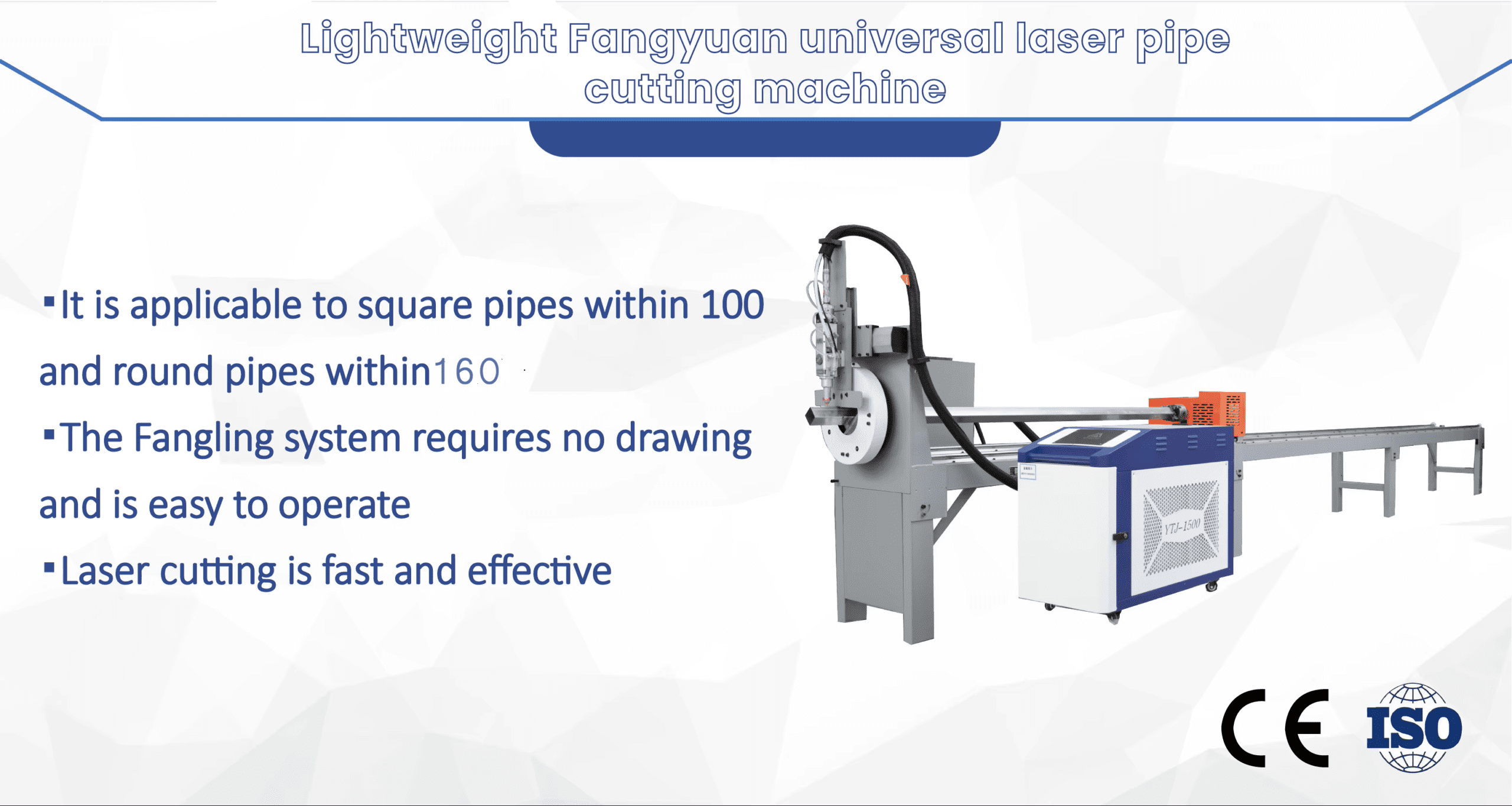
20kW Fiber Laser Dynamics: Optimizing Stainless Steel Penetration
The leap to 20kW power significantly alters the physics of the laser-material interaction. In stainless steel processing, the goal is often to achieve a “Bright Cut”—a smooth, oxide-free edge that requires high-pressure Nitrogen (N2) as a shielding gas. At 20kW, the energy density at the focal point is sufficient to vaporize stainless steel instantaneously, even in wall thicknesses exceeding 12mm.
For aerospace engineers, the primary advantage is the reduction of the Heat-Affected Zone (HAZ). High-power lasers allow for significantly faster feed rates. By increasing the cutting speed, the duration of thermal exposure to the surrounding material is minimized. This preserves the metallurgical properties of the stainless steel, preventing the precipitation of chromium carbides which can lead to intergranular corrosion. In the context of aerospace exhaust manifolds or structural tubing, maintaining the base metal’s integrity is a non-negotiable safety requirement.
Furthermore, the 20kW source provides the “power reserve” necessary to maintain consistent kerf widths across varying tube geometries. Whether cutting circular, rectangular, or specialized aerodynamic profiles, the system’s CNC controller can modulate power in real-time to prevent over-burning at corners—a common failure point in lower-powered machines.
Precision Motion Control and High-Speed Chucking Systems
A tube laser is only as accurate as its ability to hold and rotate the workpiece. In the 20kW class, the machine is typically equipped with a four-chuck or three-chuck system to minimize material wastage and maximize stability. For Queretaro’s aerospace factories, where material costs for specialized stainless alloys are high, the “zero-tailing” capability of a three-chuck system can result in a 10-15% reduction in scrap rates.
The chucks are pneumatically or electrically driven, providing a self-centering mechanism that compensates for slight deviations in tube straightness. When combined with the Plate-welded Heavy Duty Bed, these chucks allow for high-speed rotation without centrifugal vibration. The synchronization between the rotational axis (W-axis) and the longitudinal gantry (X-axis) is managed by high-resolution absolute encoders, ensuring that complex hole patterns and interlocking joints are executed with a repeatability of ±0.03mm.

Advanced Gas Dynamics and Nozzle Technology
In the precision cutting of stainless steel, the role of the cutting head and nozzle geometry is as critical as the laser source itself. 20kW systems utilize intelligent cutting heads equipped with auto-focus sensors. These sensors maintain a constant standoff distance from the tube surface, reacting in milliseconds to any surface irregularities.
For the Queretaro aerospace market, we specify nozzles designed for laminar gas flow. Turbulence in the Nitrogen stream can lead to dross (slag) attachment on the bottom of the cut, necessitating manual grinding. By optimizing the gas dynamics, a 20kW system produces a dross-free finish on stainless steel tubes up to 15mm thick. This “ready-to-weld” edge finish is a major productivity driver, as it eliminates the labor-intensive deburring stage in the manufacturing workflow.
Data-Driven Manufacturing and Industry 4.0 Integration
Modern aerospace manufacturing in Mexico is increasingly defined by data. A 20kW Tube Laser Cutter is not a standalone tool but a node in a connected factory. Integration with CAD/CAM software like Lantek or SigmaTube allows for seamless transition from aerospace design files to machine code. These systems offer advanced nesting algorithms that optimize the layout of parts on a single tube, further reducing material costs.
Moreover, the heavy-duty bed is equipped with vibration and thermal sensors that feed data back to a centralized monitoring system. This allows for predictive maintenance—identifying potential misalignments or component wear before they result in a machine failure or a rejected batch of parts. For engineers managing tight production schedules for global aerospace OEMs, this level of reliability is essential for maintaining “Just-in-Time” delivery protocols.
Economic Impact and ROI for the Queretaro Market
The investment in a 20kW Plate-welded Tube Laser Cutter is justified through a multi-faceted Return on Investment (ROI) analysis. In Queretaro’s industrial parks, where electricity and labor costs are rising, the efficiency of a high-power system provides a competitive edge.
1. Throughput Velocity: A 20kW system can cut 3mm stainless steel tubes up to 400% faster than a 4kW system. This allows a single machine to replace multiple older units, saving floor space and reducing overhead.
2. Gas Efficiency: While the hourly consumption of Nitrogen may be higher, the cost per meter of cut is often lower because the machine completes the task so much faster.
3. Secondary Process Elimination: The precision of the heavy-duty bed and the power of the 20kW source produce edges that require no further machining. In aerospace, where labor for finishing can be as expensive as the raw material, this is a significant saving.
Conclusion: Setting the Standard for Aerospace Excellence
For aerospace factory owners and engineers in Queretaro, the 20kW Tube Laser Cutter represents the pinnacle of current fabrication technology. By combining the massive structural stability of a Plate-welded Heavy Duty Bed with the extreme energy density of a 20kW fiber laser, manufacturers can achieve levels of precision, speed, and material integrity that were previously unattainable.
As the aerospace industry continues to push the boundaries of design and material science, the tools used to shape those designs must evolve accordingly. Investing in high-power, high-stability laser technology is not just an operational decision; it is a strategic commitment to quality and a statement of intent to remain at the forefront of Mexico’s most sophisticated manufacturing sector.
















