
Executive Summary: The Evolution of High-Power Fiber Lasers in Mexico’s Automotive Corridor
As Mexico solidifies its position as a global automotive manufacturing powerhouse, the demand for high-precision, high-throughput fabrication technology has reached an inflection point. In the industrial zones surrounding Mexico City, from Tlalnepantla to Toluca, automotive engineers are increasingly transitioning from traditional mechanical stamping and low-power CO2 lasers to high-wattage fiber laser systems. The 20kW Fiber Laser specialized for brass and non-ferrous metals represents the current pinnacle of this evolution.
For factory owners in the CDMX metropolitan area, the 20kW threshold is not merely a number; it is a capability gate. It allows for the processing of highly reflective materials—specifically brass and copper—that were previously considered “problematic” for fiber technology. This guide provides a technical analysis of the 20kW system, focusing on the structural integrity of the tube-welded standard bed and the specific physics of high-precision brass cutting within the context of automotive supply chains.

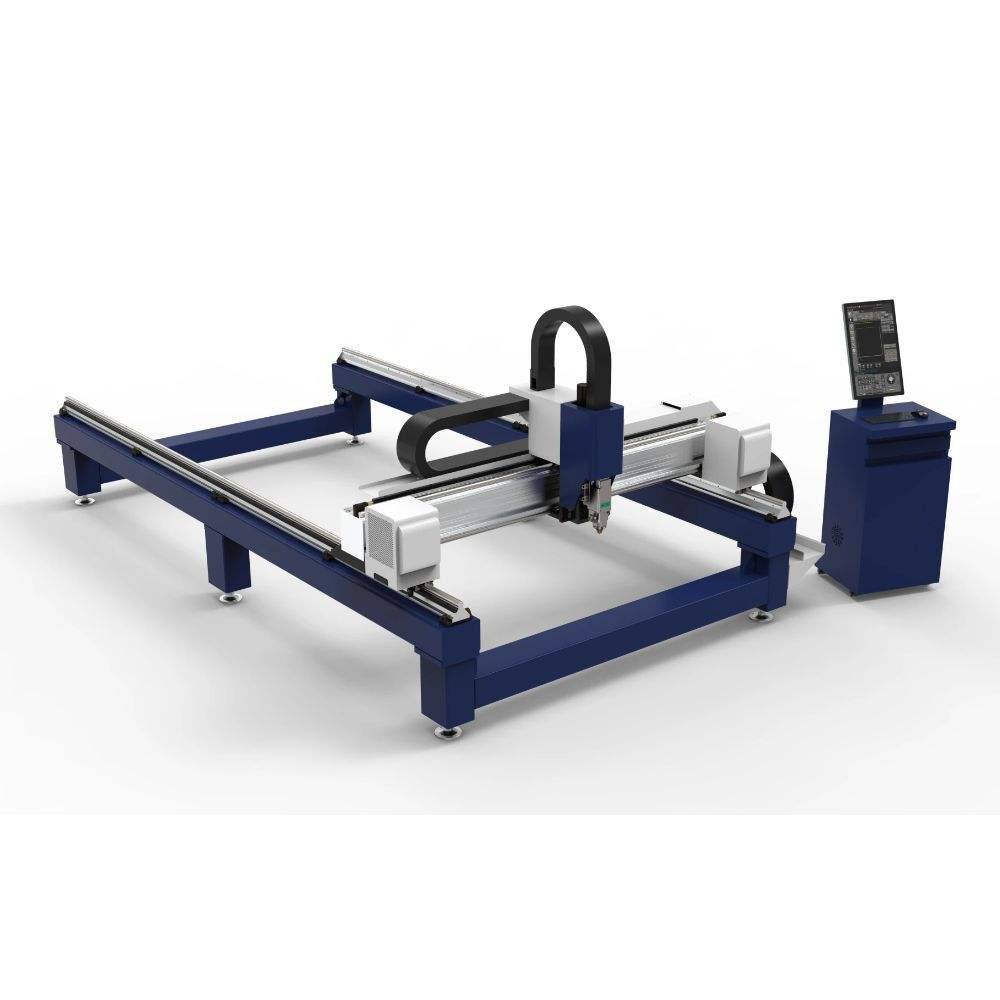
Structural Engineering: The Technical Advantages of the Tube-welded Standard Bed
The foundation of any high-power laser system is its bed. When operating at 20kW, the kinetic forces generated by rapid acceleration and deceleration of the gantry (often exceeding 1.5G to 2.0G) are immense. A standard tube-welded bed offers specific engineering advantages over cast iron or plate-welded alternatives in the 20kW class.
The tube-welded bed is constructed using high-strength rectangular steel tubes. These tubes are strategically reinforced with internal stiffeners, creating a honeycomb-like internal structure. For automotive applications where 24/7 uptime is required, this design offers three critical benefits:
1. **Vibration Damping and Resonance Control:** High-speed cutting of intricate brass components requires a platform that can absorb micro-vibrations. The hollow nature of the tube-welded structure, when properly engineered, allows for better dissipation of harmonic frequencies compared to solid structures, which can act as a tuning fork at high frequencies.
2. **Thermal Stability:** Mexico City’s high altitude and fluctuating workshop temperatures can affect machine alignment. The tube-welded bed undergoes a rigorous stress-relief process, including high-temperature annealing in a controlled furnace. This ensures that the internal stresses of the welds are neutralized, preventing the bed from warping over 10-15 years of operation.
3. **Weight-to-Rigidity Ratio:** The tube-welded design provides high structural rigidity without the excessive mass of a solid cast bed. This allows for faster dynamic response times. In the automotive sector, where “seconds per part” dictates profitability, the ability of the bed to support rapid gantry movements without oscillation is paramount.
High-Precision Brass Cutting: Overcoming Reflectivity with 20kW Density
Brass is a staple in the automotive industry, used for electrical connectors, radiator components, and decorative interior trim. However, brass is a “yellow metal” with high thermal conductivity and high reflectivity. In lower power lasers (under 6kW), the laser beam can be reflected back into the cutting head, causing catastrophic damage to the optical sensors and the fiber delivery system.
The 20kW power density changes the physics of the interaction. At this wattage, the energy delivered to the surface of the brass is so intense that it transitions the material from solid to liquid/vapor almost instantaneously. This “keyhole” effect minimizes the window for back-reflection.
**Technical Specifications for Brass Processing:**
* **Piercing Speed:** 20kW systems utilize “Flash Piercing” techniques, reducing the time to penetrate 10mm brass to under 0.1 seconds.
* **Edge Quality:** High-power density ensures a narrower Kerf width and a smaller Heat Affected Zone (HAZ). This is critical for automotive parts that require secondary welding or tight tolerances for assembly.
* **Gas Dynamics:** At 20kW, the use of high-pressure Nitrogen (N2) as a shielding gas is standard. This prevents oxidation, leaving a bright, clean edge on the brass that requires no post-process polishing.
Automotive Industry Applications in the Mexico City Market
The automotive cluster in Central Mexico is shifting toward Electric Vehicles (EVs). This shift has increased the demand for high-precision brass and copper components used in battery busbars, charging infrastructure, and high-voltage power distribution units.
A 20kW sheet metal laser provides the versatility to handle both thin-gauge brass for electrical terminals and thick-plate brass for heavy-duty busbars. In a typical CDMX factory setting, the 20kW machine can replace three 4kW machines, significantly reducing the footprint required in high-cost industrial real estate.
**Data-Driven Performance Comparison (Brass):**
* **3mm Brass:** 20kW can achieve cutting speeds of up to 45m/min, whereas a 6kW laser peaks at 12m/min. This represents a 275% increase in throughput.
* **12mm Brass:** 20kW maintains a stable cut at 4-5m/min with high verticality, while lower power lasers struggle with dross and slag accumulation at the bottom of the cut.
Integration of High-Precision Components
To maintain the accuracy required by Tier 1 and Tier 2 automotive suppliers, the 20kW system must be equipped with premium motion control components. In the Mexico City market, where technical support is local but parts are often global, the following specifications are recommended:
* **Laser Source:** IPG or Raycus 20kW Fiber Source with anti-reflection modules specifically tuned for non-ferrous metals.
* **Cutting Head:** Auto-focus heads (such as Precitec ProCutter) with integrated sensors to monitor the protective window’s temperature—essential when cutting brass.
* **Transmission:** High-precision helical rack and pinion systems with Japanese Shimpo or German Alpha reducers to ensure a positioning accuracy of ±0.03mm.
* **Software:** CNC systems like CypCut or Beckhoff that allow for “Power Ramping,” which automatically adjusts laser power during cornering to prevent over-burning in intricate brass geometries.
Operational Considerations for the CDMX Region
Operating a 20kW laser in Mexico City requires specific logistical and environmental considerations. The altitude (2,240m) affects the density of the air, which can influence the cooling efficiency of the chiller systems.
1. **Cooling Infrastructure:** A 20kW laser generates significant heat. It is vital to use a dual-circuit industrial chiller with a cooling capacity exceeding 60kW. In CDMX, where water quality can vary, a closed-loop system using deionized water and specialized additives is mandatory to prevent calcification within the laser source.
2. **Power Stability:** The industrial power grid in parts of the State of Mexico can experience voltage fluctuations. A high-capacity industrial voltage stabilizer and a dedicated transformer are non-negotiable for a 20kW installation to protect the sensitive laser diodes.
3. **Gas Supply:** Given the high consumption of Nitrogen for high-speed brass cutting, automotive factories should consider Liquid Nitrogen tanks (Cryogenic tanks) rather than standard cylinders. This reduces the cost per cubic meter and ensures consistent gas pressure during long production runs.
Return on Investment (ROI) Analysis for Factory Owners
While the initial capital expenditure (CAPEX) for a 20kW system is higher than that of a 10kW or 12kW unit, the ROI is driven by the “Cost per Part” metric.
For a typical automotive brass connector plate:
* **Labor Costs:** Reduced by 60% due to higher automation and faster cycles.
* **Gas Efficiency:** While 20kW uses more gas per minute, it uses significantly less gas *per meter* because of the vastly higher cutting speeds.
* **Market Expansion:** The ability to cut 20mm+ brass and copper opens up new contracts in the energy and aerospace sectors, diversifying the factory’s revenue stream beyond automotive.
Conclusion: Future-Proofing with 20kW Technology
For engineers and factory owners in Mexico City, the 20kW Sheet Metal Laser is not just a tool for today; it is an investment in the next decade of manufacturing. The combination of a robust tube-welded standard bed and the raw power required to master brass fabrication provides a competitive edge that is difficult to replicate with entry-level machinery.
As the automotive industry moves toward tighter tolerances and more complex material requirements, the precision, speed, and reliability of a 20kW system ensure that Mexican manufacturers remain at the forefront of the global supply chain. By prioritizing structural stability and high-wattage density, facilities can achieve the zero-defect quality standards demanded by the world’s leading automotive OEMs.
















