
Introduction to High-Power laser cutting in Guadalajara’s Industrial Landscape
Guadalajara, often referred to as the “Silicon Valley of Mexico,” has established itself as a premier hub for high-tech manufacturing, electronics, and aerospace engineering. As the industrial sector in Jalisco continues to modernize, the demand for high-precision fabrication tools has surged. Among these technologies, the 20kW precision laser system stands out as a transformative force, particularly for industries dealing with non-ferrous metals. Brass, a material prized for its conductivity, corrosion resistance, and aesthetic appeal, presents unique challenges that only high-wattage fiber lasers can effectively address.
The transition from traditional CO2 lasers to high-power fiber laser cutting systems has redefined the throughput capabilities of local machine shops. A 20kW system is not merely about raw power; it represents a sophisticated balance of beam quality, energy density, and motion control. For Guadalajara-based manufacturers, adopting this technology means the ability to process thick brass plates with the same agility once reserved for thin stainless steel, opening new doors in the production of electrical components, decorative architectural elements, and automotive heat exchangers.
The Physics of 20kW Laser Cutting on Reflective Materials
Brass is classified as a highly reflective material. In the context of laser cutting, reflectivity is a significant hurdle because it can cause the laser beam to bounce back into the cutting head, potentially damaging the sensitive optics and the fiber source. Older, lower-power systems often struggled with brass because they could not provide enough initial energy to overcome the material’s reflectivity and establish a stable “keyhole” for cutting.
A 20kW fiber laser overcomes this through sheer power density. At 20,000 watts, the energy concentrated at the focal point is sufficient to instantaneously melt the surface of the brass, significantly reducing its reflectivity and allowing the beam to penetrate the material. This high power level ensures that the laser cutting process remains stable even when working with yellow brass or naval brass alloys, which are notorious for their thermal conductivity. By processing the material faster than the heat can dissipate into the surrounding area, the 20kW system minimizes the Heat Affected Zone (HAZ), ensuring the structural integrity of the part remains intact.
Optimizing Beam Quality for Precision Brass Fabrication
Precision in laser cutting is determined by the beam’s “BPP” (Beam Parameter Product) and its focusability. A 20kW system designed for precision fabrication utilizes advanced beam-shaping technology. This allows the operator to adjust the beam profile based on the thickness of the brass. For thinner sheets, a narrow, concentrated beam provides maximum speed. For thicker plates, a wider beam profile helps evacuate molten metal more efficiently, resulting in a smoother edge finish.

Thermal Management and Cooling Requirements
Operating a 20kW laser cutting machine requires a robust infrastructure, especially in the climate of Guadalajara. The system generates significant heat, not just at the cutting point but within the laser source itself. High-efficiency chillers are essential to maintain a constant temperature for the fiber modules and the cutting head. Precision cutting in brass also requires specialized nozzles that can withstand the intense heat and the back-pressure of assist gases. Engineering teams in Jalisco must ensure that their facility’s electrical and cooling systems are rated for the continuous duty cycles that a 20kW machine demands.
Applications of Brass Laser Cutting in Guadalajara’s Key Sectors
Guadalajara’s diverse economy provides a wide array of applications for 20kW laser cutting technology. The electronics industry, which has a massive footprint in the region, relies heavily on brass for connectors, terminals, and busbars. The ability to cut these components with high precision and minimal burr formation reduces the need for secondary finishing processes, directly impacting the bottom line.
In the decorative and architectural sectors, brass is often used for high-end signage, furniture inlays, and custom hardware. The 20kW laser allows for intricate designs to be executed in thick brass plates that were previously only achievable through waterjet cutting or CNC milling. The laser cutting process is significantly faster than waterjetting and does not require the expensive abrasives, making it a more cost-effective solution for high-volume production.
Automotive and Aerospace Components
The automotive corridor in Central Mexico demands components that meet stringent tolerances. Brass is frequently used in sensors, fuel system components, and radiators. A 20kW laser cutting system provides the speed necessary to keep up with Just-In-Time (JIT) manufacturing requirements while maintaining the precision needed for aerospace-grade components. The consistency of the fiber laser ensures that the first part in a production run is identical to the thousandth, a critical factor for ISO-certified facilities in Guadalajara.
Technical Specifications and Gas Selection
One of the most critical factors in laser cutting brass is the choice of assist gas. The assist gas serves two purposes: it blows the molten material out of the kerf and protects the optics from debris.
Nitrogen vs. Oxygen in Brass Processing
When precision is the priority, Nitrogen is the preferred assist gas for brass. Nitrogen cutting is a “cold” process where the laser’s energy melts the metal, and the high-pressure gas mechanically removes it. This results in a clean, oxide-free edge that is ready for welding or plating. For a 20kW system, the pressure of the Nitrogen must be carefully calibrated; too little pressure leads to dross (hardened melt) on the bottom of the cut, while too much can cause turbulence and affect the cut quality.
Oxygen can be used for thicker brass sections to add exothermic energy to the process, but this typically results in a darker, oxidized edge. In the high-precision environment of Guadalajara’s tech industry, Nitrogen remains the standard for maintaining the golden luster of the brass edge.
Feed Rates and Kerf Compensation
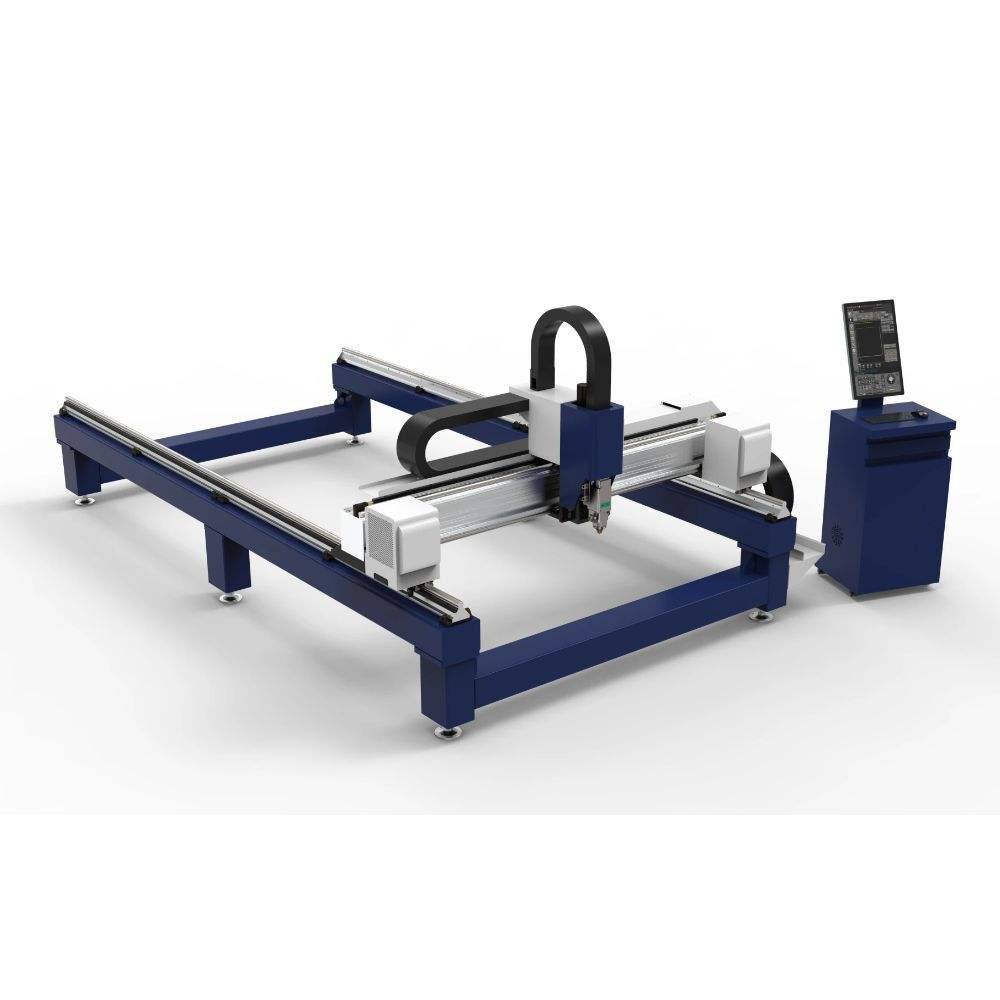
With 20kW of power, the feed rates for brass are remarkably high. For example, 3mm brass can be processed at speeds exceeding 30 meters per minute, depending on the machine’s motion system. At these speeds, the CNC controller must have an incredibly high processing rate to handle the “look-ahead” logic required for sharp corners and complex geometries. Kerf compensation—the adjustment for the width of the cut—must be precisely calculated to ensure that the final dimensions of the brass part meet the engineering specifications.
Operational Excellence: Maintenance and Safety
Maintaining a 20kW laser cutting system in an industrial environment like Guadalajara requires a disciplined approach to maintenance. The primary concern when cutting brass is the accumulation of fine metallic dust. Brass dust is conductive and can be hazardous if it enters the electrical cabinets or the laser source. High-quality dust extraction and filtration systems are mandatory.
Optical Integrity and Protective Windows
The “cover glass” or protective window is the most frequently replaced consumable in a 20kW head. Because brass is reflective, the risk of “back-reflection” damaging the optics is higher than with carbon steel. Operators must be trained to inspect the cover glass for any signs of pitting or contamination. Even a microscopic speck of dust on the lens can absorb the 20kW energy, leading to a thermal fracture of the optic.
Safety Protocols for High-Power Fiber Lasers
A 20kW laser is a Class 4 laser product, meaning it can cause immediate injury to skin and eyes, even from diffused reflections. In a professional engineering environment, the laser cutting machine must be fully enclosed with laser-safe glass (typically OD7+ rating for 1064nm wavelengths). Guadalajara’s safety regulations align with international standards, requiring interlocked doors and light curtains to prevent accidental exposure during the cutting process.
Economic Impact and ROI for Manufacturers in Jalisco
The investment in a 20kW precision laser system is significant, but the Return on Investment (ROI) for a Guadalajara-based shop is driven by three factors: speed, versatility, and reduced secondary operations. By replacing multiple lower-power machines with a single 20kW unit, a facility can reduce its footprint, lower its energy consumption per part, and significantly increase its output.
Furthermore, the ability to process brass, copper, and aluminum—materials that are often outsourced due to their difficulty—allows local shops to keep more revenue in-house. As Guadalajara continues to attract international investment from the electric vehicle (EV) and renewable energy sectors, the demand for high-precision brass components will only grow. A 20kW laser cutting system positions a company at the top of the supply chain, capable of meeting the most demanding technical requirements.
Conclusion: The Future of Precision Fabrication
The integration of 20kW precision laser systems into Guadalajara’s manufacturing sector marks a new chapter in Mexico’s industrial capabilities. By mastering the nuances of laser cutting brass—from managing reflectivity to optimizing gas dynamics—local engineers are pushing the boundaries of what is possible in metal fabrication. As the technology continues to evolve, with even higher power levels and smarter AI-driven controllers on the horizon, the foundation laid by today’s 20kW systems will ensure that Jalisco remains a global leader in high-precision engineering. For those looking to dominate the market, the message is clear: power and precision are the keys to unlocking the full potential of brass fabrication.
















