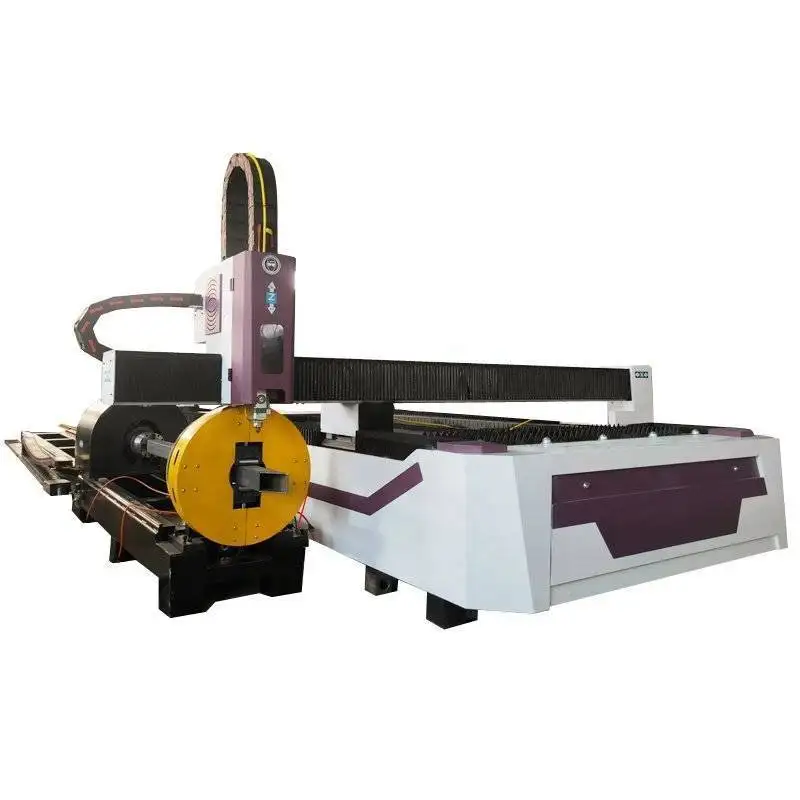
Mastering 20kW Precision Laser Systems for Aluminum Alloy Fabrication in Guadalajara
The industrial landscape of Guadalajara, often referred to as the “Silicon Valley of Mexico,” is undergoing a significant transformation. As the region solidifies its position as a hub for electronics, aerospace, and automotive manufacturing, the demand for high-precision metal fabrication has reached unprecedented levels. Central to this evolution is the implementation of 20kW fiber laser cutting systems. These ultra-high-power machines represent the pinnacle of thermal cutting technology, offering a unique combination of speed, precision, and the ability to process challenging materials like aluminum alloys with surgical accuracy.
In the context of Guadalajara’s competitive manufacturing sector, the transition from lower-wattage systems to a 20kW platform is not merely an incremental upgrade; it is a strategic shift. This guide explores the technical intricacies of utilizing a 20kW precision laser system, specifically optimized for aluminum alloy processing, and how local enterprises can leverage this technology to meet international quality standards.
The Technical Superiority of 20kW Fiber Laser Cutting
The leap to 20kW of power changes the physics of the laser cutting process. At these power levels, the energy density at the focal point is sufficient to vaporize metal almost instantaneously, minimizing the Heat Affected Zone (HAZ). For aluminum alloys, which are known for their high thermal conductivity and reflectivity, this power is essential for maintaining edge integrity and structural properties.
Beam Quality and Energy Density
A 20kW system utilizes a fiber laser source where the beam is generated within an active optical fiber and delivered via a transport fiber to the cutting head. The primary advantage here is the Beam Parameter Product (BPP). A well-tuned 20kW system maintains a low BPP, resulting in a highly concentrated beam that can penetrate thick aluminum plates (up to 50mm or more) while maintaining a narrow kerf. This precision ensures that complex geometries required by the aerospace components manufactured in Jalisco are executed without the need for secondary machining.
Overcoming Material Reflectivity
Aluminum is notoriously reflective in its molten state, which historically posed a risk to laser resonators due to back-reflection. Modern 20kW systems are equipped with advanced back-reflection isolation technologies. These systems detect reflected light and divert it or shut down the beam in microseconds to protect the optical chain. In the high-volume production environments of Guadalajara, this reliability is critical for maintaining uptime and protecting the capital investment of the machine.
Optimizing Aluminum Alloy Processing in the Guadalajara Context
Guadalajara’s manufacturing clusters frequently work with 5000 and 6000 series aluminum alloys. These materials are prized for their strength-to-weight ratio but require specific laser cutting parameters to avoid dross formation and burrs.
Assist Gas Dynamics: Nitrogen vs. Oxygen
For precision aluminum work, Nitrogen is the preferred assist gas. At 20kW, the high-pressure Nitrogen jet acts as a mechanical force to eject molten material from the kerf before it can oxidize. This results in a silver-bright, oxide-free edge that is ready for immediate welding or painting—a crucial requirement for the automotive Tier 1 suppliers located in the El Salto industrial park. While Oxygen can be used for thicker sections to speed up the process through an exothermic reaction, it often leaves a rougher finish on aluminum that requires post-processing.
Feed Rates and Thermal Management
One of the most significant advantages of a 20kW system is the exponential increase in cutting speed on medium-thickness aluminum (6mm to 12mm). At these speeds, the laser moves so quickly that heat does not have time to dissipate into the surrounding material. This “cold cutting” effect prevents the warping of thin-gauge aluminum sheets, which is common in the production of enclosures for the local electronics industry. Engineers in Guadalajara must balance the feed rate with the frequency and pulse width of the laser to achieve the smoothest possible surface finish.
Strategic Integration into Guadalajara’s Industrial Ecosystem
The adoption of 20kW laser cutting technology provides a distinct competitive edge for Mexican fabricators looking to export to the North American market. Under the USMCA framework, the ability to produce high-tolerance aluminum components locally reduces lead times and logistics costs compared to importing parts from overseas.
Aerospace and Automotive Applications
Guadalajara serves as a critical node for aerospace supply chains. Components such as structural ribs, brackets, and internal cabin panels are increasingly made from high-grade aluminum alloys. A 20kW laser system allows for the nesting of these parts with minimal spacing, maximizing material utilization—a vital factor given the high cost of aerospace-grade aluminum. Similarly, in the automotive sector, the push toward vehicle lightweighting has increased the use of aluminum in chassis and battery housings for electric vehicles (EVs), all of which benefit from the high-speed precision of 20kW lasers.
Digital Integration and Industry 4.0
Most modern 20kW systems are designed with Industry 4.0 capabilities. For Guadalajara-based firms, this means the laser cutting machine can be integrated into a broader ERP system. Real-time monitoring of gas consumption, power usage, and cutting head health allows for predictive maintenance. In a region where technical talent is highly valued, these automated systems allow engineers to focus on design optimization rather than manual machine calibration.
Operational Best Practices for High-Power Systems
Operating a 20kW laser requires a higher level of technical oversight compared to standard 4kW or 6kW machines. The following protocols are recommended for maintaining precision in aluminum alloy fabrication:
Optical Maintenance and Cleanliness
At 20kW, even a microscopic speck of dust on the protective window can absorb enough energy to shatter the lens or damage the cutting head. Cleanroom-style protocols for lens replacement are mandatory. In the dusty environments sometimes found in industrial zones, specialized filtration systems for the machine’s internal cabinet are necessary to maintain the integrity of the beam delivery path.
Chiller Calibration
The thermal load of a 20kW fiber source is substantial. A high-capacity, dual-circuit chiller is required to regulate the temperature of both the laser source and the cutting head. In Guadalajara’s climate, where ambient temperatures can fluctuate significantly, ensuring the chiller is rated for high-ambient operation is essential to prevent “thermal drift,” which can affect the focal point position and cutting quality over long production shifts.
Nozzle Selection and Centering
The nozzle is the final point of contact between the machine and the process. For 20kW aluminum cutting, large-diameter “double” nozzles are often used to provide a stable column of Nitrogen. Precise centering of the nozzle relative to the laser beam is non-negotiable; even a slight misalignment will result in asymmetrical dross and poor edge quality on one side of the part.
Cost-Benefit Analysis of 20kW Systems
While the initial capital expenditure (CAPEX) for a 20kW laser cutting system is higher than lower-power alternatives, the return on investment (ROI) is driven by throughput. A 20kW system can often replace two or three 6kW machines, reducing the footprint required in expensive industrial real estate in Guadalajara. Furthermore, the reduction in electricity consumption per part—due to the much shorter cutting times—significantly lowers the operational expenditure (OPEX).
For aluminum alloys, the cost savings are even more pronounced. Because the 20kW laser produces a weld-ready edge, the labor costs associated with grinding and deburring are virtually eliminated. In a market where speed-to-market is a primary differentiator, the ability to move from raw sheet to finished assembly in a single step is a formidable advantage.
Conclusion: The Future of Metal Fabrication in Jalisco
The introduction of 20kW precision laser systems marks a new chapter for the manufacturing sector in Guadalajara. By mastering the nuances of aluminum alloy laser cutting, local companies are not just keeping pace with global trends; they are setting new standards for efficiency and quality in Latin America. As the demand for complex, lightweight, and high-strength components continues to grow, the 20kW fiber laser will remain the cornerstone of the modern digital factory, driving innovation and economic growth across the region.
Investing in this technology requires a commitment to technical training and a rigorous approach to process control. However, for those who successfully integrate 20kW systems into their production lines, the rewards are clear: unmatched precision, incredible speed, and the capacity to tackle the most demanding projects the global market has to offer.