The Dawn of 20kW Power in Structural Fabrication
In the world of fiber lasers, the “20kW” designation is not merely a number—it is a threshold that separates general-purpose sheet cutting from heavy-duty structural profiling. For Istanbul’s manufacturing sector, which serves as the bridge between European demand and Asian supply chains, the ability to process thick-walled I-beams and H-channels with high-speed precision is a strategic necessity.
A 20kW fiber laser source provides a power density that allows for “vaporization cutting” even in substantial thicknesses. Traditional CO2 lasers or lower-wattage fiber systems often struggled with the vertical webs and thick flanges of structural steel, leading to slow feed rates and significant dross. The 20kW profiler, however, maintains a stable plasma arc that slices through 20mm to 50mm carbon steel with the same ease that a 4kW machine handles thin sheet metal. This power is critical for storage racking, where “heavy-duty” means supporting thousands of tons of palletized goods in seismic zones like the Marmara region.
The Mechanics of the Heavy-Duty I-Beam Profiler
A heavy-duty profiler is a marvel of mechanical engineering. Unlike flatbed lasers, an I-beam laser must manage a workpiece that is three-dimensional, heavy, and often slightly irregular. The machines deployed in Istanbul’s industrial zones feature massive, reinforced beds and multi-chuck systems capable of rotating beams that weigh several tons.
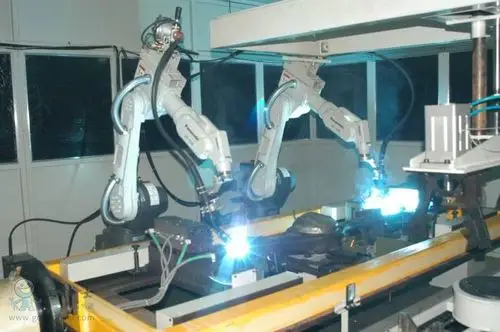
The 20kW head is usually mounted on a five-axis or six-axis robotic arm or a high-precision gantry with a 3D tilting head. This allows the laser to perform miter cuts, bevels for weld preparation, and complex bolt-hole geometries on all four sides of an I-beam in a single pass. In the production of storage racks, this eliminates the need for secondary processes like drilling, punching, or manual torching. Every notch for a beam connector and every hole for a safety bolt is executed with sub-millimeter accuracy, ensuring that when the racking reaches the warehouse site, it fits together perfectly, reducing installation time by up to 40%.
Zero-Waste Nesting: The Alchemy of Material Efficiency
In Istanbul’s competitive market, the cost of raw steel is a dominant factor in any project’s tender. Traditional sawing and drilling methods for I-beams inevitably lead to “remnants”—the 300mm to 600mm pieces of steel left at the end of a beam that are too short to be used.
Zero-waste nesting technology, driven by advanced CAD/CAM software integrated directly into the 20kW laser, solves this through “Common Line Cutting” and “Tail-End Processing.” The software analyzes the entire production queue, nesting parts of different lengths together on a single raw beam. The “Zero-Waste” moniker refers specifically to the machine’s ability to utilize the “last bit” of the beam. Through a specialized dual or triple-chuck system, the laser can hold and cut the very end of the workpiece, reducing the scrap tip to as little as 50mm.
For a large-scale storage racking project involving thousands of tons of steel, a 5% to 8% reduction in material waste translates directly into hundreds of thousands of dollars in savings. In the context of Istanbul’s high-volume exporters, this efficiency is the difference between winning and losing international contracts.
Optimizing Storage Racking for the Global Logistics Hub
Istanbul is the heart of Turkey’s logistics boom. As e-commerce giants and global distributors set up massive fulfillment centers, the demand for sophisticated storage racking—such as AS/RS (Automated Storage and Retrieval Systems)—has skyrocketed. These systems require much tighter tolerances than standard pallet racking.
The 20kW I-beam laser profiler is the only tool capable of meeting these tolerances at scale. When fabricating the vertical masts for high-bay racking (which can exceed 30 meters in height), the verticality and hole alignment are critical. A deviation of even 1mm at the base can lead to a 100mm lean at the top. The fiber laser’s ability to cut cold, without the massive heat-affected zone (HAZ) associated with plasma or oxy-fuel cutting, ensures that the structural integrity of the I-beam is maintained and that the steel does not warp during the cutting process.
Technical Integration: The Istanbul Advantage
The implementation of these machines in Istanbul is supported by a robust local ecosystem of laser technicians and software engineers. The 20kW systems are typically equipped with “Smart Piercing” technology, which uses sensors to detect when the laser has breached the material, moving immediately to the cut move. This saves seconds on every hole—a vital feature when a single racking upright might require over a hundred holes.
Furthermore, the integration of Industry 4.0 protocols allows Istanbul factory managers to monitor gas consumption (nitrogen vs. oxygen), power usage, and cutting speed in real-time from their mobile devices. This data-driven approach allows for precise job costing, which is essential for the high-turnover racking industry.
Overcoming Challenges: Gas and Thermal Management
Operating a 20kW laser isn’t without its hurdles. The sheer intensity of the beam requires advanced optics and cooling. The “Heavy-Duty” aspect of the profiler includes specialized chillers that manage the temperature of the laser source and the cutting head simultaneously.
In Istanbul’s industrial parks, where power stability and gas supply can vary, these machines are often outfitted with dedicated voltage stabilizers and high-pressure nitrogen generation systems. Using nitrogen as the assist gas at 20kW allows for “bright cutting,” leaving a clean, oxide-free edge that is immediately ready for powder coating—the standard finish for storage racking. This bypasses the need for abrasive blasting or chemical cleaning of the cut edges, further streamlining the production pipeline.
The Economic Ripple Effect on Turkey’s Infrastructure
The adoption of 20kW I-beam laser profiling is doing more than just building better racks; it is elevating the entire Turkish steel fabrication sector. As local companies master zero-waste nesting, they are becoming the preferred suppliers for European firms looking to de-risk their supply chains away from East Asia.
The “Istanbul Model” of structural laser cutting focuses on speed and versatility. The same machine that cuts heavy I-beams for a warehouse can be recalibrated in minutes to cut C-channels for mezzanine floors or square tubing for safety barriers. This flexibility allows Turkish manufacturers to offer “turnkey” structural solutions, providing everything from the primary racking to the ancillary safety components from a single production line.
Conclusion: The Future of Heavy-Duty Profiling
The 20kW Heavy-Duty I-Beam Laser Profiler is more than a tool; it is a catalyst for an industrial renaissance in Istanbul. By solving the dual challenges of processing massive structural sections and eliminating material waste, it has provided the storage racking industry with a blueprint for sustainable, high-precision growth.
As we look toward the future, the integration of AI-driven nesting and even higher wattages will likely continue. However, the current 20kW standard represents the “sweet spot” of power, precision, and ROI. For the engineers and fabricators in Istanbul, the message is clear: the future of structural steel is light-driven, zero-waste, and incredibly powerful. The skyline of tomorrow’s global logistics starts on the cutting bed of a 20kW fiber laser.