
1.0 Introduction: The Industrial Context of the Sao Paulo Offshore Sector
In the heavy industrial corridor of Sao Paulo, specifically catering to the pre-salt logistics and offshore platform construction in the Santos Basin, the demand for high-integrity structural steel components has reached a critical threshold. Conventional methods—primarily plasma cutting and manual oxy-fuel torching—are increasingly failing to meet the rigorous tolerances required for deep-sea structural assemblies. The implementation of the 20kW Heavy-Duty I-Beam Laser Profiler equipped with an Infinite Rotation 3D Head represents a necessary evolution in maritime civil engineering.
This report analyzes the technical deployment of ultra-high-power fiber laser technology in the fabrication of I-beams, H-beams, and C-channels intended for offshore jackets, topsides, and subsea manifolds. The integration of 20,000 watts of coherent light with a multi-axis motion system addresses the primary bottlenecks of heavy steel processing: thermal distortion, edge preparation time, and geometric precision.
2.0 20kW Fiber Laser Synergy: Power Density and Material Interaction
The transition from 6kW or 10kW systems to a 20kW architecture is not merely a quantitative increase in speed; it is a qualitative shift in how the laser interacts with heavy-gauge carbon steel (typically ASTM A36 or DH36 grades used in Sao Paulo shipyards). At 20kW, the power density at the focal point allows for “high-speed melt-blowing,” significantly reducing the Heat-Affected Zone (HAZ).
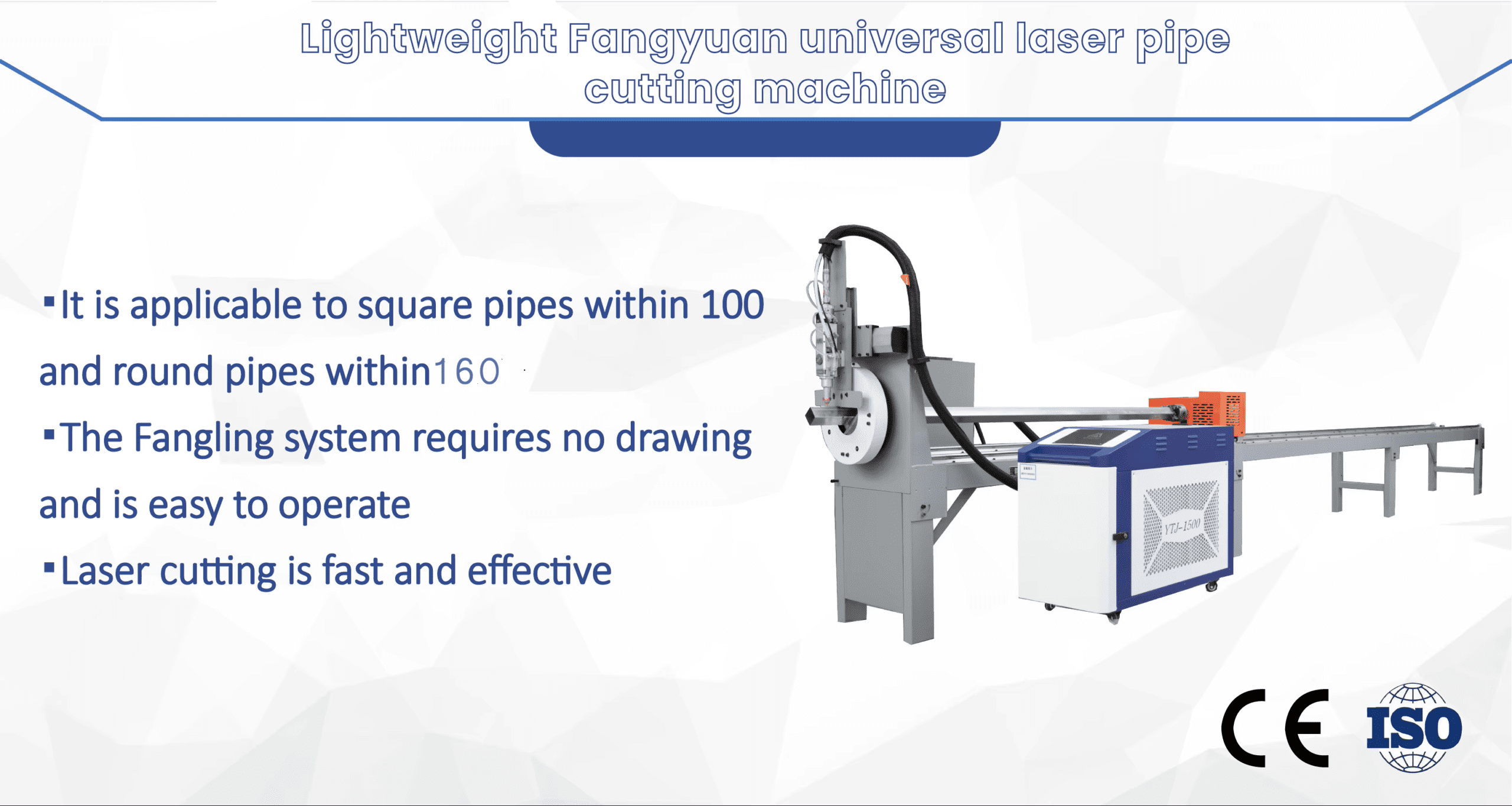
2.1 Piercing Dynamics and Kerf Quality
In heavy-duty I-beams with flange thicknesses exceeding 25mm, piercing time is a major contributor to the overall cycle time. The 20kW source utilizes ultra-high-pressure nitrogen or oxygen assist-gas to achieve “flash piercing,” reducing the dwell time from seconds to milliseconds. This prevents localized heat accumulation that can lead to micro-cracking in the grain structure of the steel—a critical failure point in high-pressure offshore environments.
2.2 Feed Rate Optimization
For a standard 300mm I-beam, the 20kW system maintains a feed rate that is 300-400% faster than traditional plasma systems while maintaining a perpendicularity tolerance of ±0.1mm. This eliminates the need for secondary grinding operations, which are traditionally labor-intensive and inconsistent in the Sao Paulo manufacturing labor market.
3.0 The Infinite Rotation 3D Head: Overcoming Geometric Constraints
The core innovation of this profiler is the Infinite Rotation 3D Head. Standard 3D laser heads are often limited by cable-wrap constraints, requiring a “rewind” move after 360 degrees of rotation. In the context of complex I-beam profiling—where cuts must transition from the flange to the web and back—this limitation is a significant source of air-cut time and potential path deviation.
3.1 Elimination of “Cable-Wrap” Latency
The infinite rotation capability (N x 360°) allows the cutting head to maintain a continuous vector. When processing a “rat-hole” or a complex scallop cut in a heavy H-beam, the head maintains its B-axis (tilt) and C-axis (rotation) without interruption. This ensures that the kerf remains consistent across the transition zones between the web and the flange, areas where structural failure often initiates in offshore platforms due to stress concentration.
3.2 Advanced Beveling for Weld Preparation
Offshore specifications typically require V, X, or K-type weld preparations. The 3D head’s ability to tilt up to ±45° (or in some advanced configurations, ±50°) while rotating infinitely allows for the automated cutting of complex bevels on the ends of large profiles. This is particularly relevant for the “nodes” of offshore jackets where multiple beams converge at disparate angles. The 20kW power ensures that even at a 45° tilt—where the “effective thickness” of the material increases by approximately 41%—the laser maintains enough energy density to produce a clean, dross-free surface.
4.0 Structural Integrity and Precision in Offshore Applications
Sao Paulo’s offshore industry operates under BSI and ISO standards that mandate strict fatigue resistance profiles. A laser-cut edge has a significantly higher fatigue life compared to a plasma-cut edge because the laser process does not induce the same level of carbon migration or surface hardening.
4.1 Accuracy in Bolt-Hole Circularity
For bolted connections in modular offshore skids, hole circularity is paramount. The 20kW profiler achieves a “taper-free” hole even in 30mm thick steel. By utilizing the 3D head to slightly compensate for the natural beam divergence, the system produces holes that require no reaming. This precision ensures that structural loads are distributed evenly across the bolt group, preventing premature shearing in the turbulent conditions of the South Atlantic.
4.2 Compensation for Beam Camber and Sweep
Heavy-duty beams are rarely perfectly straight. The profiler utilizes integrated laser touch-probes or optical sensors to map the actual “as-is” geometry of the I-beam before cutting. The 3D head then adjusts its toolpath in real-time to compensate for any camber or sweep. This ensures that the 3D geometry of the cut—whether it’s a cope, a notch, or a miter—is perfectly aligned with the beam’s centerline, a task that is nearly impossible to achieve manually on a 12-meter beam.
5.0 Automation Synergy: The “Dark Factory” Concept in Heavy Steel
In the industrial sectors of Sao Paulo, the move toward Industry 4.0 is facilitated by the synergy between the 20kW laser and automated material handling. The Heavy-Duty I-Beam Profiler is not a standalone machine but a part of a robotic ecosystem.
5.1 Automatic Loading and Chucking Systems
The system utilizes heavy-duty pneumatic chucks capable of supporting profiles weighing up to 1000kg per meter. These chucks work in tandem with the laser’s NC (Numerical Control) to move the beam through the “cutting zone.” The coordination between the longitudinal movement of the beam and the 5-axis movement of the 3D head allows for the processing of all four sides of a beam in a single pass.
5.2 Software Integration: CAD to Camber-Correction
The workflow begins with TEKLA or SDS/2 files common in structural engineering. The software automatically generates the 3D cutting paths, including the specific weld bevels required by the project’s Welding Procedure Specification (WPS). The 20kW system’s controller processes these complex G-codes with high block-processing speeds, ensuring that the machine’s dynamic motion does not stutter during complex 5-axis interpolations.
6.0 Environmental and Economic Impact in the Sao Paulo Region
Beyond the technical specifications, the deployment of this technology in Sao Paulo has significant economic implications. The reduction in power consumption per meter of cut (when compared to the multi-pass requirements of lower-power lasers or high-amperage plasma) aligns with the regional push for industrial efficiency. Furthermore, the “Infinite Rotation” technology reduces gas consumption by minimizing the number of lead-ins and lead-outs required, as the head does not need to reposition to “unwind” cables.
7.0 Conclusion
The 20kW Heavy-Duty I-Beam Laser Profiler with Infinite Rotation 3D Head is the definitive solution for the current challenges facing Sao Paulo’s offshore fabrication sector. By providing a method to process heavy structural profiles with sub-millimeter precision and integrated weld preparation, it eliminates the inefficiencies of traditional multi-stage fabrication. For the engineer, this means higher structural reliability; for the facility manager, it means a radical increase in throughput; and for the offshore operator, it means a platform built to the highest possible standards of geometric integrity.
As we continue to push into deeper waters in the Santos Basin, the reliance on such high-precision automated systems will transition from an advantage to a baseline requirement for structural safety and economic viability.
















