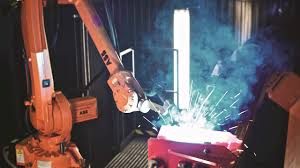
The Industrial Context: Katowice as a Hub for Infrastructure Innovation
Katowice, the heart of the Upper Silesian Industrial Region, has long been a center for metallurgy and heavy manufacturing. However, the current era of European infrastructure development demands more than just raw steel production; it requires precision, efficiency, and scalability. As Poland and its neighbors invest heavily in high-speed rail networks, modernized highways, and intricate urban flyovers, the demand for high-strength structural steel components has surged.
In this environment, the 20kW Heavy-Duty I-Beam Laser Profiler has emerged as a disruptive force. Traditional methods of processing I-beams, H-beams, and U-channels—such as mechanical sawing, drilling, and plasma cutting—often struggle to meet the tight tolerances and high-volume requirements of modern bridge engineering. By integrating fiber laser technology into the heart of the Silesian industrial corridor, engineers are now able to transform raw structural sections into ready-to-assemble bridge components with a level of accuracy that was previously impossible.
Understanding the Power: The 20kW Fiber Laser Advantage
As a laser expert, it is crucial to understand why 20kW represents a “sweet spot” for heavy-duty structural profiling. Fiber lasers operate at a wavelength of approximately 1.06 microns, which is highly absorbable by industrial steels. At 20,000 watts, the power density at the focal point is immense.
For bridge engineering, where web thicknesses and flange depths of I-beams can exceed 25mm to 40mm, lower-power lasers (such as 6kW or 12kW) often require slower feed rates that increase the Heat Affected Zone (HAZ). A 20kW source, however, allows for high-speed “vaporization” cutting. This speed is not just about throughput; it is about metallurgy. Faster cutting speeds mean less heat is conducted into the surrounding metal, preserving the tempered properties of the high-strength steel often used in bridge construction (such as S355J2+N or S460).
Furthermore, the 20kW power allows for a stable “keyhole” welding process or high-speed piercing through thick sections, significantly reducing the cycle time for creating bolt holes, drainage slots, and interlocking “finger joints” common in bridge expansion zones.
3D Profiling and Beveling: Beyond Flat Cutting
The complexity of bridge engineering lies in the geometry of the connections. I-beams rarely meet at perfect 90-degree angles in modern architectural bridge designs. This is where the heavy-duty profiler’s 3D capabilities become essential. Equipped with a five-axis laser head, the machine can perform complex bevel cuts (V, X, Y, and K shapes) directly onto the flanges and webs of the I-beam.
In Katowice’s fabrication shops, this capability eliminates the need for manual edge preparation for welding. A 20kW laser can cut a precise 45-degree bevel on a 30mm flange in a single pass. This ensures a perfect fit-up during the assembly of bridge girders, reducing the amount of filler metal required and ensuring deeper weld penetration—factors that are critical for the structural integrity and longevity of a bridge.
The Role of Automatic Unloading in Industrial Throughput
One of the most significant bottlenecks in heavy-duty profiling is the handling of the material. An I-beam used in bridge construction can weigh several tons and span 12 meters or more. Manual unloading using overhead cranes is slow, labor-intensive, and presents significant safety risks.
The integration of an automatic unloading system in the Katowice installations solves this logistical challenge. These systems utilize a series of synchronized hydraulic lifts and chain-driven conveyors that gently support the beam as the laser completes its final cut. Once detached, the system automatically moves the finished part to a staging area while the next raw beam is positioned for processing.
From an ROI perspective, automatic unloading increases machine utilization by up to 40%. In a 24/7 manufacturing environment, this allows the 20kW laser to maintain a constant “beam-on” time, ensuring that the massive capital investment in the laser source is maximized. Furthermore, it protects the precision-cut edges from the dings and scratches that often occur during clumsy crane maneuvers.
Enhancing Fatigue Life and Structural Integrity
In bridge engineering, the greatest enemy is fatigue. Bridges are subject to millions of cycles of dynamic loading as vehicles pass over them. Any micro-crack or roughness in a cut edge can serve as a stress concentrator, eventually leading to structural failure.
laser cutting with a 20kW source produces an exceptionally smooth surface finish (low Ra value) compared to plasma cutting. Plasma-cut edges often exhibit “dross” and a hardened nitrided layer that must be ground away before painting or welding. The fiber laser, using high-pressure nitrogen or oxygen assist gases, creates a clean, square edge that often requires zero post-processing. For the engineers in Katowice, this means that the holes cut for high-strength friction-grip (HSFG) bolts are perfectly cylindrical and free of the taper associated with older cutting methods, ensuring a more uniform distribution of load across the joint.
Software Integration: From BIM to the Factory Floor
The success of the 20kW profiler in Katowice is also attributed to the “digital twin” workflow. Modern bridges are designed using Building Information Modeling (BIM) software. The laser profiler’s control system can directly import these 3D models (often in STEP or IGES formats).
The software automatically nests the required cuts, optimizes the laser path to minimize heat buildup, and programs the automatic unloading sequence. This seamless “CAD-to-Cutter” workflow reduces human error. In the context of large-scale bridge projects—where a single missing bolt hole can halt construction on-site—this digital precision is invaluable.
Economic and Environmental Impact in the Silesian Region
The shift toward high-power laser profiling is also a move toward “Green Steel” fabrication. The 20kW fiber laser is significantly more energy-efficient than CO2 lasers of the past. Additionally, because the laser cutting process is so precise, material waste is minimized through optimized nesting.
In Katowice, this technological adoption is helping local firms compete on a global scale. By reducing the “cost per part” through automation and high-speed cutting, Silesian fabricators are winning contracts for bridge projects across Scandinavia, Germany, and Western Europe. They are no longer just suppliers of raw labor; they are providers of high-tech engineering components.
Technical Challenges and Solutions
Operating a 20kW laser on heavy I-beams is not without challenges. Thermal blooming (the heating of the air in the beam path) can affect beam quality. To counteract this, these machines use sophisticated beam-path purging and specialized optics. Additionally, the “back-reflection” from cutting highly reflective materials or the geometry of the I-beam itself requires advanced optical isolators to protect the 20kW fiber source.
The heavy-duty nature of the machine also requires a specialized foundation. In the Katowice facilities, these machines are often installed on reinforced concrete pads to dampen vibrations, ensuring that even when the heavy gantry is moving at high speeds, the laser maintains its sub-millimeter precision.
Conclusion: The Future of Bridge Construction
The 20kW heavy-duty I-beam laser profiler with automatic unloading represents the pinnacle of current fabrication technology. In the industrial landscape of Katowice, it is proving to be the essential tool for the next generation of bridge engineering. By bridging the gap between massive structural scale and microscopic precision, this technology ensures that the infrastructure of tomorrow is safer, more efficient, and built to last for centuries. As fiber laser power continues to scale and automation becomes even more intelligent, the transformation of the structural steel industry is only just beginning.