The Dawn of 20kW Fiber Laser Dominance in Heavy Fabrication
For decades, the heavy-duty structural steel industry relied on mechanical sawing, oxy-fuel, or plasma cutting to manage the massive I-beams and thick plates required for large-scale engineering. However, the emergence of the 20kW fiber laser has fundamentally shifted the baseline of what is possible. At 20,000 watts, the energy density at the focal point is so intense that it transitions from mere “cutting” to a high-speed sublimation and melting process that leaves a mirror-like finish on even the thickest carbon steels.
In the context of Pune’s manufacturing landscape—a city known as the “Detroit of India” and a hub for heavy engineering—the adoption of 20kW systems provides a competitive edge. This power level allows for the effortless piercing and cutting of I-beam flanges and webs up to 50mm and beyond, thicknesses that were previously the exclusive domain of slower, less precise thermal processes. The fiber laser’s narrow kerf width and minimal heat-affected zone (HAZ) are critical when working with high-tensile steels like S355 or S460, which are standard in wind turbine tower construction.
Mastering the Geometry: ±45° Bevel Cutting for Weld Preparation
In the world of wind turbine towers, the quality of a weld is the difference between a 25-year lifespan and a catastrophic structural failure. Wind towers are subjected to immense cyclical loading and extreme weather conditions. Consequently, the “V,” “Y,” and “K” joints required for welding these massive sections must be flawless.
The ±45° bevel cutting head is the “brain” of the heavy-duty I-beam profiler. By utilizing a sophisticated five-axis interpolated motion system, the laser head can tilt and rotate in real-time as it traverses the I-beam or thick plate. This allows the machine to create complex bevels directly during the primary cutting phase. Traditionally, a fabricator would cut a piece to size and then move it to a secondary station where a technician would manually grind the bevel or use a secondary chamfering machine. The 20kW laser profiler eliminates this secondary step entirely.
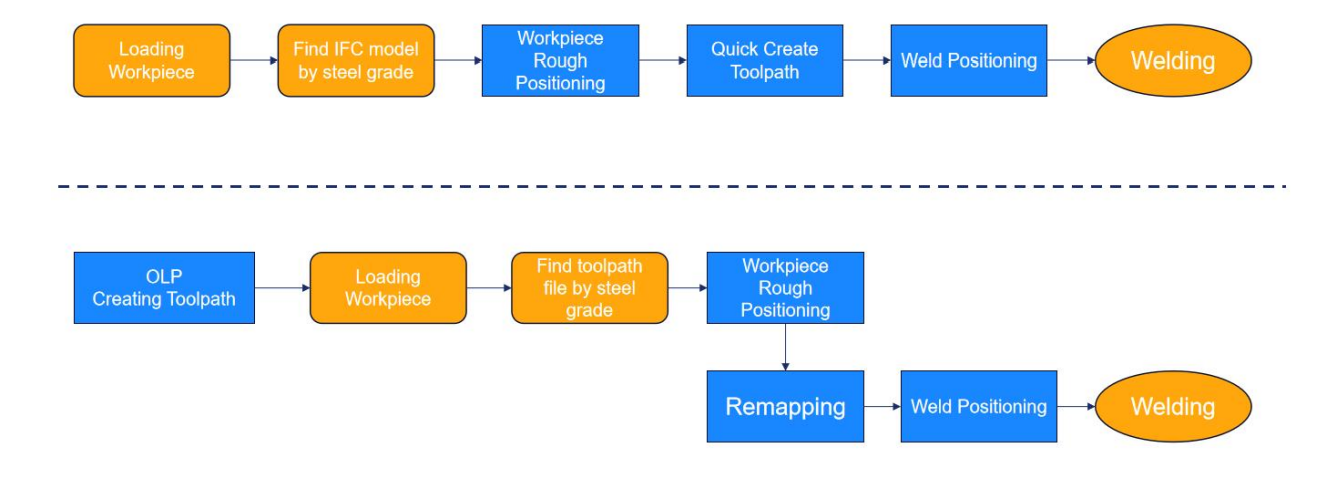
A ±45° bevel capability ensures that the edges are perfectly prepared for full-penetration welds. Because the laser is controlled by CNC precision, the bevel angle remains consistent to within fractions of a degree over a 12-meter beam, something human operators simply cannot replicate. This consistency reduces weld wire consumption and ensures that automated welding robots can perform their tasks without constant adjustments for fit-up gaps.
Heavy-Duty I-Beam Profiling: Scaling for the Wind Sector
Wind turbine towers are not just simple tubes; they require complex internal structures, door frames, and massive base flanges. The “Heavy-Duty” designation of these laser profilers refers to their ability to handle workpieces that can weigh several tons.
A standard laser cutter struggles with the physical dimensions and weight of an I-beam used in tower support structures. A dedicated I-beam profiler, however, utilizes a combination of heavy-duty rollers, chucks, and 3D sensing technology. In Pune’s fabrication shops, these machines are being configured with beds spanning 12 to 24 meters.
The machine’s ability to “profile” means it can cut holes for electrical conduits, mounting brackets, and ventilation ports across all three faces of an I-beam (the two flanges and the web) in a single setup. The laser’s sensing system automatically compensates for the natural “camber” or “twist” often found in hot-rolled steel beams, ensuring that every cut is geometrically perfect relative to the beam’s actual shape, rather than its theoretical CAD model.
Pune: The Strategic Hub for Renewable Energy Manufacturing
The choice of Pune as the epicenter for this technological deployment is no coincidence. As a nexus for the Indian automotive and heavy engineering sectors, Pune offers a sophisticated supply chain, a skilled workforce, and proximity to major ports like Nhava Sheva.
For wind turbine tower manufacturers, being located in Pune means they are strategically positioned between the steel mills of the east and the high-wind-velocity sites of Gujarat, Maharashtra, and Karnataka. The installation of 20kW laser profilers in the Chakan and Talegaon industrial belts allows local manufacturers to supply high-precision components to global OEMs (Original Equipment Manufacturers) like Vestas, Siemens Gamesa, and GE Renewable Energy.
Furthermore, the “Make in India” initiative has incentivized the local production of these massive towers. By investing in 20kW fiber technology, Pune-based fabricators are moving up the value chain, transitioning from “built-to-print” shops to high-tech engineering partners capable of delivering “Ready-to-Assemble” (RTA) kits for wind farms.
Enhancing Structural Integrity in Wind Turbine Towers
A wind turbine tower is essentially a giant cantilever beam. The stresses at the base are astronomical. The 20kW fiber laser contributes to the tower’s longevity in ways that are often overlooked.
First, the Heat Affected Zone (HAZ) is significantly smaller with a 20kW laser compared to plasma or oxy-fuel. A large HAZ can alter the metallurgy of the steel, making it brittle and prone to fatigue cracking. By keeping the heat localized, the fiber laser preserves the base metal’s properties.
Second, the laser produces a superior edge finish. Micro-cracks or irregularities on a cut edge can act as “stress risers” where cracks begin to form under the vibration of the turbine blades. The smooth, dross-free edge of a 20kW laser cut significantly increases the fatigue life of the tower components. For the ±45° bevels on the circular flanges that connect tower sections, this precision is non-negotiable.
The Economic Equation: Efficiency and ROI
While the capital expenditure for a 20kW heavy-duty laser profiler is significant, the Return on Investment (ROI) is driven by throughput and the elimination of downstream costs.
1. **Processing Speed:** A 20kW laser can cut 20mm carbon steel at speeds four to five times faster than a 6kW system. In a high-volume wind tower production line, this throughput increase is transformative.
2. **Gas Efficiency:** Modern 20kW systems often utilize high-pressure air cutting or “Mix-Gas” technology for thick plates, significantly reducing the cost per meter compared to high-purity Oxygen.
3. **Labor Savings:** By integrating beveling and profiling into one operation, the machine replaces multiple manual stations. This reduces the labor cost and the risk of human error during material handling.
4. **Material Utilization:** Advanced nesting software specifically designed for 3D profiling allows manufacturers to squeeze the maximum number of parts out of every I-beam or plate, reducing scrap in an era of fluctuating steel prices.
Future-Proofing India’s Green Energy Infrastructure
As wind turbines grow taller and blades get longer, the towers must become more robust. We are moving toward 5MW and 7MW onshore turbines that require thicker walls and more complex structural reinforcements. The 20kW laser is the only tool currently capable of meeting these future requirements while maintaining economic viability.
In Pune, the marriage of 20kW fiber laser power with heavy-duty I-beam profiling is more than just an industrial upgrade; it is a critical enabler of the energy transition. By producing towers that are stronger, more precise, and more cost-effective, Indian manufacturers are ensuring that wind energy remains a cornerstone of the nation’s power grid.
The ±45° beveling capability ensures that every weld is a testament to engineering excellence, providing the structural backbone for the thousands of turbines that will dot the Indian landscape in the coming decades. As a fiber laser expert, I see this not just as a machine installation, but as the foundation of a more sustainable and technologically advanced manufacturing future.