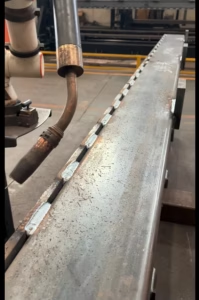
Field Report: High-Power Thermal Processing of Structural H-Beams in Riyadh’s Modular Sector
1. Project Scope and Regional Context
The transition toward Vision 2030 in the Kingdom of Saudi Arabia has catalyzed an unprecedented demand for rapid, high-integrity structural steel fabrication. In Riyadh, the modular construction sector has emerged as the primary vehicle for large-scale infrastructure, including residential complexes and commercial districts. Traditional fabrication workflows—characterized by manual layout, mechanical sawing, and oxygen-fuel beveling—are increasingly insufficient to meet the tolerances required for modular assembly. This report evaluates the deployment of the 20kW H-Beam laser cutting Machine equipped with ±45° beveling capabilities, focusing on its technical integration into the Riyadh construction ecosystem.
2. 20kW Fiber Laser Dynamics in Heavy-Wall Profiles
The integration of a 20kW fiber laser source represents a significant shift in energy density application for structural steel. In the context of H-beams (HEA, HEB, and IPE profiles), the 20kW threshold is critical for maintaining high-speed feed rates through flange thicknesses exceeding 25mm.
From a metallurgical perspective, the 20kW source minimizes the Heat-Affected Zone (HAZ). Traditional plasma or oxy-fuel cutting introduces significant thermal stress, leading to localized hardening and potential embrittlement of the S355JR or S355J2+N steel grades commonly specified in Riyadh’s structural projects. The high-power density of the 20kW laser ensures that the energy is concentrated, allowing for a vaporizing cut that preserves the base metal’s grain structure. This is vital for modular components that undergo high-stress loading in multi-story configurations.
3. Kinematics of ±45° Bevel Cutting
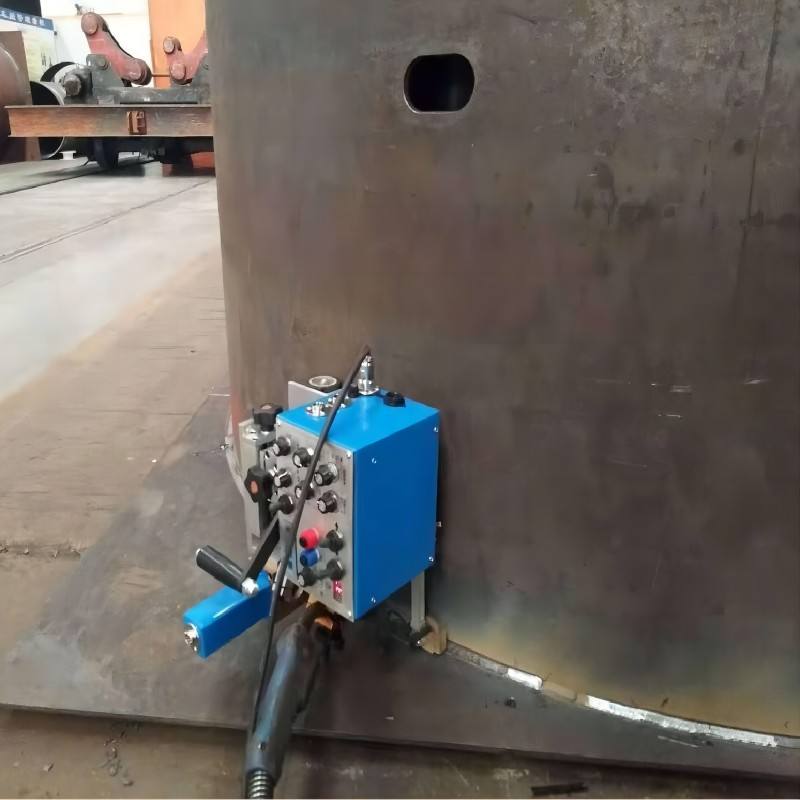
The core technological advantage of this system is the 5-axis or 6-axis robotic cutting head capable of ±45° beveling. In heavy steel processing, the bevel is not merely an aesthetic feature but a functional requirement for Weld Prep (Partial or Full Penetration Grooves).
3.1 Precision Geometry and Weld Preparation
Modular construction relies on the “Kit-of-Parts” philosophy, where H-beams must interface with millimeter-level precision. The ±45° beveling capability allows the machine to execute complex “V”, “Y”, and “K” joints directly on the production line. By automating the beveling process, we eliminate the secondary machining stage—traditionally performed by handheld grinders or portable beveling machines—which is prone to human error and angular inconsistency.
3.2 Compensation for Structural Deformations
H-beams, particularly those sourced in high volumes, often exhibit inherent “camber” or “sweep” (longitudinal bowing). The 20kW H-Beam Laser utilizes advanced 3D laser sensing and mechanical probing to map the beam’s actual geometry before the cut begins. The software then dynamically adjusts the cutting path in real-time. For a ±45° bevel, this compensation is critical; if the head does not account for a 2mm flange deviation, the resulting weld gap will be inconsistent, compromising the structural integrity of the modular unit.
4. Synergy with Modular Construction in Riyadh
Modular construction in Riyadh faces unique challenges, including extreme ambient temperatures and the need for seismic resilience in specific zones. The precision afforded by the 20kW laser system directly addresses these variables.
4.1 Tolerance Management for Interlocking Modules
In modular high-rises, tolerances are cumulative. If an H-beam column is off by 1mm, the tenth module in the stack could be displaced by 10mm. The 20kW laser maintains a positioning accuracy of ±0.05mm and a repeatability of ±0.03mm. The ability to cut bolt holes, cope notches, and 45° bevels in a single setup ensures that when modules are transported to sites in Riyadh, they lock together without on-site rectification, significantly reducing crane idle time.
4.2 Throughput and Economic Efficiency
The Riyadh market operates on tight delivery windows. Our field data indicates that a 20kW H-Beam Laser replaces approximately three separate workstations: the band saw, the drilling line, and the manual beveling station. For a standard 12-meter HEB 300 beam with complex end-cuts and 14 bolt holes, the total processing time is reduced from 45 minutes (traditional) to under 6 minutes. This 85% reduction in cycle time is the primary driver for ROI in high-capacity fabrication shops.
5. Automatic Structural Processing: The “Black Box” Workflow
The machine operates within an automated ecosystem. The integration of “Infeed” and “Outfeed” conveyor systems, coupled with automatic material height detection, allows for near-continuous operation.
5.1 Nesting and Material Utilization
Advanced nesting algorithms for H-beams are significantly more complex than those for flat sheets. The software must account for the beam’s profile, the rotation of the bevel head, and the “kerf” (the width of the cut). By optimizing the sequence of cuts, the system minimizes “drop” (scrap metal). In Riyadh, where steel prices are subject to global supply chain fluctuations, a 5-10% increase in material utilization directly impacts project margins.
5.2 Environmental Adaptability
Operating a 20kW fiber laser in Riyadh requires specific environmental considerations. The system utilizes high-efficiency chillers and pressurized cabinets to protect the optical components from ambient dust and heat. The automatic structural processing unit includes integrated dust extraction and filtration, ensuring that the high-volume vaporization of steel during the 20kW cut does not contaminate the workspace or the machine’s internal optics.
6. Technical Analysis of Weld Quality Post-Laser Cut
A critical technical concern for senior engineers is the weldability of laser-cut edges. Some argue that the smooth, almost polished surface of a laser cut (especially when using Oxygen as a redundant gas) can lead to poor weld adhesion. However, the 20kW system’s high-speed nitrogen-assist cutting produces an oxide-free edge.
When executing a ±45° bevel, the resulting surface roughness (Rz) is significantly lower than that of plasma cutting. This reduces the risk of slag inclusions and porosity in the weld bead. In the modular sector, where many welds are performed by robots in a controlled factory setting, the consistency of the laser-cut bevel is a prerequisite for robotic welding path programming.
7. Conclusion and Engineering Outlook
The deployment of the 20kW H-Beam Laser Cutting Machine with ±45° Bevel Cutting technology represents the current apex of structural steel fabrication. For the Riyadh modular construction market, the benefits are clear: extreme precision, drastic reduction in man-hours, and superior structural integrity.
As we move toward more complex architectural geometries and taller modular structures, the ability to process heavy profiles with the speed and accuracy of a fiber laser becomes a necessity rather than an upgrade. The synergy between high-power optics and multi-axis kinematics allows engineers to design with tighter tolerances, knowing that the fabrication stage can achieve the required fidelity. The 20kW system is not merely a cutting tool; it is a fundamental component of the modern industrialization of construction in the Middle East.
End of Report
Authored by: Senior Laser & Structural Engineering Consultant
Date: October 2023
Location: Riyadh, KSA