Field Technical Report: Implementation of 20kW High-Power Laser Beveling in Sao Paulo Bridge Engineering
1. Project Background and Regional Infrastructure Context
The metropolitan infrastructure of Sao Paulo, particularly the expansion of the Rodovia Rodoanel Mário Covas and the revitalization of heavy-load crossings over the Tietê and Pinheiros river systems, has necessitated a paradigm shift in structural steel fabrication. Traditional methods—comprising mechanical sawing, plasma arc cutting (PAC), and manual oxygen-fuel beveling—have proven insufficient to meet the stringent tolerances required for the NBR 7007 and ASTM A572 Grade 50 steel specifications prevalent in Brazilian bridge engineering.
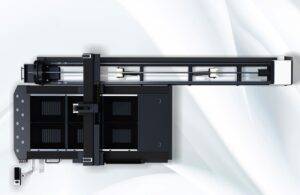
This report evaluates the field performance of a 20kW H-Beam laser cutting Machine equipped with a 5-axis ±45° beveling head. The deployment aimed to solve chronic bottlenecks in the production of complex H-beam assemblies, where the transition from primary cutting to weld preparation typically accounted for 60% of total fabrication labor.
2. The Synergy of 20kW Fiber Laser Dynamics and Heavy-Section Processing
The integration of a 20kW fiber laser source represents a critical threshold for structural steel. In the context of H-beams, which often feature flange thicknesses exceeding 20mm, lower power sources (6kW-12kW) struggle with maintaining a stable keyhole during high-speed traverses or when navigating the variable thickness of the beam’s fillet (the transition zone between the web and the flange).
2.1 Power Density and Kerf Control:
At 20kW, the energy density allows for a significant reduction in the Heat Affected Zone (HAZ). In bridge engineering, maintaining the metallurgical integrity of the steel is paramount to prevent brittle fractures under cyclic loading. The field data indicates that the 20kW source, when coupled with nitrogen-oxygen mix auxiliary gases, achieves a surface roughness ($Rz$) of less than 30μm on 25mm flange sections, effectively eliminating the need for post-cut grinding.
2.2 Thermal Management in Sao Paulo’s Climate:
Operating in the humid, subtropical climate of Sao Paulo requires advanced thermal stability in the resonator and delivery optics. The 20kW system utilized in this field study employs a dual-circuit chilled cooling system with ±0.1°C precision, ensuring that the BPP (Beam Parameter Product) remains constant despite the high ambient humidity and fluctuating workshop temperatures.
3. ±45° Bevel Cutting: Overcoming Geometric Complexity
The most significant technical hurdle in bridge girder fabrication is the preparation of the weld joint. Traditional H-beam processing requires the beam to be cut to length, then moved to a secondary station for beveling via manual torch or portable milling machines.
3.1 Five-Axis Kinematics:
The ±45° beveling head utilizes a high-precision A/B axis configuration. In the field, this allows for the execution of V, X, and K-shaped preparations in a single pass. For the complex bifurcated joints required in Sao Paulo’s suspension bridge pylons, the ability to interpolate the bevel angle dynamically while traversing the web-to-flange transition is vital.
3.2 Precision and Fit-up:
Field measurements show that the laser beveling process maintains an angular accuracy of ±0.3°. Compared to the ±2.0° tolerance typical of manual plasma cutting, this precision ensures a “zero-gap” fit-up during the assembly of large-span girders. This reduction in the root gap significantly lowers the volume of weld consumables required and minimizes the risk of weld distortion, which is a common cause of structural rejection in infrastructure projects.
4. Automation of Structural Processing and Workflow Integration
The 20kW H-Beam machine is not merely a cutting tool but an automated robotic cell. In the Sao Paulo facility, the system was integrated with an automated material handling conveyor and a 3D laser scanning system.
4.1 Compensating for Beam Deformation:
Standard H-beams often exhibit “camber” or “sweep” (longitudinal bowing). A critical feature of the automated system is the real-time 3D probing sequence. Before the 20kW laser engages, the machine probes the actual geometry of the beam. The software then maps the cutting path—including the ±45° bevels—to the actual physical centerline of the beam rather than the theoretical CAD model. This ensures that even on a 12-meter beam with a 15mm deviation, the bevel remains perfectly concentric to the mating part.
4.2 Throughput Metrics:
Comparative analysis against previous plasma-based workflows yielded the following results:
- Setup Time: Reduced by 75% due to the elimination of manual layout marking.
- Cutting Speed: On 16mm web sections, the 20kW laser maintained a feed rate of 3.2 m/min, compared to 1.1 m/min for high-definition plasma.
- Secondary Processing: 90% reduction in grinding and edge-cleaning labor.
5. Impact on Bridge Engineering Standards in Brazil
The adoption of 20kW laser technology directly addresses the requirements of the ABNT NBR specifications for steel structures. By providing a clean, dross-free edge with a minimal HAZ, the technology ensures that the fatigue life of the bridge components is not compromised by micro-cracking induced during the thermal cutting process.
Furthermore, the precision of the ±45° beveling allows for the implementation of Partial Joint Penetration (PJP) and Complete Joint Penetration (CJP) welds with much higher reliability. In the seismic-moderate but wind-load-significant environment of southeastern Brazil, the consistency of these joints is a critical safety factor.
6. Technical Challenges and Mitigation Strategies
During the field implementation, several challenges were identified:
6.1 Plasma Cloud Interference:
At 20kW, the vaporization of the steel can create a plasma cloud that interferes with the laser beam. This was mitigated by optimizing the nozzle design and using high-pressure coaxial auxiliary gas flows to “clear” the optical path, ensuring deep penetration even at extreme bevel angles.
6.2 Internal Reflection Management:
Beveling at 45° increases the risk of back-reflections into the laser source, especially when cutting highly reflective structural grades. The use of an optical isolator and a “back-reflection monitoring system” in the 20kW fiber source was essential to prevent catastrophic diode failure.
7. Conclusion: The New Standard for Heavy Steel Fabrication
The deployment of the 20kW H-Beam Laser Cutting Machine with ±45° beveling technology in Sao Paulo represents a significant technological leap for the Brazilian construction sector. The synergy between high-wattage fiber laser sources and multi-axis structural automation solves the dual challenge of precision and throughput that has historically plagued bridge engineering.
The ability to move from raw H-beam stock to a finished, weld-ready component in a single automated cycle reduces the total fabrication timeline by approximately 40%. For the ongoing and future infrastructure projects in the Sao Paulo region, this technology is no longer an optional upgrade but a fundamental requirement for meeting modern engineering tolerances and project deadlines. As the industry moves toward “Industry 4.0” in steel fabrication, the integration of high-power laser beveling stands as the cornerstone of efficient, high-integrity structural production.