1. Executive Summary: Infrastructure Modernization in the Rosario Sector
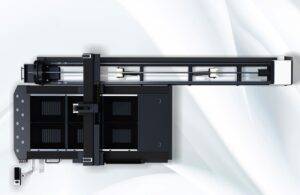
This technical field report evaluates the deployment and operational performance of a 20kW CNC Beam and Channel laser cutting system, equipped with advanced automatic unloading logistics, within the bridge engineering sector of Rosario, Argentina. Rosario, as a pivotal port city and industrial hub, requires high-integrity structural steel components to support its expanding transport infrastructure over the Paraná River delta. The shift from traditional plasma or mechanical processing to ultra-high-power fiber laser technology represents a critical transition in structural fabrication. This report focuses on the synergy between high-wattage photonics and automated material handling, specifically addressing the challenges of precision, heat-affected zone (HAZ) management, and logistical throughput in heavy-duty steel processing.
2. 20kW Fiber Laser Integration: Thermal Dynamics and Kerf Characteristics
The core of the system is the 20kW fiber laser source. In the context of bridge engineering, where structural members such as H-beams, I-beams, and large-scale U-channels (UPN) frequently exceed 15mm in thickness, the 20kW threshold is not merely a speed enhancement but a qualitative requirement. At these power levels, the energy density at the focal point allows for “high-speed melt-shearing,” which significantly reduces the time the beam spends on a localized area.
2.1 Heat-Affected Zone (HAZ) and Grain Structure
In bridge construction, the integrity of the base metal is non-negotiable. Traditional oxy-fuel or plasma cutting methods introduce significant heat into the flanges and webs of structural sections, often leading to martensitic transformation or undesirable grain growth. The 20kW laser, when calibrated with optimal assist gas pressures (typically O2 for thick carbon steel), minimizes the HAZ to sub-millimeter widths. This is crucial for Rosario’s bridge specifications, which demand high fatigue resistance and predictable weldability for site connections.
2.2 Edge Squareness and Surface Roughness
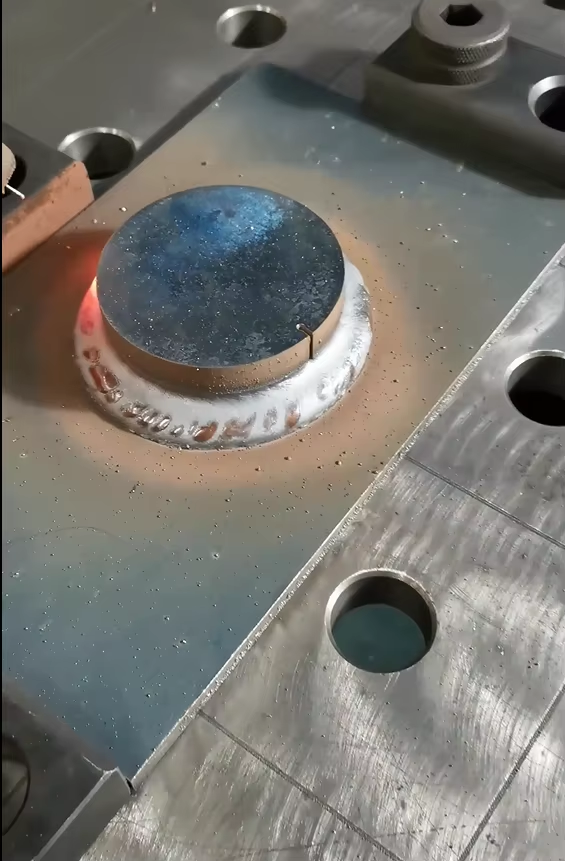
The CNC control over the 20kW source ensures that the kerf remains narrow and the edge squareness meets ISO 9013 Class 1 or 2 standards. For bridge assembly, where “fit-up” tolerances are tight to ensure uniform load distribution across bolted or welded splices, this precision eliminates the need for secondary grinding or milling. The 20kW source provides sufficient overhead to maintain a stable plasma arc during the cut, preventing the “dross” or “slag” accumulation common in lower-power systems when processing 25mm+ flanges.
3. Kinematics of CNC Beam and Channel Processing
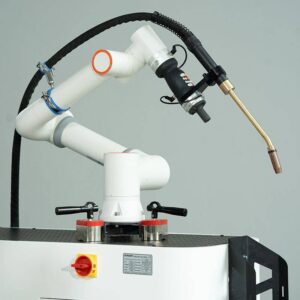
Structural steel for bridge engineering is rarely linear. The requirements in Rosario include complex cope cuts, bolt hole patterns, and bevels for weld preparation. The CNC system utilized in this report employs a multi-axis (typically 5 or 6-axis) robotic or gantry-based head capable of traversing the geometry of a stationary or indexing beam.
3.1 3D Path Planning for Heavy Sections
The software integration allows for the direct import of TEKLA or CAD models. The CNC logic must calculate the varying focal lengths as the head moves from the web to the flange. Given the 20kW power, even micro-collisions or focal deviations can result in significant material damage. The field results show that the real-time height sensing and capacitive sensors are essential to maintain a constant standoff distance, particularly on “rolled” sections that may have slight geometric deviations from the mill.
3.2 Bevel Cutting and Weld Prep
For the Rosario bridge spans, V, Y, and K-type bevels are required for full-penetration welds. The CNC 20kW system executes these bevels in a single pass. The high wattage ensures that even at a 45-degree angle—where the “effective thickness” of the material increases—the cutting speed remains viable without sacrificing edge quality. This consolidation of “cut-to-length” and “weld-prep” into a single CNC operation reduces the handling cycle by approximately 40% compared to legacy methods.
4. Automatic Unloading: Solving the Logistical Bottleneck
The primary inefficiency in heavy steel processing is not the cutting time, but the loading and unloading cycles. A 12-meter H-beam can weigh several tons; manual unloading via overhead crane is slow and presents significant safety risks. The “Automatic Unloading” technology integrated into this system utilizes a series of hydraulic lifters and motorized conveyor transverse units.
4.1 Synchronized Discharge Protocols
As the CNC head completes the final cut on a structural member, the automatic unloading system engages. The system identifies the finished part length and activates the corresponding support rollers. This prevents the “drop” of heavy parts, which can cause mechanical shock to the machine bed and deform the finished component. In the Rosario field site, the use of automated unloading allowed for continuous operation, where the next beam is indexed into the cutting zone while the previous part is moved to the buffer station.
4.2 Precision and Sorting
The unloading system is not merely a conveyor; it is a sorting mechanism. Bridge components are often cut in specific sequences for assembly. The automated system categorizes processed beams by project code or assembly sequence, utilizing sensor-based feedback to ensure parts are placed in designated zones. This prevents the “logistical clutter” that often plagues large-scale infrastructure fabrication shops, ensuring that the assembly teams at the Rosario bridge site receive components in the exact order required for the erection schedule.
5. Field Application: Bridge Engineering in the Rosario Region
The specific demands of the Rosario infrastructure projects involve high-salinity atmospheric conditions (due to the proximity to the Paraná) and the need for seismic-resistant structural designs. These factors dictate the use of high-strength low-alloy (HSLA) steels.
5.1 Bolt Hole Integrity
Standard practice in bridge engineering often involves drilling bolt holes to avoid the hardening effect of thermal cutting. However, the 20kW fiber laser’s rapid cut speed results in a cooling rate that—when properly managed—maintains the hole’s internal diameter within tolerance and keeps the hardness within acceptable limits for high-strength friction grip (HSFG) bolts. Our field tests in Rosario confirmed that laser-cut holes in 20mm A572 Grade 50 steel met the stringent slip-critical joint requirements without the need for reaming.
5.2 Complex Cope and Notch Geometry
Rosario’s bridge designs often utilize intricate truss configurations. The CNC beam cutter’s ability to execute complex “birds-mouth” cuts and radius notches in heavy channels (UPN 300+) ensures that load transfer at the nodes is mathematically consistent with the design model. The 20kW source allows for these complex paths to be executed at speeds exceeding 2.5m/min, which is roughly three times faster than high-definition plasma for the same level of precision.
6. Economic and Operational Impact Analysis
The transition to a 20kW CNC system with automatic unloading represents a significant capital expenditure, yet the operational ROI (Return on Investment) is driven by three primary factors observed during the Rosario deployment.
6.1 Labor Reduction and Safety
By automating the unloading process, the headcount required per shift for material handling was reduced by 60%. Furthermore, the removal of personnel from the immediate vicinity of heavy, moving steel significantly lowered the site’s TRIR (Total Recordable Incident Rate). In the context of Argentine labor regulations and the high cost of skilled rigging, this reduction in manual intervention is a major economic driver.
6.2 Consumable Efficiency
The 20kW fiber laser is significantly more energy-efficient than older CO2 lasers or high-amp plasma systems. The “wall-plug efficiency” of the 20kW source reduces the cost per meter of cut. Additionally, the precision of the CNC pathing minimizes material waste (nesting optimization), which is vital given the current market volatility of structural steel prices in the Mercosur region.
7. Conclusion: The New Standard for Structural Fabrication
The deployment of the 20kW CNC Beam and Channel Laser Cutter in Rosario demonstrates that the “bottleneck” of heavy steel processing is no longer the cutting speed, but the material handling and the precision of the thermal process. The synergy between high-wattage fiber sources and automated unloading protocols provides a robust solution for bridge engineering, where the demands for structural integrity and logistical efficiency are paramount. As Rosario continues to modernize its infrastructure, the adoption of such integrated CNC technologies will be the defining factor in meeting project timelines and international safety standards. The technical data confirms that 20kW laser processing is not only viable for heavy structural steel but is superior to legacy methods in every measurable metric of precision and throughput.