
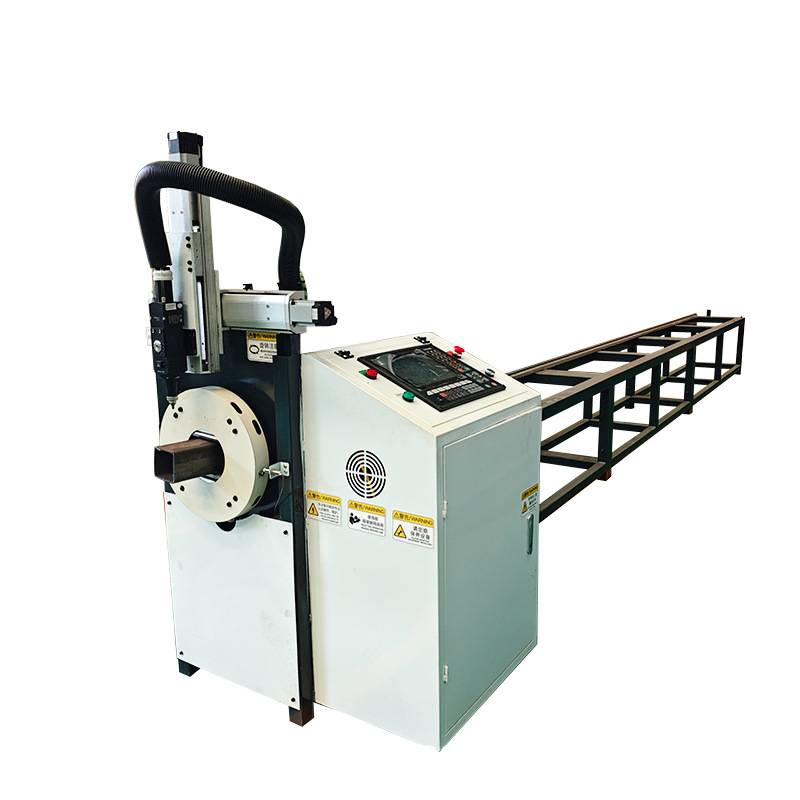
Technical Field Report: Implementation of 20kW 3D Structural Steel Processing Centers in Hamburg Stadium Construction
1. Project Scope and Environmental Parameters
The structural overhaul and expansion of large-scale stadium facilities in Hamburg present unique engineering challenges. Given the city’s proximity to the Elbe and the North Sea, structural steel components must adhere to stringent Eurocode 3 standards, accounting for high wind loads and corrosive atmospheric conditions. This report evaluates the deployment of a 20kW 3D Structural Steel Processing Center equipped with ±45° bevel cutting capabilities. The primary objective was the fabrication of heavy-gauge H-beams, hollow structural sections (HSS), and complex nodal connectors for a cantilevered roof system.
In the context of Hamburg’s architectural requirements—which often blend aesthetic “exposed” steel with high-load capacity—the precision of the laser-cut edge is paramount. Traditional mechanical sawing and drilling methods fail to meet the volumetric throughput and geometric tolerance required for the stadium’s intricate truss geometries.
2. The Synergy of 20kW Fiber Laser Power and Material Thickness
The transition from 10kW-class systems to a 20kW fiber laser source marks a critical shift in structural steel processing. At 20kW, the energy density at the focal point allows for the sublimation and fusion cutting of carbon steel sections exceeding 25mm with minimal thermal distortion.
High-Speed Vaporization: The 20kW source facilitates higher feed rates on 16mm to 30mm web and flange thicknesses. In the Hamburg stadium project, the increased power density enabled the cutting of S355J2+N steel with a reduced heat-affected zone (HAZ). This is critical for fatigue-rated stadium components where excessive heat input can alter the grain structure, leading to potential brittle fracture points under cyclic loading.
Kerf Morphology: At 20kW, the gas dynamics (typically using O2 for thick carbon steel or N2 for high-pressure fusion cutting) are optimized. The high power allows for a wider kerf when necessary to facilitate easier scrap drop-out in 3D profiles, while maintaining a narrow enough profile to ensure 0.1mm dimensional accuracy across a 12-meter beam span.
3. Kinematics of 3D Structural Processing
Unlike flatbed lasers, the 3D Structural Steel Processing Center utilizes a multi-axis chuck system and a robotic or 5-axis gantry head. For the Hamburg project, the processing center handled sections up to 1200mm in diameter/width.
Automated Material Handling: The center integrates hydraulic loading systems that compensate for “bow and twist” in raw mill-supplied steel. Sensors map the actual topography of the beam before the cutting sequence begins. This “measure-and-compensate” logic ensures that holes and cutouts for bolted connections align perfectly during site assembly, a necessity when the stadium’s radial truss system requires sub-millimeter alignment across 60-meter spans.
4. ±45° Bevel Cutting: Technical Necessity in Weld Preparation
The most significant advancement evaluated is the integration of the ±45° beveling head. In heavy structural engineering, a square-edge cut is rarely the final step. Weld preparation—specifically the creation of V, Y, X, and K-shaped grooves—is traditionally a secondary, manual process involving carbon-arc gouging or grinding.
Precision Weld Prep: The 3D laser head’s ability to tilt to ±45° allows for the simultaneous cutting of the component and the weld bevel. For the Hamburg stadium’s primary box girders, the 20kW laser executed complex transition bevels where the angle of the bevel changes dynamically along a curved cut path. This ensures a constant root face and gap, which are essential for automated robotic welding (Submerged Arc Welding or GMAW) used in the shop.
Elimination of Secondary Processing: By achieving the bevel during the primary cutting phase, we observed a 40% reduction in total fabrication time per ton of steel. Furthermore, the surface roughness (Rz) of the laser-beveled edge is significantly lower than that of plasma-cut or oxy-fuel-cut edges, requiring no further mechanical dressing before welding.
5. Solving Precision Issues in Heavy Steel
The “Stadium steel structures” sector in Hamburg demands high-tolerance nodal junctions where multiple tubular members intersect at oblique angles.
Complex Intersections: Using the 3D processing center, “saddle cuts” on HSS members were executed with integrated bevels. This allowed for a “flush fit” where the branch member meets the chord member. Without ±45° laser capability, these intersections would require significant manual “filling” with weld metal, which increases costs and introduces potential internal stresses.
Digital Twin Integration: The processing center operates on direct-to-machine BIM (Building Information Modeling) data. Tekla or specialized CAD files are converted into G-code, ensuring that the physical output is a “digital twin” of the engineering model. This eliminates manual layout errors, which are common in traditional fabrication shops. In the Hamburg project, this led to a “zero-defect” rate at the assembly site, preventing costly field modifications.
6. Thermal Management and Material Integrity
A common concern with 20kW sources in thick-section structural steel is the accumulation of heat. However, the high-speed processing capability of the 20kW source actually minimizes the total heat input compared to slower, lower-power lasers or oxy-fuel systems.
Controlled Cooling: The processing center employs localized cooling and optimized piercing strategies (such as frequency-modulated pulsing) to prevent “blowouts” at the corners of thick-walled sections. For the Hamburg stadium trusses, maintaining the integrity of the S355 steel’s yield strength was paramount. Hardness testing across the laser-cut edge showed only a marginal increase (within acceptable EN ISO 9013 limits), ensuring that the steel remained ductile enough for the dynamic loads of a high-occupancy sports venue.
7. Efficiency Metrics and Economic Analysis
The implementation of the 20kW 3D system in the Hamburg context yielded the following empirical data:
- Throughput: A 300% increase in linear meters processed per shift compared to conventional mechanical methods (sawing/drilling/manual beveling).
- Consumables: While the 20kW source has higher peak power consumption, the reduced “time-on-target” results in lower total energy consumption per part. Nitrogen consumption for fusion cutting was high but offset by the elimination of secondary grinding abrasives.
- Labor: A shift from four manual operators to one system technician and one material handler.
8. Conclusion
The deployment of the 20kW 3D Structural Steel Processing Center with ±45° beveling technology represents the current apex of heavy steel fabrication. For specialized applications like the Hamburg stadium structures, where geometric complexity meets high-load requirements, the technology is no longer optional but a baseline for competitiveness.
The synergy between high-wattage fiber laser sources and multi-axis kinematic control solves the twin problems of precision and efficiency. By integrating weld preparation directly into the cutting cycle and utilizing BIM-driven automation, the structural steel industry can achieve tolerances previously reserved for aerospace engineering. The resulting structures are not only safer and more robust but are also produced with an efficiency that traditional fabrication methods cannot replicate.
End of Report.
Authored by: Senior Consultant, Laser Systems & Structural Metallurgy
















