The Dawn of High-Power Fiber Lasers in Jakarta’s Infrastructure
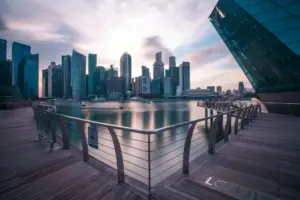
Jakarta is currently witnessing an unprecedented transformation. As the city grapples with the demands of rapid urbanization and the logistical complexities of large-scale infrastructure projects like the MRT expansions and high-rise modular residential units, the speed of construction has become the primary KPI for developers. Traditional methods of steel fabrication—plasma cutting, mechanical sawing, and manual drilling—are increasingly viewed as the “weak links” in the supply chain.
Enter the 20kW fiber laser. Just five years ago, a 6kW or 10kW laser was considered the industry standard for thick plate cutting. However, the jump to 20kW is not just a linear increase in power; it is a fundamental shift in capability. In Jakarta’s industrial zones, where floor space is premium and labor costs for skilled welders are rising, the ability to process thick structural steel (up to 50mm or more) with a single machine is revolutionary. The 20kW source provides the photon density required to “vaporize” steel with such efficiency that the Heat Affected Zone (HAZ) is virtually eliminated, ensuring the structural integrity of the steel—a critical requirement for seismic-prone regions like Indonesia.
3D Processing: Beyond the Flatbed
Traditional laser cutters are confined to X and Y axes, limiting them to flat sheets. However, modular construction relies on H-beams, I-beams, C-channels, and hollow structural sections (HSS). A 3D Structural Steel Processing Center utilizes a multi-axis head and a rotary chuck system—or often a robotic arm configuration—to move the laser beam around a stationary or rotating profile.
For a modular construction project in Jakarta, this means a 12-meter H-beam can be loaded onto the machine, and within minutes, it emerges with all bolt holes, notches, and complex cutouts completed. The precision is measured in microns, not millimeters. This level of accuracy is what allows “Plug-and-Play” construction. When these steel components are shipped from a Jakarta workshop to a construction site in the city center or even to the new capital project (IKN), they fit together perfectly. There is no on-site grinding, no “forcing” beams into place, and no costly delays.
The Game Changer: ±45° Bevel Cutting for Weld Preparation
In the world of structural engineering, the joint is the most critical point of failure. To ensure a deep, penetrative weld, the edges of the steel must be beveled. Historically, this was a secondary process: after a beam was cut to length, a technician would use a hand-held grinder or a dedicated bevelling machine to create a V, Y, K, or X-shaped groove.
The 20kW 3D Processing Center integrates this into the primary cutting cycle. With a ±45° tilting head, the laser can cut the profile and the bevel simultaneously. This is particularly vital for Jakarta’s modular industry, which often employs Heavy Steel Frames (HSF). By providing a clean, oxide-free bevel at exactly 45 degrees, the laser prepares the piece for immediate robotic welding. This eliminates hundreds of man-hours per project and significantly reduces the consumption of welding wire, as the fit-up is tighter and more consistent.
Meeting the Demands of Modular Construction
Modular construction is essentially “manufacturing” a building. It requires a manufacturing mindset: standardization, repeatability, and speed. The 20kW laser fits this ethos perfectly. Because the machine is driven by CAD/CAM software, it can be integrated directly into Building Information Modeling (BIM) workflows.
When a Jakarta-based architect updates a structural design in Revit or Tekla, the changes can be pushed directly to the laser’s nesting software. The 20kW laser then executes these changes across hundreds of components with zero downtime for re-tooling. This flexibility is what allows Jakarta’s modular firms to pivot between different project types—from emergency healthcare facilities to luxury residential modules—using the same hardware.
Operating in Jakarta’s Tropical Climate: Technical Considerations
An expert perspective on 20kW lasers in Jakarta would be incomplete without addressing the environmental challenges. Jakarta is hot and extremely humid. For a high-power fiber laser, these conditions are hostile. A 20kW laser source generates significant heat and is sensitive to ambient humidity which can cause condensation on optical components.
Modern 3D processing centers installed in Jakarta are now equipped with dual-circuit industrial chillers and climate-controlled cabinets for the laser source and electrical components. The “Jakarta-ready” 20kW system must include specialized air filtration to handle the local dust and salinity if located near the Tanjung Priok port area. Furthermore, given the occasional instability of the local power grid, high-capacity voltage stabilizers and UPS systems are non-negotiable to protect the multi-million dollar investment from surges and sags.
The Economic Impact and ROI for Indonesian Fabricators
The capital expenditure (CAPEX) for a 20kW 3D laser system is significant. However, the Return on Investment (ROI) for Jakarta fabricators is driven by three factors: throughput, material savings, and labor reallocation.
1. **Throughput:** A 20kW laser cuts 20mm carbon steel roughly 3 to 4 times faster than a 6kW laser. This allows a shop to quadruple its output without increasing its footprint.
2. **Material Savings:** Advanced nesting algorithms specifically designed for 3D profiles minimize “remnants.” In a country where steel prices can fluctuate based on global imports, saving 5-10% on raw material is a direct boost to the bottom line.
3. **Labor:** With the shortage of high-end certified welders in the region, using the laser to perform the “grunt work” of beveling and hole-drilling allows the skilled workforce to focus on high-value assembly and finishing.
The Future: Automation and the Smart Factory
As Jakarta pushes toward “Industry 4.0,” the 20kW 3D processing center is becoming the heart of the smart factory. We are seeing these machines integrated with automated loading and unloading systems. Bundles of raw steel beams are placed on a loading rack, and the system automatically feeds, measures, cuts, bevels, and sorts the finished parts.
For modular construction, this means the “factory-built” home or office is no longer a dream but a high-speed reality. The data collected by these machines—cutting time, gas consumption, and part count—allows Jakarta’s business owners to bid on projects with surgical precision. They know exactly what their costs are, and they know they can deliver on time.
Conclusion
The introduction of 20kW 3D structural steel processing centers with ±45° beveling is a transformative milestone for Indonesia’s construction landscape. In a city as dynamic and demanding as Jakarta, the ability to fuse high-power physics with 3D mechanical precision is the key to unlocking the full potential of modular construction. By reducing the time from “blueprints to beams,” this technology is not just cutting steel; it is building the foundation for a more efficient, sustainable, and architecturally ambitious Indonesia. For the structural steel expert, the message is clear: the future of fabrication is high-power, multi-dimensional, and it is happening right now in Jakarta.