The Dawn of Ultra-High-Power Fiber Lasers in Structural Steel
The structural steel industry has long been defined by heavy machinery, high labor costs, and significant material waste. However, the advent of the 20kW fiber laser has fundamentally altered the physics of steel fabrication. As an expert in laser systems, I have witnessed the evolution from 4kW systems—suitable for thin sheets—to the current 20kW behemoths capable of piercing and profiling structural steel up to 50mm thick with surgical precision.
In the context of Rosario’s industrial landscape, a 20kW system is not just about raw power; it is about “brightness” and “power density.” At 20,000 watts, the laser beam can maintain a stable keyhole effect even in thick-walled I-beams and H-sections. The fiber laser’s wavelength (typically around 1.07 microns) allows for high absorption rates in carbon steel, translating to cutting speeds that are four to five times faster than traditional plasma or oxy-fuel systems. This speed is essential for the modular construction industry, where project timelines are compressed and the “time-to-market” for a building module is the primary competitive metric.
3D Processing: Beyond the Flatbed
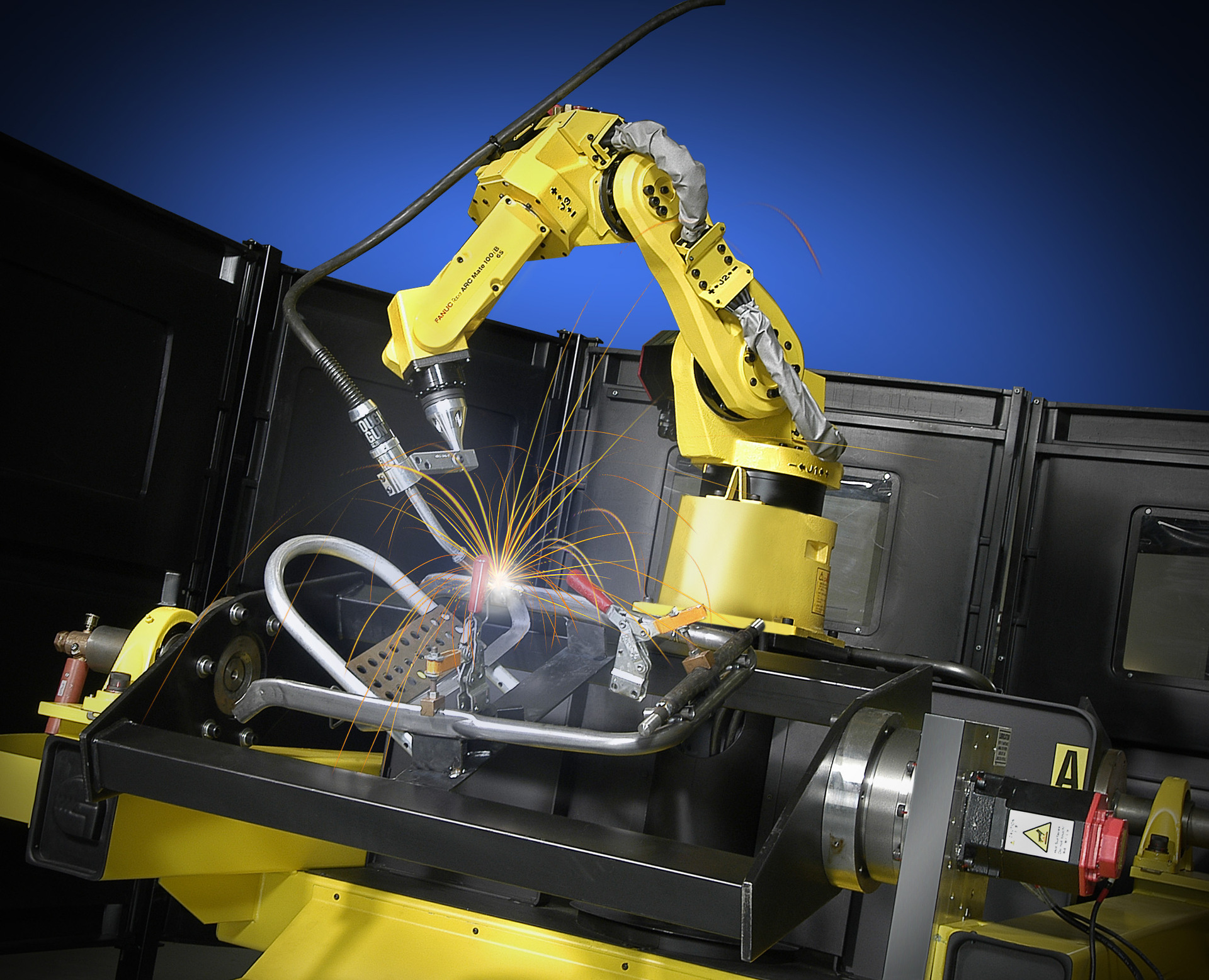
Traditional laser cutting is often associated with flat plate processing. However, a 3D Structural Steel Processing Center utilizes a multi-axis head—often a 5-axis or 6-axis robotic configuration—capable of moving around a stationary or rotating workpiece. This allows for the complex geometry required in modern architecture.
In modular construction, we deal with Hollow Structural Sections (HSS), C-channels, and wide-flange beams. These components require “bird-mouth” cuts, miter joints, and precision bolt holes on multiple faces. A 3D laser system can execute a complex bevel cut for weld preparation in a single pass. By integrating the beveling process directly into the cutting cycle, we eliminate the need for secondary grinding or manual edge preparation. For a facility in Rosario, this means that a beam arrives as raw stock and leaves as a finished component, ready for immediate assembly into a modular frame, with every bolt hole perfectly aligned to within ±0.1mm.
Zero-Waste Nesting: The Economics of Sustainability
One of the most significant challenges in structural engineering is “drop”—the scrap material left over after a beam is cut. In a traditional shop, 10% to 15% material waste is common. The implementation of Zero-Waste Nesting software within the 20kW center changes the financial equation of the project.
Zero-waste nesting utilizes advanced algorithms to “common-line” cut adjacent parts, sharing a single laser path between two components. Furthermore, the software can nest smaller components (such as gusset plates or connection brackets) within the “windows” or scrap areas of larger beams. In Rosario’s modular construction projects, where steel prices are subject to global market volatility, reclaiming 10% of material through intelligent nesting can be the difference between a profitable project and a loss. This isn’t just about saving money; it is about the “Green Steel” initiative. By minimizing waste at the source, the carbon intensity per square meter of the final modular building is significantly reduced.
Rosario: A Strategic Hub for Modular Innovation
Rosario, Argentina, is uniquely positioned to host such a high-tech center. As a critical port city on the Paraná River and a nexus of the country’s metallurgical tradition, it possesses the logistics chain necessary to move large-scale modular units. The proximity to major steel producers like Acindar and Ternium provides a steady supply of raw materials, while the local engineering talent from the National University of Rosario (UNR) ensures a workforce capable of managing complex CAD/CAM environments.
The deployment of a 20kW 3D laser center here serves as a catalyst for a “Construction 4.0” ecosystem. It allows local firms to move away from “on-site” construction—which is often plagued by weather delays and quality inconsistencies—toward “off-site” manufacturing. In this model, the Rosario facility acts as a precision factory, churning out the skeletal structures of hospitals, schools, and high-density housing that can be shipped via the river or highway networks to their final destinations across the Southern Cone.
Precision Engineering for Modular Assembly
The “Modular” in modular construction implies that parts must fit together like LEGO blocks. If a 12-meter structural beam is off by 5mm, the entire stack of modules will be out of plumb, leading to catastrophic structural failure or expensive on-site rework.
The 20kW fiber laser solves this through thermal control and mechanical accuracy. Fiber lasers have a much smaller heat-affected zone (HAZ) compared to plasma cutting. This means the metallurgical properties of the steel remain intact near the cut edge, and more importantly, the beam does not warp or distort due to excessive heat. When we cut a series of interlocking joints for a modular unit, we are relying on the laser’s ability to maintain dimensional stability across a 12-meter length. The 3D processing center uses integrated laser scanning to compensate for any inherent “bow” or “twist” in the raw mill-supplied steel, adjusting the cutting path in real-time to ensure the final geometry is perfect.
Technical Integration and Digital Twin Workflow
As an expert, I emphasize that the hardware is only half the story. The 20kW center in Rosario operates within a “Digital Twin” framework. The process begins with a BIM (Building Information Modeling) file. This 3D model is fed directly into the laser’s nesting software.
We can simulate the entire cutting process in a virtual environment before the laser even touches the steel. This prevents collisions of the 3D head and optimizes the cutting sequence to manage heat dissipation. For modular construction, this digital thread is vital. Each part can be laser-etched with a QR code during the cutting process, containing instructions for the assembly robot or the welding team. This traceability ensures that every component in the modular chain is accounted for, from the moment it is a 20kW beam of light in Rosario to its final placement in a skyscraper in Buenos Aires or a mining camp in the Andes.
The Future of Structural Steel Fabrication
Looking forward, the scaling of laser power will likely continue, but the 20kW threshold represents a “sweet spot” for structural steel. It provides enough power for the heaviest industrial sections while remaining efficient enough for high-speed work on lighter gauge modules.
The 20kW 3D Structural Steel Processing Center with Zero-Waste Nesting is more than a machine; it is a fundamental shift in how we conceive of the built environment. By combining the industrial muscle of Rosario with the precision of fiber laser technology, we are entering an era where buildings are manufactured with the same rigor as aerospace components. This transition to modularity, powered by laser precision, is the most viable path toward solving the global housing crisis and meeting the stringent environmental targets of the 21st century. The zero-waste philosophy, enabled by the 20kW laser, ensures that we are not just building faster and better, but also more responsibly.