The 20kW Revolution: Redefining Structural Cutting Speeds
In the realm of fiber lasers, power is not merely a measure of speed; it is a measure of capability. For decades, structural steel was the domain of plasma cutting or mechanical sawing and drilling. While reliable, these methods lacked the finesse required for the complex geometries demanded by modern modular architecture. The introduction of the 20kW fiber laser source changes the physics of the cut.
At 20,000 watts, the energy density at the focal point is immense. This power level allows for “high-speed fusion cutting,” where the laser melts the steel and a high-pressure assist gas (typically nitrogen or oxygen) blows the molten material away. For Edmonton-based fabricators dealing with heavy-gauge structural members—such as 1-inch thick flanges on wide-flange beams—the 20kW source maintains a feed rate that makes 10kW systems look pedestrian. This speed reduces the Heat Affected Zone (HAZ), ensuring that the structural integrity of the Canadian-sourced steel remains uncompromised by excessive thermal cycling.
Furthermore, the 20kW threshold allows for “pierce-on-the-fly” capabilities. In modular construction, where a single frame may require hundreds of bolt holes and slot attachments, the ability to pierce thick plate instantaneously significantly reduces the overall cycle time per ton of steel.
3D Kinematics and 5-Axis Precision
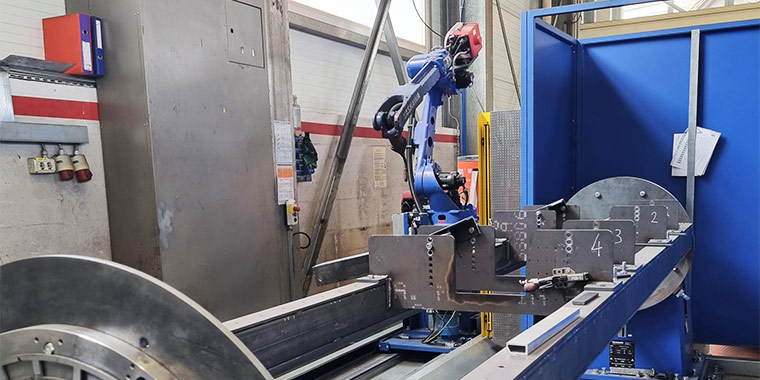
Structural steel is rarely flat. To process I-beams, H-beams, C-channels, and Square Hollow Sections (SHS), a standard 2D laser bed is insufficient. The 3D Structural Steel Processing Center utilizes a sophisticated 5-axis cutting head capable of rotating and tilting around the workpiece.
In the context of Edmonton’s modular builders, this 3D capability is essential for creating complex bevels for weld preparations. Traditionally, a welder would spend hours grinding edges to create a V-groove or J-groove. The 20kW 3D laser performs these bevel cuts during the primary processing phase. When the steel reaches the assembly floor, the fit-up is perfect. This “tab-and-slot” geometry—where parts interlock like a puzzle—eliminates the need for expensive jigs and fixtures, drastically reducing the man-hours required for fit-up and welding.
Zero-Waste Nesting: The Economics of Sustainability
In an era of volatile steel prices, material utilization is the difference between a profitable project and a loss. Zero-waste nesting software represents the “brain” of the 20kW laser center. This software utilizes advanced heuristics to arrange parts on a length of structural steel with maximal density.
Traditional “linear nesting” often leaves “drops” or “remnants”—short pieces of beam that are too small for primary use but too expensive to simply scrap. The zero-waste approach utilizes “Common Line Cutting,” where a single laser pass creates the edge for two adjacent parts. Additionally, the software can identify small components needed for a project (such as gussets or base plates) and “nest” them into the windows or web-spaces of larger beams that would otherwise be discarded as scrap.
For Edmonton’s industrial modular sector—which often produces large-scale pipe racks and housing modules—saving even 5% in material across a 10,000-ton project translates to hundreds of thousands of dollars in direct cost savings and a significant reduction in the carbon footprint of the build.
The Edmonton Context: Logistics and Local Industry
Edmonton is uniquely positioned as a hub for modular construction. Serving the oil sands to the north and the green energy transition across the prairies, the city requires infrastructure that can be built in a controlled environment and shipped to remote sites.
The 20kW 3D laser center addresses the “Edmonton Challenge”: the need to compress fabrication schedules into short summer windows or prepare massive modules indoors during the sub-zero winters. By automating the most labor-intensive parts of the fabrication process—marking, drilling, sawing, and beveling—local firms can compete with international fabricators while maintaining the high quality mandated by Canadian building codes (such as CSA S16).
Moreover, the precision of laser cutting ensures that modules manufactured in South Edmonton will align perfectly with those manufactured in Nisku when they meet on-site in Fort McMurray or the Port of Prince Rupert. This interchangeability is the bedrock of modular efficiency.
Digital Twin Integration and BIM Workflow
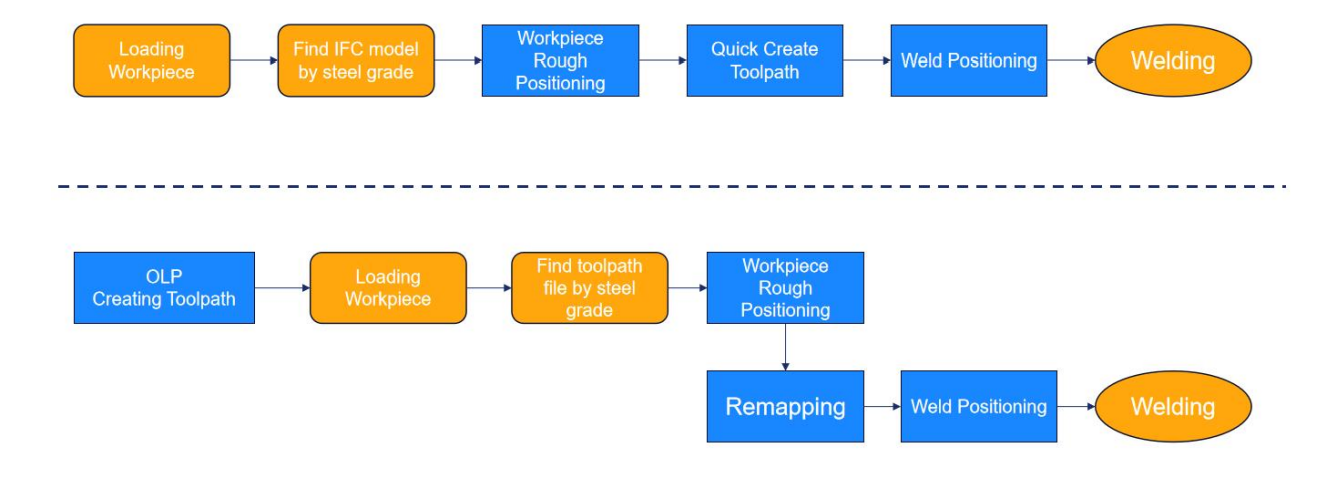
The 20kW laser center does not operate in a vacuum. It is the physical manifestation of a digital workflow. Modern modular construction relies on Building Information Modeling (BIM). Software like Tekla Structures or Revit generates 3D models of the entire building.
These models are exported directly to the laser’s controller. The “Expert System” within the laser center interprets the CAD data, automatically assigning the correct cutting parameters for the specific grade of steel (e.g., G40.21 350W). This eliminates human error in the transcription of blueprints to the shop floor. If a design change occurs in the morning, the laser can be processing the updated geometry by the afternoon. This agility is critical in the fast-paced world of modular development, where design-build contracts are the norm.
Environmental Impact and the Green Building Mandate
As the construction industry moves toward Net-Zero, the efficiency of the 20kW fiber laser becomes a strategic asset. Fiber lasers are significantly more energy-efficient than older CO2 lasers or plasma systems. They convert electrical energy into light with high wall-plug efficiency, and because the cutting process is so rapid, the energy consumed per meter of cut is remarkably low.
The “Zero-Waste” aspect further aligns with LEED certification and other green building standards. By minimizing the raw material required and reducing the amount of scrap steel that needs to be transported and re-melted, the Edmonton modular industry can market itself as a leader in sustainable heavy manufacturing. The reduction in secondary processes—like manual cleaning of dross or mechanical deburring—also reduces the noise and dust pollution within the fabrication facility, improving the work environment for the local labor force.
The Future: AI and Autonomous Processing
Looking ahead, the 20kW 3D centers in Edmonton are beginning to incorporate Artificial Intelligence (AI). AI-driven vision systems can now scan a raw beam as it enters the machine, identifying any slight deviations in the mill-supplied material (such as a slight twist or camber in the beam) and adjusting the cutting path in real-time to ensure the finished part is perfectly within tolerance.
This level of “autonomous fabrication” is the goal for the next generation of modular construction. As these systems become more prevalent in Edmonton’s industrial zones, the city will solidify its reputation not just as a resource hub, but as a high-tech manufacturing powerhouse capable of delivering the world’s most complex structural modules with surgical precision and zero waste.
Conclusion
The deployment of a 20kW 3D Structural Steel Processing Center is more than a capital investment; it is a commitment to the future of construction. For Edmonton’s modular industry, this technology provides the tools to build faster, cleaner, and more accurately than ever before. By mastering the intersection of high-power photonics and intelligent nesting, local fabricators are not just cutting steel—they are shaping the architecture of the 21st century.