Field Technical Report: 20kW 3D Structural Steel Processing Center Implementation
1. Executive Summary and Site Context
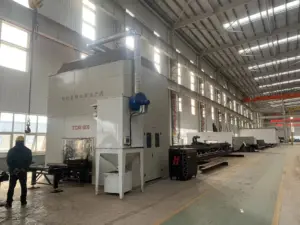
This report details the technical deployment and operational performance of a 20kW 3D Structural Steel Processing Center at a major airport construction site in Rayong, Thailand. The project involves the fabrication of complex canopy structures, terminal frames, and baggage handling support systems. Given the proximity to the coast and the high-load requirements of airport infrastructure, the use of high-tensile structural steel (primarily S355JR and S460QL) necessitated a shift from traditional mechanical processing to high-power fiber laser integration. The primary focus of this evaluation is the synergy between 20kW power density and “Zero-Waste” nesting algorithms in optimizing material yield and joint precision.
2. Theoretical Framework of 20kW Fiber Laser Integration
The transition to a 20kW fiber laser source represents a significant deviation from the standard 6kW to 12kW systems used in light-to-medium structural work. In the Rayong project, the 20kW output allows for the efficient processing of thick-walled H-beams (up to 25mm wall thickness) and large-diameter hollow sections without the thermal deformation associated with plasma cutting.
The high power density enables a “melt-and-blow” mechanism with significantly higher gas pressures, resulting in a narrower Kerf width and a reduced Heat Affected Zone (HAZ). In structural engineering, minimizing the HAZ is critical for maintaining the metallurgical integrity of the steel, especially in seismic-prone zones or high-vibration environments like airports. The 20kW source provides the necessary photon flux to maintain stable cutting speeds of 1.5–2.0 m/min on 20mm carbon steel, ensuring that production timelines meet the rigorous schedules of international aviation infrastructure projects.
3. 3D Kinematics and Five-Axis Beveling
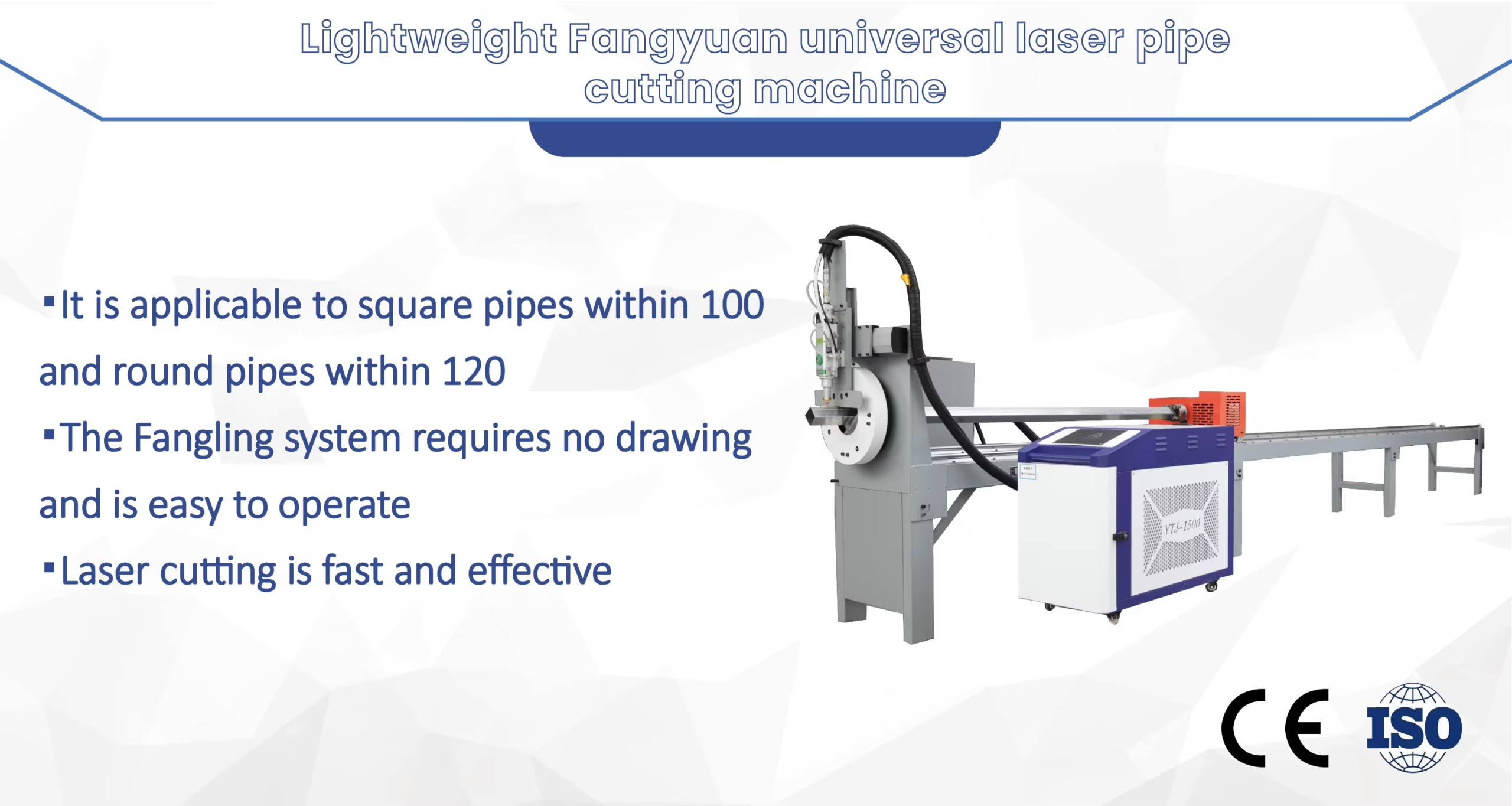
The structural demands of the Rayong airport terminal include organic, non-linear geometries that require complex intersection cuts. The 3D processing center utilizes a five-axis laser head capable of ±45-degree beveling. This functionality is essential for preparing welding grooves (V, X, and K types) directly on the laser bed.
By integrating the beveling process into the primary cutting cycle, the center eliminates secondary processing steps. In our field observations, the spatial accuracy of the 3D head, governed by a high-precision CNC controller, maintained a positioning tolerance of ±0.05mm across a 12-meter workpiece. This precision is vital for the “bolt-together” assembly strategy employed at the site, where manual grinding or onsite rectification is prohibited by strict quality control protocols.
4. Analysis of Zero-Waste Nesting Technology
One of the most significant advancements evaluated in this report is the “Zero-Waste” (or Zero-Tailings) nesting system. Traditional structural laser cutters require a minimum “dead zone” for the chuck to grip the material, often resulting in 500mm to 1000mm of scrap per beam. Given the cost of high-grade structural steel in the current market, these losses are unacceptable.
4.1. Mechanical Mechanism of Zero-Waste Cutting
The system at the Rayong site employs a multi-chuck configuration—specifically a four-chuck synchronization system. This allows the laser head to cut between the chucks. As the beam progresses through the processing area, the chucks dynamically shift positions, passing the workpiece from one to another. This ensures that the laser can reach the absolute end of the raw material.
During our testing phase, the system processed a 12,000mm H-beam into six distinct components with a total residual scrap of less than 50mm. This represents a material utilization increase of approximately 8-12% compared to standard three-chuck systems. For the scale of the Rayong airport project, this efficiency translates to several hundred tons of steel saved over the project lifecycle.
5. Application in Airport Infrastructure: Rayong Site Specifics
The Rayong project’s architectural design features a “flowing” roofline, necessitating hundreds of unique tubular and H-beam junctions. The 3D processing center facilitates the following specific applications:
- Truss Intersections: Cutting complex “bird-mouth” joints in circular hollow sections (CHS) and rectangular hollow sections (RHS) to allow for flush fitment and automated welding.
- Base Plate Integration: Precise cutting of bolt holes and slotting in heavy columns to match pre-cast concrete anchors with sub-millimeter accuracy.
- Aesthetic Facade Supports: Processing of tapered beams and curved sections that serve both structural and architectural functions.
The environmental conditions in Rayong—characterized by high humidity and saline air—require that the processing center be equipped with a specialized climate-controlled cabinet for the laser source and optics. The 20kW source is particularly sensitive to internal reflections; thus, the use of a back-reflection isolation system is mandatory when processing the galvanized or primed steels frequently used in airport construction.
6. Software Integration and BIM Synchronization
The efficacy of the hardware is contingent upon its integration with Building Information Modeling (BIM) software, specifically Tekla Structures. The 3D Processing Center utilizes a direct-to-machine interface where .NC1 or .IFC files are imported into the nesting engine. This eliminates the risk of human error in transcribing coordinates.
The Zero-Waste Nesting algorithm calculates the optimal sequence of cuts not only based on material length but also based on the structural weight distribution within the chucks to prevent sagging or vibration during high-speed 20kW cutting. Our data shows that the software-calculated toolpaths reduced the total “beam-on” time by 15% through optimized pathing and rapid-traverse movements between cut segments.
7. Operational Challenges and Mitigations
Operating a 20kW system in a structural steel environment presents unique challenges:
7.1. Plasma Cloud Suppression
At 20kW, the potential for plasma cloud formation during nitrogen-assisted cutting can interfere with the beam. The system in Rayong utilizes a high-pressure coaxial nozzle design that maintains a laminar flow of assist gas, effectively suppressing plasma and ensuring consistent penetration.
7.2. Thermal Management
Continuous cutting of heavy structural sections generates significant heat. The processing center employs a dual-circuit water cooling system for the laser head and the fiber delivery cable. In the 35°C+ ambient temperatures of Rayong, the chiller capacity was upgraded to 60kW to ensure the laser source maintained a stable operating temperature of 22°C.
8. Comparative Efficiency Metrics
The following table summarizes the performance of the 20kW 3D Structural Center versus traditional mechanical methods observed at the Rayong site:
| Metric | Mechanical (Saw/Drill) | 20kW 3D Laser Center |
|---|---|---|
| Processing Time (12m H-Beam) | 145 Minutes | 18 Minutes |
| Dimensional Tolerance | ±2.0 mm | ±0.2 mm |
| Material Waste (per 12m) | ~600 mm | <50 mm |
| Secondary Deburring Required | Yes | No |
9. Conclusion
The implementation of the 20kW 3D Structural Steel Processing Center at the Rayong airport project confirms that high-power laser technology, when coupled with Zero-Waste Nesting, is the most efficient method for large-scale infrastructure fabrication. The ability to handle heavy structural sections with high spatial precision, while simultaneously eliminating material waste, addresses the two most significant cost drivers in steel construction: labor and raw material. As the project progresses, the data suggests that the capital expenditure on the 20kW system will be amortized significantly faster than lower-power alternatives due to the sheer volume of high-precision throughput required by the aviation sector’s stringent standards.
Field Engineer: Senior Laser Systems Specialist
Date: October 2023
Location: Rayong Project Site Office