The Dawn of High-Power Fiber Lasers in Indian Infrastructure
The landscape of structural steel fabrication in India is undergoing a radical transformation, driven by the government’s aggressive push for railway modernization. At the heart of this revolution is Pune, an industrial powerhouse that has transitioned from an automotive hub to a center for high-end engineering and infrastructure technology. The introduction of the 20kW 3D Structural Steel Processing Center represents the pinnacle of this evolution. As a fiber laser expert, I have witnessed the transition from CO2 and plasma cutting to low-power fiber, but the move to 20kW is a “force multiplier” that changes the fundamental economics of steel processing.
A 20kW fiber laser source provides a power density that allows for the “vaporization” of thick carbon steel rather than mere melting. For the railway sector, which relies on massive structural sections to support bridges and station gantries, this means the ability to cut through 50mm of mild steel with a clean, weld-ready edge. In the context of Pune’s manufacturing ecosystem, this machine serves as a beacon of the “Make in India” initiative, allowing local firms to compete with international standards in both speed and quality.
Understanding the 3D Cutting Advantage for Structural Steel
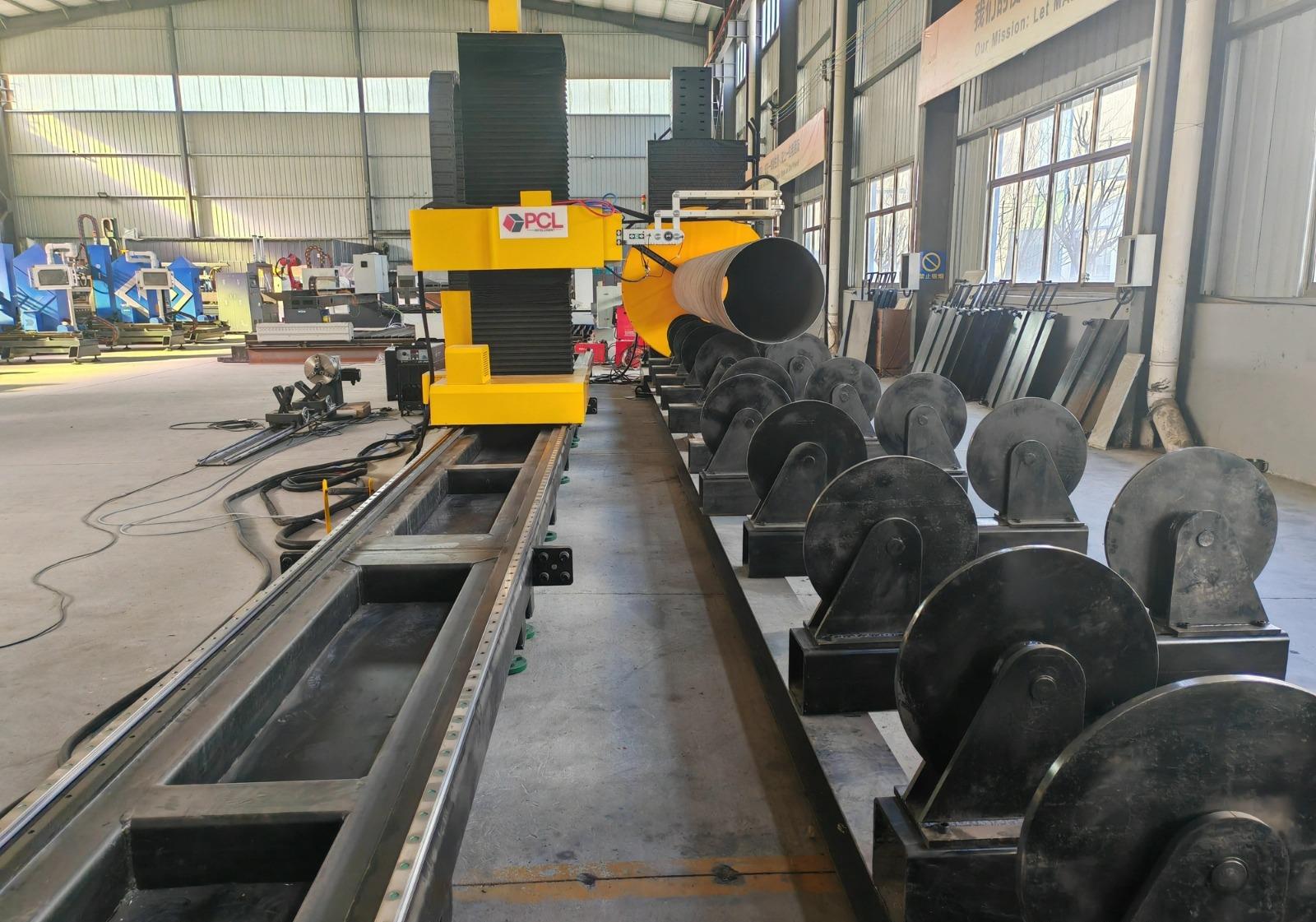
Traditional flatbed lasers are limited to two dimensions. However, railway infrastructure is built on three-dimensional geometry. H-beams, I-beams, channels, and angles require holes, notches, and bevels across multiple planes. The 3D Structural Steel Processing Center utilizes a multi-axis cutting head—often featuring a 5-axis or 6-axis configuration—that can rotate and tilt around the workpiece.
This capability is crucial for creating complex joints. In railway bridge construction, beams often meet at non-perpendicular angles. A 3D laser head can cut a precise “fish-mouth” or bevel on a heavy-duty beam in a single pass. This eliminates the need for secondary processes like mechanical drilling or manual grinding. For a fiber laser expert, the most impressive aspect is the software-driven compensation; the machine accounts for the slight twists and deviations inherent in raw structural steel, ensuring that every bolt hole aligns perfectly during on-site assembly at a railway project.
The 20kW Power Threshold: Why It Matters
One might ask why 20kW is necessary when 6kW or 10kW systems exist. The answer lies in the “Processing Window” and “Material Versatility.” At 20kW, the laser can maintain high speeds on 20mm to 30mm plates—the bread and butter of railway bogies and support columns—while still having the “headroom” to tackle 40mm+ thicknesses without sacrificing edge quality.
The high power also facilitates the use of compressed air or nitrogen as a shielding gas for thicker materials than previously possible. While oxygen is traditionally used for thick carbon steel, 20kW allows for high-speed air cutting on medium thicknesses, significantly reducing the cost per part. In Pune’s competitive industrial market, where electricity and gas costs are scrutinized, the efficiency of a 20kW fiber source—which boasts a wall-plug efficiency of over 40%—provides a significant competitive edge over older plasma or CO2 technologies.
Automation: The Role of Automatic Unloading Systems
In a high-throughput environment like Pune’s structural steel plants, the bottleneck is rarely the laser itself; it is the handling of the material. A 12-meter H-beam can weigh several tons. Relying on manual overhead cranes for unloading not only slows down the machine but also poses significant safety risks to operators. This is where the Automatic Unloading System becomes indispensable.
The integrated unloading system utilizes synchronized chain conveyors and hydraulic lifting arms to move the finished part away from the cutting zone while the next beam is already being positioned. This “hidden time” processing ensures that the laser source is active for the maximum possible percentage of the shift. In the railway industry, where project deadlines for track laying or station commissioning are incredibly tight, the ability to run 24/7 with minimal human intervention is a game-changer. The automation also includes scrap management, where off-cuts are automatically diverted to bins, maintaining a clean and safe “Industry 4.0” compliant workspace.
Impact on Railway Infrastructure: Precision and Safety
Railway infrastructure demands the highest safety factors. Every cut made by the 20kW laser in Pune is subjected to rigorous quality standards, such as those set by the Research Designs and Standards Organisation (RDSO). Unlike plasma cutting, which creates a large Heat Affected Zone (HAZ), the high-speed fiber laser minimizes thermal distortion. This preserves the metallurgical properties of the steel, which is vital for components subject to the high fatigue and vibration of passing trains.
Furthermore, the precision of laser-cut holes (accurate to within 0.1mm) ensures that the high-strength friction grip (HSFG) bolts used in railway bridges fit perfectly. This level of precision reduces the internal stresses in the structure, leading to a longer lifespan and lower maintenance costs for the Indian Railways. From the overhead electrification (OHE) structures to the intricate frameworks of modern “Amrit Bharat” stations, the 20kW 3D laser ensures that every component is a perfect replica of the digital twin designed by engineers.
Pune: The Strategic Hub for Structural Excellence
Choosing Pune as the location for such a high-tech center is a strategic masterstroke. Pune’s proximity to the Mumbai-Nagpur Samruddhi Mahamarg and various dedicated freight corridors makes it a logistical nexus. The city is home to a vast pool of skilled engineers and technicians who can operate complex CNC systems and manage the sophisticated software required for 3D laser processing.
Moreover, Pune’s industrial belts like Chakan and Talegaon are already integrated with the supply chains of major steel players. This means raw materials can be sourced, processed at the 20kW center, and shipped to railway project sites across Western and Southern India with minimal transit time. The local presence of service engineers for high-power laser sources also ensures that downtime is kept to a minimum, a critical factor when the machine represents a multi-crore investment.
Economic Viability and Future-Proofing
While the initial investment in a 20kW 3D Structural Steel Processing Center is substantial, the ROI (Return on Investment) is driven by volume and versatility. By consolidating multiple operations—sawing, drilling, milling, and marking—into a single laser workstation, a fabrication unit in Pune can replace four or five traditional machines. This saves floor space and reduces the labor force required for material movement.
Looking ahead, the system is “future-proofed.” As railway designs become more complex with the introduction of high-speed maglev or bullet train components, the software-driven nature of the fiber laser allows for instant adaptation. There are no tools to change; only a new CAD/CAM file to upload. This agility allows Pune-based manufacturers to pivot from railway bridges to station roofing or even rolling stock chassis with a few clicks of a mouse.
Conclusion: The Path Forward
The deployment of a 20kW 3D Structural Steel Processing Center with Automatic Unloading in Pune is more than just an equipment upgrade; it is a statement of intent for the Indian infrastructure sector. It represents the intersection of high-power physics and mechanical automation to solve the real-world challenges of a growing nation. For the railway industry, it means stronger bridges, more aesthetic stations, and faster project delivery. As an expert in this field, I see this technology as the backbone of the next generation of Indian engineering, ensuring that the tracks we lay today are supported by the most advanced manufacturing processes available in the world.