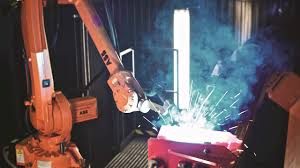
The Dawn of Ultra-High Power in the Middle East Infrastructure
Dubai has long been a global theater for architectural and engineering marvels. From the iconic Infinity Bridge to the expansive Al Shindagha Corridor, the demand for structural steel that meets rigorous safety and aesthetic standards is relentless. As a fiber laser expert, I have witnessed the transition from CO2 to fiber, and now, the shift from “standard” power levels to the 20kW regime.
A 20kW 3D Structural Steel Processing Center is not merely a cutting machine; it is a comprehensive manufacturing ecosystem. In the context of bridge engineering, where the thickness of web plates and flanges often exceeds 25mm, the 20kW power reserve is critical. It provides the “thermal momentum” necessary to maintain a stable keyhole during the cutting process, ensuring that the resulting edge is square, clean, and free of the dross that typically plagues lower-powered systems or traditional plasma alternatives.
The Technical Superiority of 20kW Fiber Laser Sources
Why 20kW? For the bridge engineer, the answer lies in the physics of the Heat Affected Zone (HAZ). Traditional thermal cutting methods, like oxy-fuel or plasma, impart significant heat into the structural member. This can lead to micro-structural changes in the steel, potentially compromising the fatigue resistance of a bridge component.
The 20kW fiber laser operates with such high energy density that the cutting speed is dramatically increased. This high-speed processing results in a much narrower HAZ. When fabricating tension members or complex nodes for a suspension bridge, maintaining the metallurgical integrity of the steel is paramount. Furthermore, the 20kW source allows for high-pressure nitrogen cutting of thick sections, which produces a bright, oxide-free surface. This is a game-changer for Dubai’s coastal bridges, as it ensures superior paint adhesion and galvanic protection without the need for secondary grinding.
3D Kinematics: Beyond Flat Plate Cutting
Bridge engineering rarely relies on flat plates alone. It is a world of H-beams, I-beams, C-channels, and heavy-walled rectangular hollow sections (RHS). A 3D Structural Steel Processing Center utilizes a multi-axis head—often a 5-axis or 6-axis configuration—that can orbit the workpiece.
This 3D capability allows for complex beveling (V, Y, K, and X-cuts) in a single pass. In traditional fabrication, a worker would spend hours manually grinding a bevel onto a 30mm thick flange to prepare it for a full-penetration weld. The 20kW laser does this automatically, with sub-millimeter precision, directly from the BIM (Building Information Modeling) data. This level of “Digital-to-Physical” fidelity ensures that when these massive steel sections arrive at a construction site in the Dubai desert, they fit together with the precision of a Swiss watch.
Automatic Unloading: The Engine of Productivity
In the harsh climate of Dubai, where ambient temperatures can soar, reducing manual labor in the fabrication shop is both a safety priority and an economic necessity. The “Automatic Unloading” component of these centers is what transforms a high-tech tool into a continuous production line.
Once the 20kW laser has finished intricate profile cutting and hole-drilling on a 12-meter beam, the automated system takes over. Heavy-duty hydraulic lifters and synchronized conveyor systems move the finished part to a designated unloading zone. This happens while the next raw beam is already being loaded into the chucks.
For bridge projects involving thousands of unique structural components, this automation eliminates the “human bottleneck.” It prevents the physical damage that often occurs when using overhead cranes for small movements and ensures that the flow of material is governed by software algorithms rather than manual labor availability.
Optimizing for Bridge Engineering: Precision and Fatigue Life
Bridges are dynamic structures; they breathe, vibrate, and endure constant cyclic loading. The precision afforded by a 20kW 3D laser is vital for the longevity of these structures.
1. **Bolt Hole Quality:** Unlike plasma cutting, which can leave tapered or hardened holes, the fiber laser produces perfectly cylindrical holes with minimal taper. This ensures a “snug-fit” for high-strength friction grip (HSFG) bolts, which are essential for the slip-critical joints found in bridge trusses.
2. **Scallops and Access Holes:** In bridge girde fabrication, “rat holes” or weld access holes are often points of stress concentration. The 3D laser can cut these with perfectly smooth radii, significantly reducing the risk of fatigue cracking over the 50-to-100-year lifespan of the bridge.
3. **Complex Geometry:** As Dubai pushes for more “signature” bridges with organic, non-linear forms, the ability to cut curved 3D profiles in heavy steel becomes a requirement rather than a luxury.
The “Dubai Factor”: Overcoming Environmental Challenges
Operating a 20kW laser in the Middle East presents specific engineering challenges that we, as experts, must address. The most significant is thermal management. A 20kW laser generates substantial heat within the resonator and the cutting head.
The processing centers deployed in Dubai are equipped with “Tropicalized” industrial chillers. These systems use dual-circuit cooling with oversized heat exchangers to maintain the laser source and optics at a constant 22°C, even when the factory floor ambient temperature hits 45°C. Furthermore, advanced dust extraction and filtration systems are mandatory to protect the sensitive 3D optics from the fine silica sand prevalent in the region.
Integration with BIM and Industry 4.0
The modern Dubai bridge project is designed entirely in a digital environment using software like Tekla Structures or Autodesk Revit. The 20kW 3D Processing Center acts as the physical printer for these digital models.
By importing DSTV or STEP files directly into the laser’s nesting software, we eliminate manual marking and layout. The machine can even laser-mark part numbers, weld symbols, and alignment lines onto the steel. This creates a seamless “Smart Factory” workflow. For a bridge contractor, this means a reduction in “Request for Information” (RFI) cycles and a near-zero rate of rework, which is crucial when working on high-stakes government infrastructure contracts.
Economic Impact and the Future of Fabrication
While the capital expenditure for a 20kW 3D Structural Steel Processing Center is significant, the ROI (Return on Investment) for a Dubai-based bridge firm is compelling.
* **Labor Reduction:** One automated laser center can often replace three to four traditional manual fabrication lines.
* **Material Savings:** Advanced nesting algorithms for 3D profiles minimize “off-cut” waste, which is significant when dealing with high-grade structural steel.
* **Time-to-Market:** Bridges that used to take 18 months in the fabrication phase can now be processed in 12 months, allowing Dubai to hit its ambitious “Urban Master Plan 2040” milestones.
Conclusion: Setting a New Global Benchmark
The deployment of 20kW 3D Structural Steel Processing Centers with Automatic Unloading in Dubai is more than an upgrade in machinery—it is a statement of intent. It positions the region’s bridge engineering sector at the absolute forefront of global manufacturing technology.
By leveraging the sheer power of the 20kW fiber source, the versatility of 3D kinematics, and the efficiency of automated logistics, Dubai is not just building bridges; it is engineering a future where structural integrity, architectural beauty, and industrial efficiency coexist. For the fiber laser expert, seeing these photons slice through 40mm of structural steel to create the spine of a new city landmark is the ultimate validation of this technology’s transformative power.