
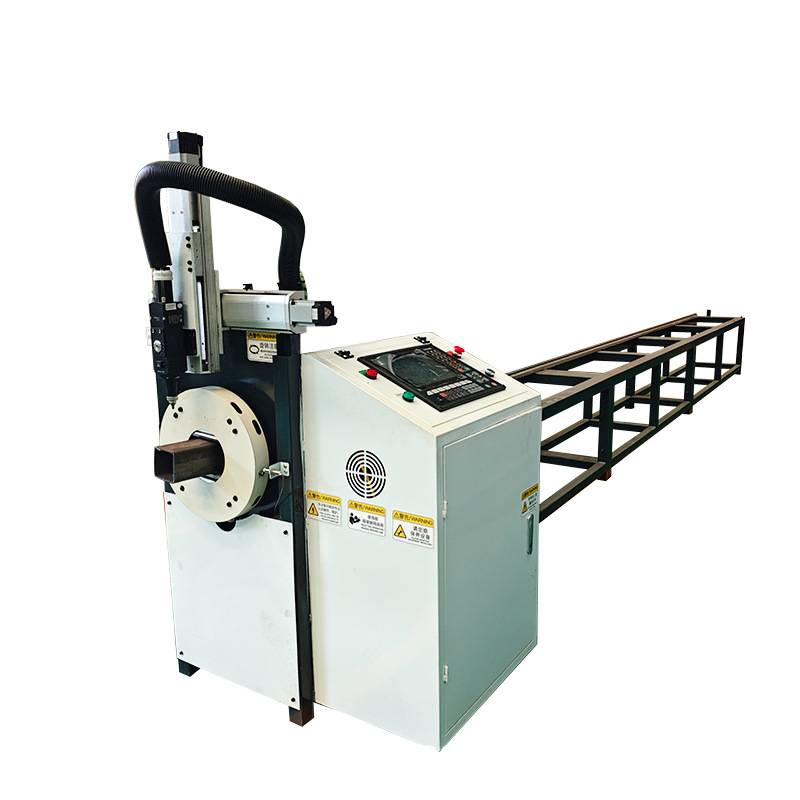
Technical Field Report: 20kW 3D Structural Steel Processing Center Deployment
1. Site Overview and Structural Requirements
The deployment of the 20kW 3D Structural Steel Processing Center in Mexico City (CDMX) represents a critical shift in the execution of large-scale infrastructure projects, specifically within the airport construction sector. Given Mexico City’s unique geotechnical profile—characterized by high seismic activity and lacustrine soil—the structural requirements for the new terminal and hangar facilities mandate the use of heavy-gauge structural steel with exceptionally high tolerances.
Traditional processing methods, including manual plasma cutting and stationary drilling, have historically struggled with the geometric complexities of the “funnel-style” columns and curved roof trusses characteristic of modern airport architecture. The integration of a 20kW fiber laser source into a multi-axis structural processing center addresses the dual requirements of high-speed throughput and the precision required for American Welding Society (AWS) D1.1 structural welding standards.
2. 20kW Fiber Laser Integration: Thermal Dynamics and Penetration
The adoption of a 20kW fiber laser source is not merely an upgrade in raw power; it is a fundamental shift in the material-energy interaction during structural processing. At 20kW, the power density allows for “high-speed nitrogen cutting” on carbon steel thicknesses that previously required oxygen-assisted cutting.
2.1 Heat Affected Zone (HAZ) Management:
In airport construction, structural integrity is paramount. High-power laser cutting minimizes the Heat Affected Zone (HAZ) compared to oxy-fuel or plasma cutting. The 20kW source achieves a faster “vaporization” threshold, meaning the energy is focused narrowly, preventing the excessive heat soak that can alter the metallurgical properties of S355 or A992 structural steel.
2.2 Kerf Consistency:
At the 20kW level, we observe a significantly more stable kerf profile across thick-walled H-beams (up to 25mm web thickness). The high-intensity beam maintains a tighter focal point over a longer depth of field, which is essential when cutting through the flanges and webs of structural sections where beam divergence would otherwise cause a tapered edge.
3. ±45° Bevel Cutting: Technical Execution of Weld Preparations
The most significant bottleneck in heavy steel fabrication is weld preparation. For the Mexico City project, structural joints require Full Penetration (CJP) welds. The ±45° bevel cutting capability of the 3D processing center automates what was once a multi-step manual grinding process.
3.1 Geometry and Kinematics:
The processing center utilizes a five-axis 3D head. In the field, we have validated the machine’s ability to perform complex bevels (K, V, X, and Y types) directly onto the ends of H-beams and rectangular hollow sections (RHS). The ±45° range is critical for the “splayed” joint geometries found in the airport’s seismic damping frames.
3.2 Precision in Beveling:
Field measurements indicate a bevel angle accuracy of ±0.3°. This precision ensures that when the structural members arrive at the job site, the “fit-up” is near-perfect. This reduces the volume of weld filler metal required and significantly lowers the probability of weld defects such as lack of fusion or inclusions, which are common when using manually prepped joints.
4. 3D Structural Processing Efficiency in Airport Infrastructure
The “3D” aspect of the center refers to its ability to process 6-degree-of-freedom movements. This allows for the simultaneous cutting of bolt holes, cope notches, and weld bevels in a single program cycle.
4.1 Complex Coping:
Airport terminal designs often feature complex intersections where multiple beams converge at non-orthogonal angles. The 3D processing center utilizes sophisticated nesting software that interprets Building Information Modeling (BIM) files (typically IFC or TEKLA formats) to execute precise bird-mouth cuts and complex notches.
4.2 Productivity Metrics:
Comparative analysis on-site in Mexico City showed that a traditional fabrication workflow (layout, drill, plasma cut, grind bevel) for a standard 12-meter H-beam took approximately 180 minutes. The 20kW 3D Structural Center completed the same sequence of operations—including high-precision bolt holes and ±45° bevels—in 22 minutes. This represents a nearly 800% increase in component-level throughput.
5. Impact of High-Altitude Atmospheric Conditions
Operating a 20kW laser at the altitude of Mexico City (approximately 2,240 meters) presents specific technical challenges regarding gas dynamics and cooling efficiency.
5.1 Assist Gas Density:
The lower atmospheric pressure affects the flow dynamics of the assist gas (Nitrogen/Oxygen). We recalibrated the nozzle pressure sensors to compensate for the thinner air, ensuring that the supersonic gas flow required to eject the molten slag remains consistent. Without this calibration, “dross” or “slag” adhesion increases, which would negate the benefits of the laser’s precision.
5.2 Chiller Performance:
The 20kW source generates significant waste heat. At higher altitudes, air-cooled heat exchangers are less efficient. The system in Mexico City was fitted with an oversized, pressurized water-cooling circuit to ensure the laser resonators and the 3D cutting head maintain a delta-T of less than 1°C, preventing thermal drift during long-form cutting of 12-meter sections.
6. Automation and Workflow Integration
The synergy between the 20kW power source and the automated material handling system is what facilitates continuous operation.
6.1 Sensing and Compensation:
Structural steel is rarely perfectly straight. The 3D center utilizes laser scanning probes to map the actual “as-is” geometry of the beam (accounting for camber, sweep, and twist) before the first cut. The software then dynamically adjusts the cutting path in real-time. This ensures that a bolt hole pattern remains centered on the flange even if the beam has a slight mill-induced bow.
6.2 Material Tracking:
For the airport project, traceability is a legal requirement. The processing center integrates an automated fiber laser marking head that etches heat numbers, part IDs, and assembly directions directly onto the steel. This eliminates the risk of manual marking errors and ensures that the structural integrity records are maintained from the mill to the final weld.
7. Conclusion: Engineering Impact on Heavy Fabrication
The deployment of the 20kW 3D Structural Steel Processing Center in Mexico City marks a transition from “mechanical” fabrication to “digital” fabrication in the heavy infrastructure sector. By combining the high energy density of a 20kW source with the geometric flexibility of a ±45° beveling head, the facility has effectively bypassed the traditional limitations of heavy steel processing.
The technical advantages—specifically the reduction in weld prep time, the elimination of secondary grinding, and the ability to process complex 3D geometries—directly contribute to the structural safety and accelerated timeline of the airport construction. For senior engineering stakeholders, this system represents the current apex of structural steel technology, providing a scalable solution for the most demanding seismic-resistant designs in the world.
















