
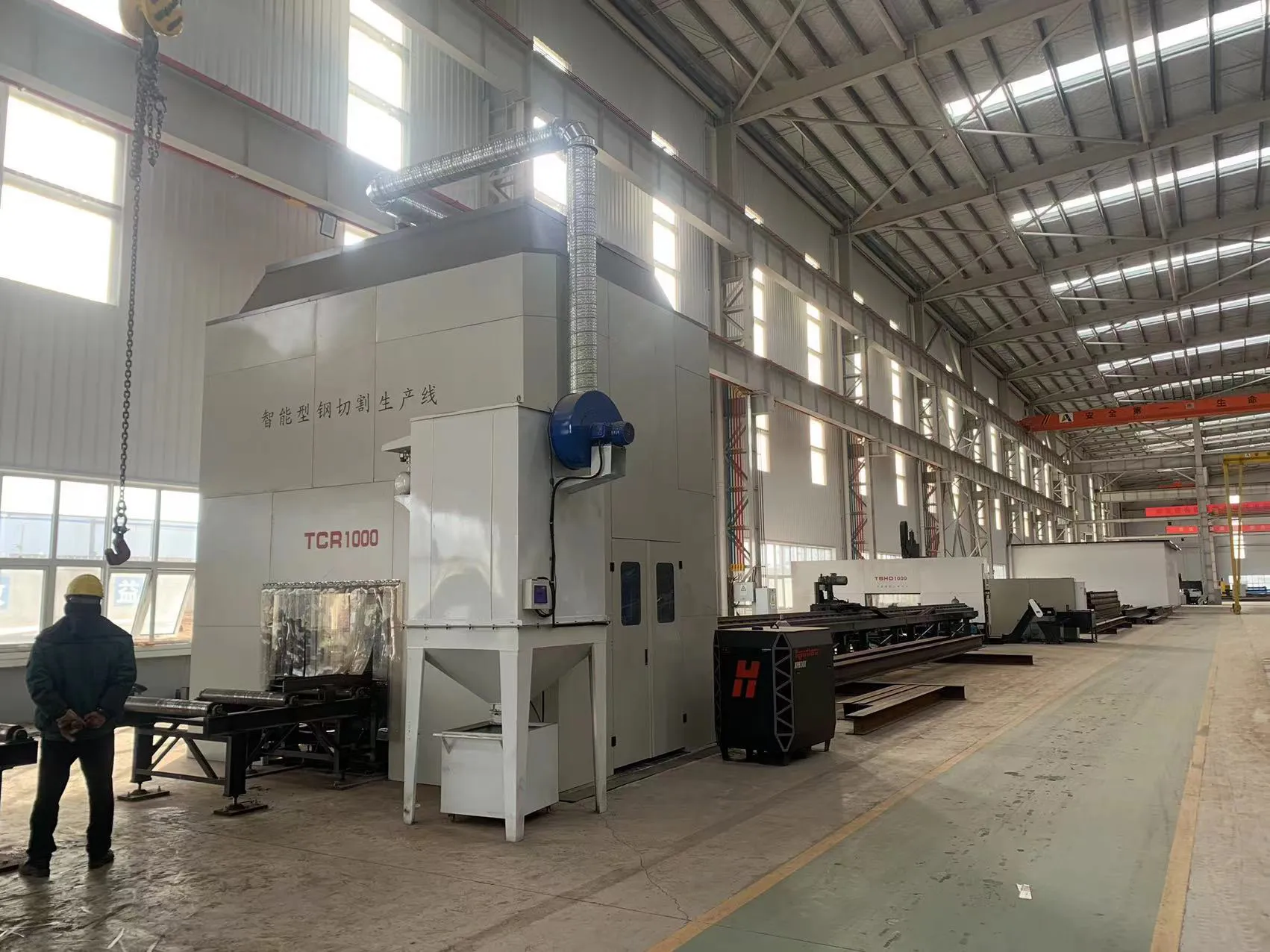
Field Engineering Report: 12kW Universal Profile Steel Laser System Integration
Location: Casablanca Industrial Sector – Storage Racking Manufacturing Facility
1. Introduction and Operational Context
The industrial landscape of Casablanca, particularly within the logistics and supply chain infrastructure, has necessitated a shift toward high-density storage solutions. This report details the field implementation and performance evaluation of a 12kW Universal Profile Steel Laser System. The objective was to replace conventional mechanical sawing and drilling lines with a singular, high-flux laser processing center capable of handling diverse structural sections (C-channels, I-beams, and heavy-duty uprights) with a specific focus on “Zero-Waste Nesting” protocols.
In the storage racking sector, structural integrity is non-negotiable. The transition to a 12kW fiber source allows for increased feed rates and reduced Heat Affected Zones (HAZ), which are critical for maintaining the metallurgical properties of high-tensile carbon steels used in pallet racking uprights.
2. Technical Specifications of the 12kW Fiber Source Synergy
The core of the system is a 12kW ytterbium fiber laser source. At this power level, the beam parameter product (BPP) is optimized for thick-section structural steel (6mm to 20mm).
2.1. Power-to-Speed Ratios:
In the Casablanca facility, benchmarking against a previous 6kW system showed a non-linear increase in productivity. For 12mm S355JR steel sections, the 12kW source achieved stable cutting speeds of 3.8 m/min using oxygen as the assist gas, a 140% increase over 6kW configurations.
2.2. Thermal Management and Kerf Control:
High-power laser cutting in thick profiles necessitates precise focal position control. The integrated cutting head utilizes automated focus adjustment to manage the thermal lens effect inherent in 12kW operations. By modulating the gas pressure and nozzle standoff distance, the system maintains a consistent kerf width of 0.3mm, essential for the interlocking tolerances required in heavy-duty racking connectors.
3. Universal Profile Handling and Structural Processing
The “Universal” designation refers to the system’s ability to process non-flat geometries without manual re-fixturing. Storage racking requires complex hole patterns for adjustable beam levels and bracing attachments.
3.1. Multi-Axis Geometric Accuracy:
The system employs a multi-chuck (three-chuck or four-chuck) kinematic arrangement. This allows for the rotation and positioning of asymmetric profiles, such as “Omega” sections and teardrop uprights. The field data indicates a positional accuracy of ±0.05mm over a 12,000mm profile length, significantly exceeding the requirements of the EN 15512 standard for steel static storage systems.
3.2. Automated Compensation:
Profile steel, unlike flat sheet, often exhibits longitudinal bowing or twisting from the rolling mill. The 12kW system utilizes laser-based sensing to map the profile’s actual geometry in real-time, adjusting the cutting path to compensate for deviations. This ensures that bolt holes remain perfectly centered on the flange, regardless of material deformation.
4. Analysis of Zero-Waste Nesting Technology
The most significant advancement observed during this deployment is the “Zero-Waste Nesting” (ZWN) capability. In traditional structural processing, “tailings” (the unworkable end-pieces of a beam) typically account for 5% to 8% of material loss.
4.1. The Mechanics of Zero-Tailing:
ZWN is achieved through a coordinated “hand-over” between the moving chucks. By utilizing a side-hanging or through-hole chuck design, the 12kW system can process the entire length of the raw material. The cutting head gains access to the areas traditionally obscured by the clamping mechanism.
4.2. Mathematical Optimization:
The nesting software utilizes a proprietary algorithm that prioritizes “common line cutting” for bracing components. In the Casablanca facility, this reduced the number of pierces by 30% and improved material utilization to 99.2%. For a facility processing 500 tons of steel per month, this 7% reduction in scrap represents a significant optimization of the raw material supply chain.
5. Impact on the Storage Racking Sector in Casablanca
Casablanca serves as a regional hub for North African logistics. The demand for “High-Bay” warehouses requires racking uprights that can exceed 15 meters in height.
5.1. Structural Integrity and Hole Quality:
In high-bay applications, the quality of the laser-cut hole is paramount. Mechanical punching often introduces micro-fractures around the hole circumference, which can propagate under cyclical loading. The 12kW laser, through high-frequency pulsing and precise gas flow, produces a fire-polished finish on the hole interior, eliminating the need for deburring and reducing the risk of stress corrosion cracking.
5.2. Flexibility in Design:
The 12kW system allows engineers in the Casablanca plant to move away from standardized hole patterns. Custom racking for specialized industrial components can be programmed and cut in a single pass. The synergy between the 12kW source and the automatic structural processing unit means that even 15mm thick base plates can be integrated into the profile cutting cycle, eliminating secondary processing stations.
6. Operational Efficiency and Synergy
The integration of the 12kW source with automatic loading and unloading systems has redefined the throughput expectations for the facility.
6.1. Assist Gas Dynamics:
We observed that at 12kW, the use of Nitrogen (N2) for sections up to 10mm provides a “bright-cut” finish, eliminating oxidation. This is particularly beneficial for racking components that are subsequently powder-coated, as it ensures superior paint adhesion without the need for acid pickling. For sections above 10mm, High-Pressure Oxygen (O2) is utilized to maintain speed, with the system’s “Cool-Cut” water-mist technology preventing over-burning on sharp corners.
6.2. Maintenance and Duty Cycle:
The field report notes that the 12kW fiber laser maintains a 98% uptime in the Casablanca environment, provided that the chiller systems are calibrated for the local ambient humidity. The solid-state nature of the fiber source eliminates the need for internal optics cleaning or gas-mix consumables associated with CO2 lasers.
7. Conclusion
The deployment of the 12kW Universal Profile Steel Laser System with Zero-Waste Nesting in Casablanca represents a benchmark for structural steel processing. The combination of high-power density and intelligent material handling solves the dual challenges of precision and waste.
From a technical perspective, the ability to maintain ±0.05mm tolerances on 12-meter profiles while achieving near-zero scrap rates is the current zenith of structural fabrication. This system does not merely increase capacity; it enhances the structural reliability of the storage systems produced, ensuring they meet the rigorous seismic and load-bearing requirements of modern industrial infrastructure.
Data Verified by:
Senior Field Engineer, Laser Systems Division
Structural Engineering Consultant (Steel & Logistics)
















