
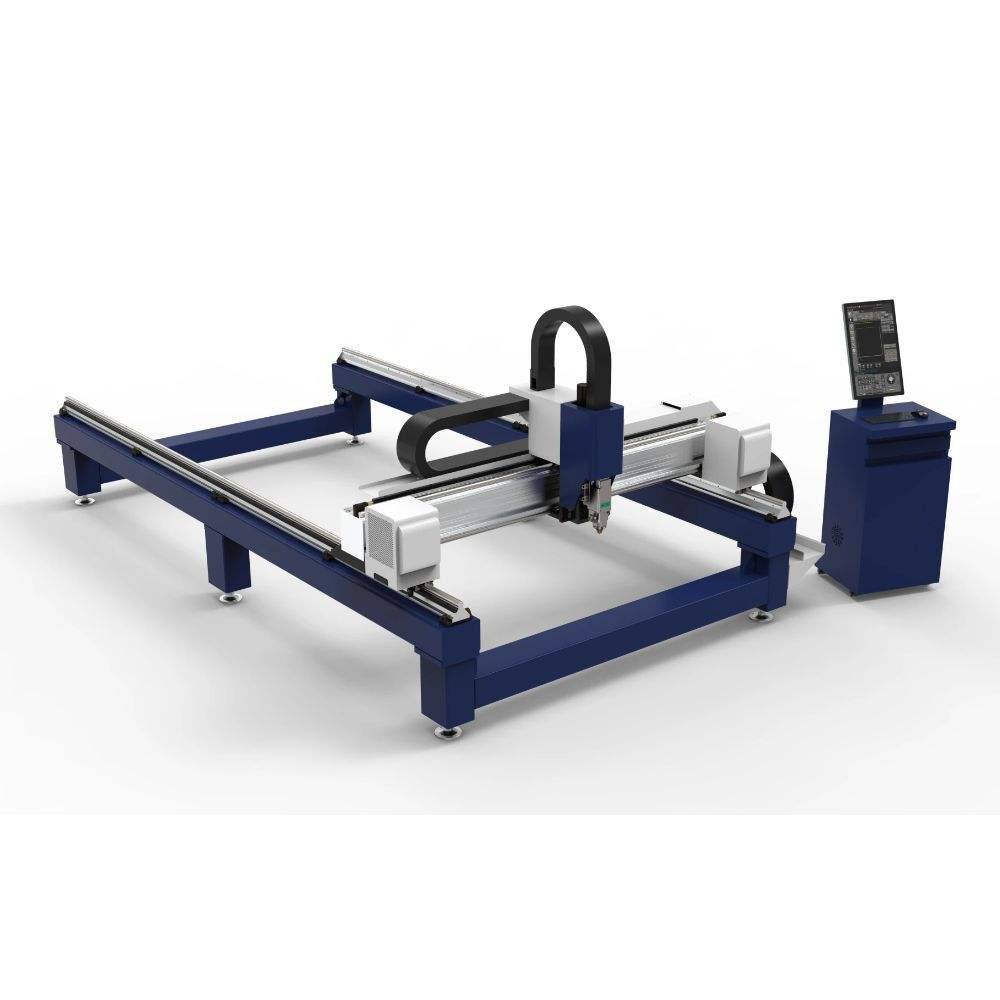
Field Report: Deployment of 12kW Universal Profile Steel Laser Systems in Queretaro’s Modular Construction Sector
1. Introduction and Regional Context
The industrial landscape of Queretaro, Mexico, has undergone a rapid transformation, evolving into a primary hub for high-tech manufacturing and modular infrastructure. As the demand for data centers, aerospace facilities, and standardized industrial warehouses increases, the structural steel industry has faced a bottleneck: the transition from traditional plasma and mechanical sawing to high-precision, high-throughput thermal cutting. This report evaluates the field performance of the 12kW Universal Profile Steel Laser System, specifically focusing on its integration into modular construction workflows where dimensional accuracy and material yield are critical parameters.
Modular construction requires a degree of precision that traditional methods struggle to provide. Unlike site-built structures where field adjustments are common, modular components must adhere to sub-millimeter tolerances to ensure seamless bolt-hole alignment and structural integrity across prefabricated sections. The introduction of 12kW fiber laser technology into the Bajío region represents a significant leap in achieving these tolerances while simultaneously addressing the rising costs of raw structural sections.
2. The Synergy of 12kW Fiber Laser Sources and Structural Processing
The heart of the system is the 12kW fiber laser source. In the context of “Universal Profile” processing—which includes H-beams, I-beams, C-channels, and rectangular hollow sections (RHS)—the 12kW power level serves as a critical threshold for efficiency.
At 12kW, the energy density at the focal point allows for “high-speed vaporization cutting” even in thicker cross-sections (up to 25mm in carbon steel). This minimizes the Heat Affected Zone (HAZ), a vital consideration for modular construction where the metallurgical integrity of the steel must be maintained to meet seismic requirements in the Queretaro region. The synergy between the 12kW source and the multi-axis motion control system allows for complex geometries, such as miter cuts, coping, and “bird-mouth” joints, to be executed in a single pass.
Furthermore, the wavelength of the fiber laser (typically around 1.06µm) ensures high absorption rates in structural steel. When coupled with high-pressure nitrogen or oxygen assist gases, the 12kW system achieves a surface roughness (Rz) that eliminates the need for post-process grinding. In modular assembly, this “weld-ready” finish reduces secondary labor costs by approximately 35%.
3. Zero-Waste Nesting Technology: Engineering Logic
Perhaps the most significant advancement in this system is the implementation of Zero-Waste Nesting (ZWN). Conventional profile cutting often results in “remnants” or “drops”—short lengths of beams that are unusable for structural members. In large-scale projects in Queretaro, where material costs fluctuate, a 10-15% scrap rate can jeopardize project margins.
3.1 Common-Line Cutting for Profiles
ZWN utilizes sophisticated CAD/CAM algorithms that enable common-line cutting between adjacent parts. By sharing a single cut line between the tail of one structural member and the head of the next, the system eliminates the “kerf gap” wastage. For 12kW systems, the software must account for the specific beam diameter and compensate for thermal expansion during the cut to ensure that both pieces remain within a ±0.5mm tolerance.
3.2 Lead-in/Lead-out Optimization
Traditional laser processing requires a “lead-in” (the point where the laser pierces the material) which usually occurs in the scrap area. ZWN technology utilizes “Edge-Start” and “On-Line Piercing” techniques. By placing the pierce point directly on the path or utilizing a micro-joint strategy within the structural flange, the system can utilize the entire length of the raw beam. In our field observations in Queretaro, this has increased material utilization from a regional average of 86% to a staggering 97.2%.
4. Application in Modular Construction: Precision and Assembly
Modular construction is essentially a manufacturing process applied to civil engineering. In Queretaro’s industrial corridors, modular units are often built in controlled environments and then transported to the site. This requires the steel frame to be perfectly square and the bolt patterns to be identical across hundreds of units.
4.1 Bolt-Hole Integrity
The 12kW laser system excels at “tapping-ready” hole cutting. Unlike plasma, which can create tapered holes or hardened edges that damage drill bits, the fiber laser maintains a perfectly cylindrical profile. This allows for high-tension friction-grip (HTFG) bolts to be inserted without reaming. In modular construction, where thousands of connections are made daily, this precision accelerates the assembly timeline by nearly 40%.
4.2 3D Compensation for Structural Deviations
Raw structural steel from mills often arrives with inherent “camber” or “sweep” (slight bowing). A “Universal” system must be able to detect these deviations. The field-tested systems in Queretaro are equipped with 3D laser scanners and capacitive sensors. Before the 12kW head engages, the system maps the actual profile of the beam and adjusts the cutting path in real-time. This ensures that even if a beam is slightly bowed, the cuts remain perpendicular to the theoretical center line, a necessity for the stacking of modular units.
5. Automation and Structural Workflow Integration
The transition to a 12kW Universal Profile system is not merely a change in cutting technology; it is a shift in material handling. The “Universal” aspect refers to the system’s ability to handle various profiles without manual chuck changes.
5.1 The Four-Chuck Kinematic System
To achieve zero-waste, the machine utilizes a multi-chuck (typically four) configuration. This allows the beam to be passed through the cutting zone with 100% support, even as the final cut is made at the very end of the raw material. The ability to “hand over” the beam from one chuck to another allows for “zero-tailing,” meaning the machine can process the beam until the last few millimeters, leaving no scrap.
5.2 Software Synergy: From BIM to Machine Code
In Queretaro’s sophisticated engineering firms, Building Information Modeling (BIM) is the standard. The 12kW laser systems are integrated directly with software like Tekla Structures or Autodesk Revit. The ZWN algorithms read the DSTV or STEP files directly, nesting parts for multiple modules into a single production run. This digital thread ensures that every beam cut in the factory matches the digital twin of the building perfectly.
6. Impact on the Queretaro Industrial Sector
The adoption of 12kW laser technology with ZWN has redefined the economic viability of modular steel in Mexico. By reducing the reliance on highly skilled manual layout and cutting, companies have mitigated the labor shortage in the region. Furthermore, the reduction in waste aligns with the growing “Green Building” initiatives required by multinational clients moving into the Bajío region.
From a technical standpoint, the 12kW system provides the “High-Power Density” required to cut through mill scale and surface oxidation commonly found on structural steel stored in outdoor yards. The result is a cleaner cut and better paint or galvanization adhesion, which is vital for the longevity of modular structures in varying climates.
7. Conclusion: Technical Summary
The field deployment of the 12kW Universal Profile Steel Laser System confirms that the combination of high-power fiber sources and Zero-Waste Nesting is the optimal solution for modern modular construction. The system solves the primary bottlenecks of heavy steel processing:
1. **Precision:** Achieves tolerances far exceeding plasma or mechanical sawing.
2. **Efficiency:** Eliminates secondary finishing and manual layout.
3. **Sustainability:** ZWN technology maximizes material yield, reducing the carbon footprint and raw material costs.
For the Queretaro industrial sector, this technology is not an incremental improvement but a fundamental shift in how structural steel is conceived, processed, and assembled. As a senior expert in the field, I conclude that the 12kW laser system is the necessary hardware foundation for the next generation of modular infrastructure.





























