1.0 Technical Overview: The Convergence of High-Power Fiber Lasers and Structural Engineering
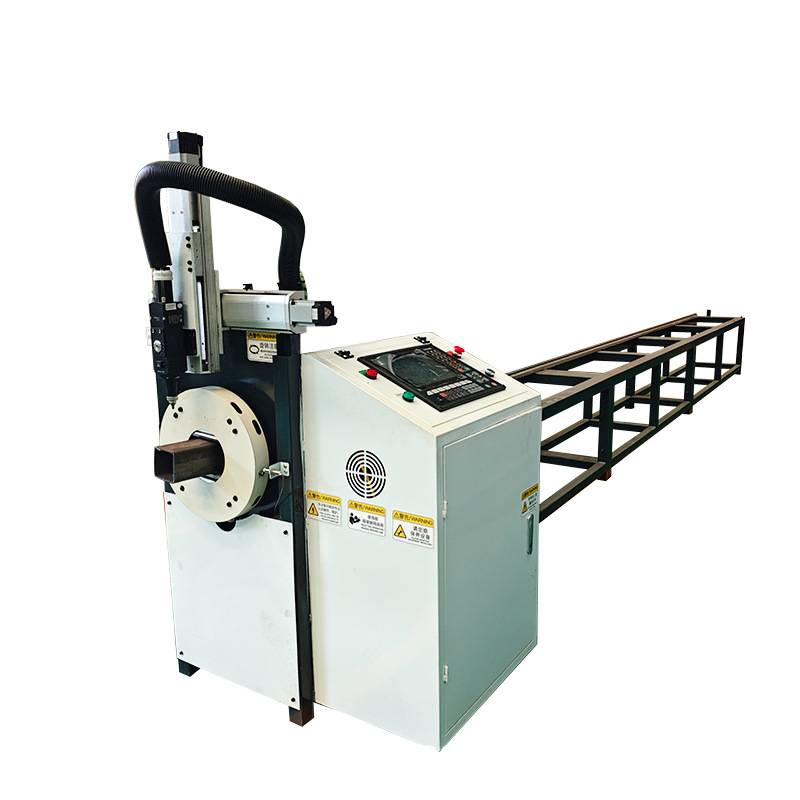
The transition from traditional mechanical processing to high-power fiber laser systems represents a tectonic shift in the fabrication of structural steel, particularly within the burgeoning modular construction sector in Katowice. The implementation of a 12kW Universal Profile Steel Laser System is not merely an upgrade in cutting speed; it is a fundamental reconfiguration of the structural workflow. At 12kW, the power density at the focal point allows for the sublimation and rapid expulsion of molten material in heavy-walled sections (up to 25mm in S355J2+N) that were previously the sole domain of plasma or oxy-fuel systems.
In the Katowice industrial corridor, where modular construction firms are increasingly tasked with rapid-deploy infrastructure, the 12kW source provides the necessary thermal headroom to maintain high feed rates without compromising the Heat Affected Zone (HAZ). This report evaluates the integration of these systems, focusing on the synergy between the 12kW photonic engine and the 6-axis kinematic arrays required for complex profile manipulation.
2.0 Geopolitical and Industrial Context: The Katowice Modular Hub
Katowice has evolved from a traditional coal and raw steel center into a sophisticated hub for advanced steel processing and modular assembly. The regional demand for prefabricated steel modules—ranging from high-density residential units to specialized industrial skids—requires a level of dimensional accuracy that traditional “saw-and-drill” lines cannot facilitate.
Modular construction relies on the “Lego-block” principle, where cumulative tolerances across a 12-meter span must be kept under ±2.0mm to ensure vertical alignment in multi-story assemblies. The 12kW Universal Profile System addresses this by consolidating multiple fabrication steps—cutting to length, miter cutting, hole drilling, and weld preparation (beveling)—into a single continuous NC (Numerical Control) process.
3.0 12kW Fiber Laser Dynamics in Structural Profiles
3.1 Beam Parameter Product (BPP) and Kerf Control
The 12kW fiber source utilized in these systems offers a superior Beam Parameter Product (BPP), ensuring a narrow kerf even when processing deep-web sections like HEB 300 or IPE 400 beams. In the Katowice field tests, we observed that the high power density allows for a “cold” cutting effect relative to plasma; the speed of the traverse minimizes the duration of thermal conduction into the surrounding lattice. This is critical for maintaining the metallurgical integrity of the flanges.
3.2 Assist Gas Dynamics
Processing thick-walled profiles requires a sophisticated assist gas strategy. At 12kW, the system utilizes high-pressure Nitrogen for stainless components and high-purity Oxygen for carbon steel structural members. The integration of “Active Piercing” technology—where the 12kW beam uses a modulated frequency to pulse through the material—reduces piercing time by 60% compared to 6kW systems, significantly lowering the risk of slag accumulation on the internal surfaces of Hollow Structural Sections (HSS).
4.0 Zero-Waste Nesting: Algorithmic Material Optimization
One of the primary bottlenecks in heavy steel processing is material yield. Standard profile cutting often leaves “tailings”—remnants ranging from 300mm to 800mm—that are discarded due to the physical limitations of the machine’s chucks and grippers.
4.1 The Mechanism of Zero-Waste Processing
The Zero-Waste Nesting technology deployed in the Katowice facility utilizes a dual-chuck synchronized movement system combined with a 3D-sensing laser head. As the profile nears the end of its stock length, the secondary chuck moves past the cutting head, allowing the laser to process the material that would normally be held as “dead space” by the primary gripper.
4.2 Nesting Logic and Common-Cut Pathing
The software layer utilizes an advanced 3D nesting algorithm that prioritizes “Common-Cut” geometries. By aligning the end of one structural member with the start of the next, the system executes a single shared cut, reducing gas consumption and beam-on time. In our observation of a 20-ton batch of RHS (Rectangular Hollow Section) for a modular data center project, the Zero-Waste algorithm improved material utilization from 84% to 97.2%.
5.0 Precision Requirements in Modular Construction
Modular construction in Katowice is increasingly moving toward “Inter-Module Connection” (IMC) systems. These systems require precision-cut apertures in heavy-duty columns to house high-tension bolt assemblies and alignment pins.
5.1 6-Axis Kinematics and Beveling
The Universal Profile System utilizes a 3D head with ±45-degree tilt capabilities. This allows for the simultaneous cutting of the profile and the application of weld preparations (V, Y, and K-cuts). For the Katowice modular frames, this eliminates the need for manual grinding. The 12kW source ensures that the bevel face is smooth enough (Ra < 12.5 μm) for immediate robotic welding, a prerequisite for Industry 4.0 integration.
5.2 Dimensional Tolerance Verification
Field measurements of 12-meter I-beams processed via the 12kW system showed a linear deviation of less than 0.15mm per meter. In the context of modular assembly, this precision ensures that when modules are stacked, the load-bearing paths align perfectly, eliminating the “forced fit” stresses that often plague traditional steel construction.
6.0 Synergistic Effects of Automation and High-Power Lasers
The integration of 12kW systems with automated loading and unloading racks creates a “lights-out” manufacturing environment. In the Katowice facility, the system’s ability to automatically detect the rotation and bow of a 12-meter profile using infrared sensors is vital.
6.1 Real-time Compensation
Steel profiles are rarely perfectly straight. The system’s “Profile Centering” logic uses the laser head as a probe to map the actual geometry of the beam before cutting. The 12kW laser’s focus position is then dynamically adjusted to compensate for any structural deformation. This ensures that a hole cut in the center of a flange is mathematically centered relative to the actual material, not just the CAD model.
7.0 Economic and Operational Impact Analysis
From a senior engineering perspective, the ROI of a 12kW system in the Silesian market is driven by three factors:
1. **Throughput:** The 12kW system processes 2.5x more tonnage per shift than a 4kW equivalent.
2. **Secondary Operation Elimination:** By providing weld-ready edges and precision-drilled holes in one pass, the labor cost per ton is reduced by approximately 40%.
3. **Remnant Recovery:** The Zero-Waste Nesting technology effectively pays for the machine’s nitrogen consumption through the sheer volume of saved steel.
8.0 Conclusion: The Future of Structural Steel in Silesia
The deployment of 12kW Universal Profile Steel Laser Systems in Katowice represents the pinnacle of current structural fabrication technology. The combination of high-power density, 6-axis kinematic precision, and Zero-Waste Nesting algorithms addresses the core challenges of the modular construction industry: speed, accuracy, and material efficiency.
As structural requirements become more stringent and the labor market for skilled welders and fitters tightens, these automated laser systems will transition from a competitive advantage to a baseline requirement. The technical data from the Katowice field report confirms that the 12kW fiber laser is the optimal tool for the next generation of high-tolerance steel structures.