Technical Field Report: Implementation of 12kW Universal Profile Steel Laser Systems in Wind Energy Infrastructure
1. Project Scope and Environmental Context
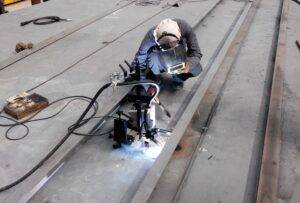
This report details the technical deployment and operational performance of a 12kW Universal Profile Steel Laser System, equipped with an Infinite Rotation 3D Head, at a heavy-scale fabrication facility in Dammam, Saudi Arabia. The primary application is the production of critical structural components for wind turbine towers, specifically targeting the transition pieces, internal platform supports, and door-frame reinforcements.
In the Dammam industrial sector, environmental factors—specifically high ambient temperatures and saline humidity—necessitate a highly stabilized laser delivery system. The integration of a 12kW fiber source allows for the rapid processing of high-tensile S355 and S420 grade structural steels, which are standard in the wind energy sector. The objective of this deployment was to replace traditional plasma cutting and mechanical beveling with a single-pass laser solution capable of achieving complex geometries with zero secondary processing.
2. The 12kW Fiber Laser Source: Power Density and Kerf Dynamics
The selection of a 12kW fiber laser source is predicated on the requirement for a specific power density capable of maintaining a stable melt pool in materials ranging from 12mm to 40mm in thickness. While higher wattages exist, 12kW represents the “sweet spot” for structural profile cutting where edge squareness and Heat Affected Zone (HAZ) management are critical for fatigue-rated components.
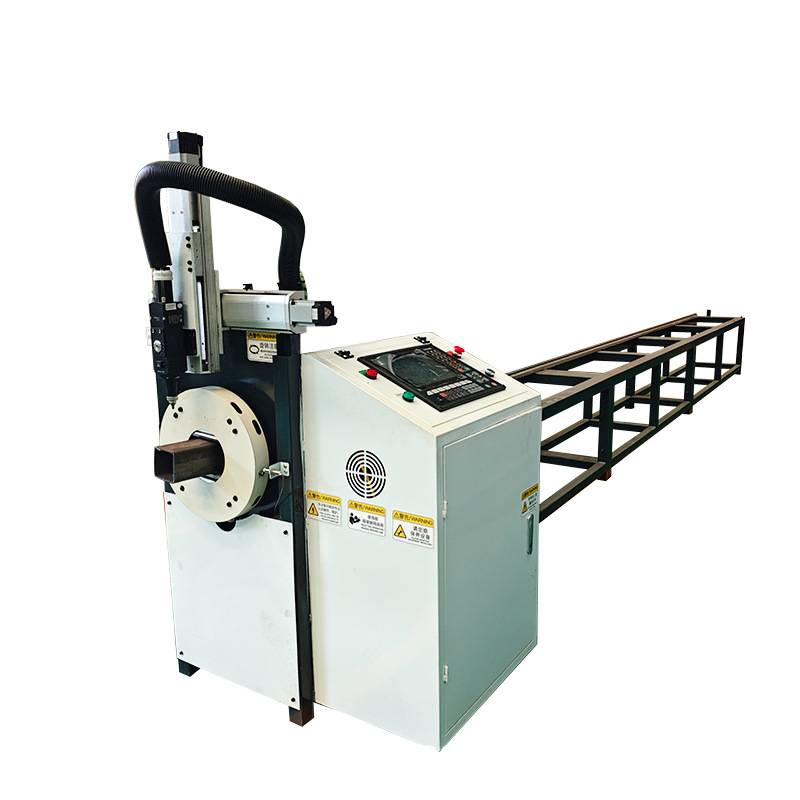
At 12kW, the system utilizes a high-brightness beam profile that facilitates high-speed nitrogen-assisted cutting for thinner gauges and oxygen-assisted cutting for heavy sections. In the context of wind tower fabrication, the laser’s ability to maintain a narrow kerf width (typically 0.3mm to 0.5mm) ensures that the dimensional integrity of large-diameter profiles is maintained, minimizing the “spring-back” effect common in heavy-gauge rolled sections. The energy distribution of the 12kW source is optimized via a collimator to ensure that the beam waist is positioned precisely within the material cross-section, reducing dross adhesion and ensuring a surface finish (Ra) that meets ISO 9001:2015 standards for offshore structural welds.
3. Infinite Rotation 3D Head: Kinematics and Geometric Precision
The core technological differentiator in this field deployment is the Infinite Rotation 3D Head. Traditional 5-axis laser heads are often constrained by “cable wrap” limitations, requiring a de-rotation cycle after reaching a 360-degree or 540-degree limit. In the processing of circular wind tower door frames and complex tubular intersections, these interruptions introduce thermal discontinuities and physical “witness marks” at the re-entry points.
The Infinite Rotation technology utilizes a specialized fiber-optic slip-ring or a high-flexibility torsion-compensated internal routing system that allows the cutting head to rotate continuously around the C-axis. This is coupled with a +/- 135-degree B-axis tilt.
3.1. Weld Preparation and Beveling Efficiency
In wind tower construction, the structural integrity of the longitudinal and circumferential welds is paramount. The 3D head enables the system to execute V, Y, X, and K-type bevels in a single pass. For a 30mm S355 plate, the 12kW system can produce a precise 45-degree bevel with a land (root face) accuracy of +/- 0.2mm. This level of precision is unattainable with manual plasma cutting, which typically requires subsequent grinding. By eliminating the grinding phase, the Dammam facility observed a 40% reduction in man-hours per transition piece assembly.
3.2. Compensating for Structural Deviation
Large-scale profiles in the wind sector often exhibit slight geometric deviations due to the rolling process. The 3D head is integrated with high-speed capacitive sensing and 3D vision mapping. Before the cut sequence, the head performs a non-contact scan of the profile’s actual topology. The CNC controller then adjusts the 5-axis toolpath in real-time to maintain a constant standoff distance and focal position relative to the material surface, regardless of the profile’s undulations.
4. Application Specifics: Wind Turbine Tower Components
The deployment in Dammam focused on three primary structural categories:
4.1. Transition Piece Internal Brackets
Transition pieces require complex internal shelving and cable management attachment points. These components involve intricate slot-and-tab geometries to facilitate self-jigging during the welding process. The 12kW system’s ability to cut small-diameter holes (with a 1:1 ratio to thickness) in heavy plate allows for the direct bolt-on of secondary structures without the need for drilling or reaming.
4.2. Door Frame Reinforcements (D-Sections)
The entrance door of a wind tower is a point of significant stress concentration. The reinforcement frames are typically made from thick-section forged or heavy-rolled steel. The Infinite Rotation 3D head allows for the contouring of these elliptical shapes with a continuous variable bevel, ensuring that the weld prep follows the curvature of the tower shell precisely. This ensures a 100% penetration weld with minimal filler material, significantly reducing the risk of fatigue cracking over the tower’s 25-year lifecycle.
5. Synergy Between 12kW Source and Automatic Structural Processing
The system is not merely a cutting head but a fully integrated structural processing cell. In the Dammam installation, the 12kW laser is paired with an automated material handling system designed for “Universal Profiles” (H-beams, I-beams, and large-diameter tubes).
5.1. Automated Nesting and Path Optimization
The control software utilizes advanced algorithms to nest parts across different profiles to maximize material utilization. For wind tower internal structures, which often use asymmetrical shapes, the software calculates the optimal entry and exit points for the 3D head to minimize heat buildup in localized zones. This is critical for maintaining the metallurgical properties of the S355NL steel used in the project.
5.2. Integration with Tekla and BIM Workflows
The system operates on a direct-to-machine workflow. 3D models from engineering suites like Tekla are imported as STEP or IGES files. The system automatically identifies the required weld preps and assigns the appropriate 3D toolpaths. This digital thread from design to fabrication eliminates human error in interpreting complex bevel angles on shop drawings.
6. Field Observations: Performance Metrics and Quality Control
After six months of operation in the Dammam facility, the following technical metrics were recorded:
- Angular Accuracy: The 3D head maintained an angular deviation of less than 0.3 degrees over a 10-meter cut length.
- Surface Roughness: The 12kW fiber source produced a surface finish on 25mm plate that bypassed the need for shot blasting prior to welding in 85% of cases.
- Thermal Management: Despite the 45°C+ ambient temperatures in Dammam, the high-capacity dual-circuit chiller system maintained the laser source and the 3D head optics within a 1.5°C variance, preventing focal shift.
- Throughput: Compared to the previous CNC plasma installation, the 12kW laser system increased the throughput of tower door frames by 210% due to the elimination of secondary mechanical milling.
7. Conclusion: The Future of Structural Steel Fabrication
The implementation of the 12kW Universal Profile Steel Laser System with Infinite Rotation 3D Head technology represents a paradigm shift for the Middle Eastern wind energy supply chain. By merging high-power fiber laser density with unrestricted 5-axis kinematics, fabricators can now achieve aerospace-grade precision on heavy-scale structural steel.
The technical success of this deployment in Dammam proves that the “Infinite Rotation” capability is no longer an optional luxury but a fundamental requirement for the efficient production of the next generation of 10MW+ wind turbine towers. The reduction in post-processing, coupled with the ability to handle complex structural profiles automatically, positions this technology as the benchmark for heavy-duty steel processing in the region.
Lead Engineer: [Field Systems Specialist]
Location: Dammam Industrial Area, KSA
Status: Operational / High Performance