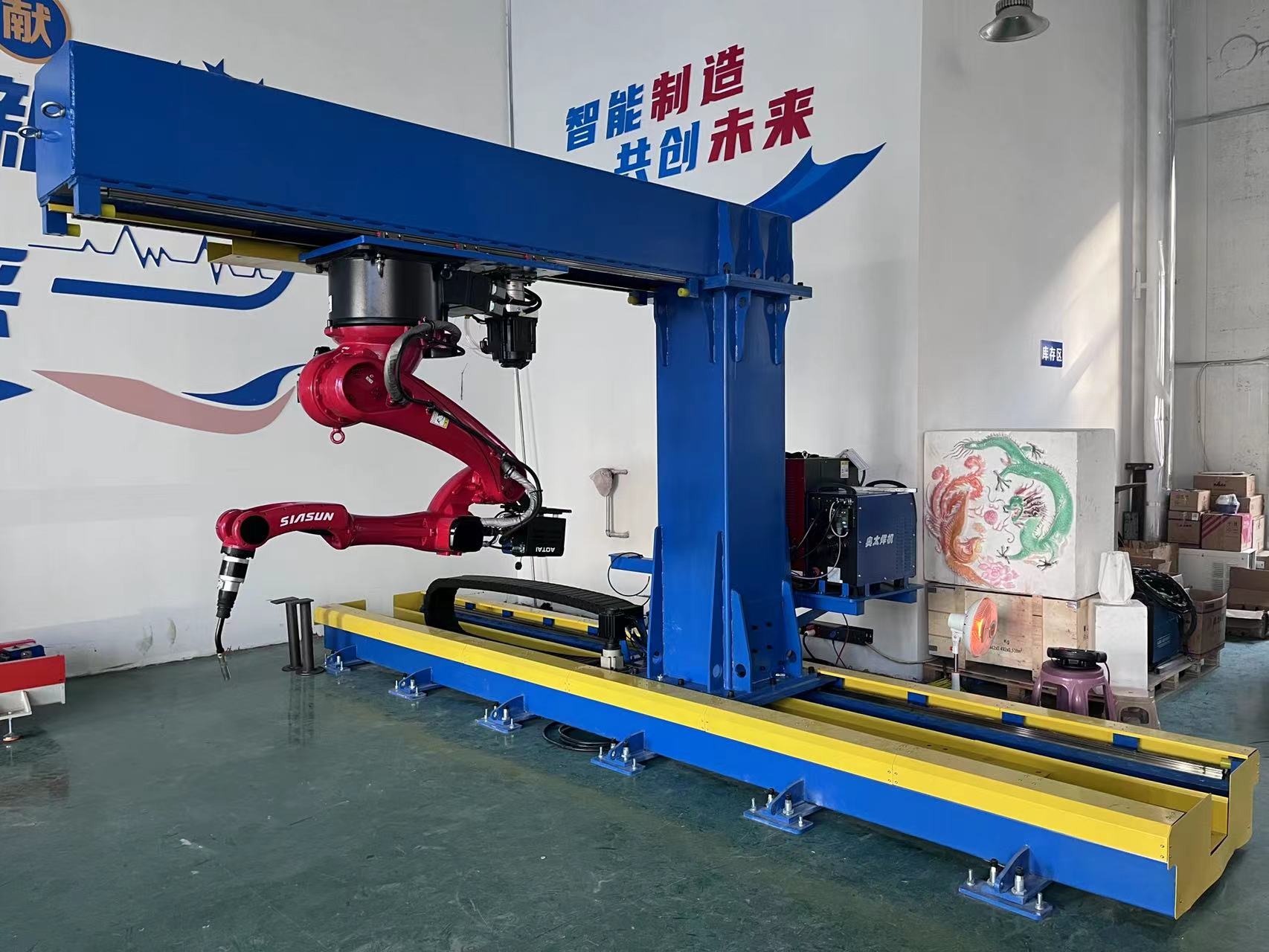
The Dawn of High-Power Precision in Ho Chi Minh City’s Industrial Landscape
Ho Chi Minh City (HCMC) has long been the economic engine of Vietnam, but its transition from a light-manufacturing hub to a center for heavy industrial technology is nowhere more evident than in its infrastructure projects. As the city grapples with urban density, the expansion of the HCMC Metro and the revitalization of national railway links have become top priorities. Central to these projects is the requirement for massive quantities of structural steel.
Traditionally, the fabrication of railway components—ranging from station frameworks to rolling stock chassis and overhead line supports—relied on plasma cutting, sawing, and manual drilling. However, these methods are fraught with limitations: wide kerf widths, significant thermal distortion, and the labor-intensive need for post-cut grinding. The 12kW Universal Profile Steel Laser System changes this equation entirely. By utilizing a 12,000-watt fiber laser source, fabricators in HCMC can now pierce through thick-walled structural steel in seconds, maintaining a level of accuracy that was previously reserved for aerospace components.
The Technical Edge: 12kW Fiber Laser Power
From a fiber laser expert’s perspective, the leap to 12kW is not merely about “more power”; it is about energy density and processing speed. At 12kW, the laser achieves a “keyhole” effect even in thick materials, where the metal is vaporized rather than just melted. For railway infrastructure, which utilizes thick carbon steel and specialized alloys, this power level allows for:
1. **High-Speed Processing:** Cutting 20mm to 30mm thick steel profiles at speeds that make plasma cutting look archaic.
2. **Minimized Heat Affected Zone (HAZ):** Railway structures are subject to constant vibration and cyclic loading. A large HAZ can lead to structural fatigue and premature failure. The 12kW laser moves so quickly that heat dissipation into the surrounding material is minimized, preserving the metallurgical integrity of the steel.
3. **Superior Edge Quality:** The resulting cut is so clean that it requires zero secondary finishing, allowing parts to move directly from the laser bed to the welding jig or assembly site.
Infinite Rotation 3D Head: Redefining Geometry
The “Infinite Rotation” capability of the 3D cutting head is perhaps the most significant mechanical innovation in this system. Conventional 3D laser heads are often limited by internal cabling, requiring the head to “unwind” after a certain degree of rotation. This leads to downtime and interrupts the continuity of the cut, which can introduce weak points in the material.
The Infinite Rotation 3D Head utilizes advanced slip-ring technology or specialized fiber routing to allow the head to spin indefinitely around the A and C axes. This is crucial for “Universal Profile” cutting. When processing an I-beam, the laser must navigate the flanges, the web, and the corners with varying angles.
Furthermore, the 3D head allows for bevel cutting (V, X, Y, and K joints). In railway construction, beams are rarely joined at simple 90-degree angles. They require complex bevels to ensure deep-penetration welds that can withstand the weight of locomotives and the stresses of high-speed travel. By performing these bevels in a single pass on the laser, the system replaces three or four traditional machining steps.
Application in Railway Infrastructure: From Tracks to Stations
The specific demands of railway infrastructure in the HCMC region—characterized by high humidity and the need for seismic resilience—require precision that manual fabrication cannot consistently deliver.
**1. Station Frameworks and Canopies:**
Modern metro stations in HCMC, such as those along the Ben Thanh – Suoi Tien line, feature complex architectural designs. The 12kW system can process the large-diameter pipes and curved H-beams necessary for these aesthetic yet structural masterpieces. The 3D head can cut intersecting holes in pipes (saddle cuts) with perfect fitment, ensuring that the structural load is distributed exactly as the engineers intended.
**2. Rolling Stock Components:**
The carriages themselves require lightweight yet incredibly strong frames. Laser-cut steel profiles allow for weight reduction without sacrificing strength. The 12kW laser handles the high-tensile steels often used in bogie frames, where precision in hole placement for sensors and mechanical linkages is measured in microns.
**3. Electrification and Signalling Supports:**
The thousands of overhead line masts required for railway electrification must be durable and uniform. The Universal Profile system can take raw 12-meter steel sections and perform all necessary cuts, mounting holes, and cable routing entries in one continuous automated cycle, significantly accelerating the rollout of electrification.
Integration with BIM and Industry 4.0 in Vietnam
The deployment of such a system in HCMC aligns perfectly with the “Digital Transformation” goals set by the Vietnamese government. This laser system is not a standalone “dumb” tool; it is a sophisticated CNC node.
The system integrates directly with Building Information Modeling (BIM) software. In practice, a structural engineer in an office in District 1 can design a bridge component, and the CAD/CAM software can translate that design into a cutting path for the laser located in a factory in Binh Duong or Thu Duc. This “Design-to-Fabrication” workflow eliminates human error, reduces material waste through advanced nesting algorithms, and allows for real-time tracking of production metrics.
For the HCMC railway projects, this means that every single beam or bracket has a digital twin. If a part is damaged during installation, a perfect replacement can be cut and delivered within hours, using the original digital coordinates.
Economic Impact: Why HCMC is the Ideal Hub
Ho Chi Minh City’s proximity to major ports (Cat Lai, Hiep Phuoc) and its surrounding industrial zones makes it the logistical heart of the railway supply chain. By investing in 12kW 3D laser technology locally, Vietnam reduces its dependence on imported pre-fabricated steel from China or Europe.
The economic benefits include:
* **Reduced Lead Times:** No more waiting months for specialized structural profiles to be shipped from overseas.
* **Job Creation:** Operating and maintaining these high-tech systems creates a demand for highly skilled Vietnamese engineers and technicians, fostering a local ecosystem of laser expertise.
* **Material Efficiency:** Traditional methods often result in 10-15% material scrap. High-power laser nesting reduces this to under 5%, a significant cost saving when dealing with thousands of tons of infrastructure steel.
Addressing the Challenges: Maintenance and Power Stability
As a fiber laser expert, one must acknowledge that a 12kW system requires a robust environment. HCMC’s tropical climate and occasional power fluctuations necessitate high-end industrial chillers to maintain the laser source at a constant temperature and voltage stabilizers to protect the sensitive fiber optics and diodes.
The “Infinite Rotation” head also requires rigorous calibration. In the railway industry, a deviation of even one degree in a bevel can lead to a weld failure. Therefore, these systems are equipped with automated nozzle cleaning, focus calibration, and optical monitoring to ensure that the 1,000th cut is as precise as the first.
Conclusion: Building the Future of Vietnamese Transit
The 12kW Universal Profile Steel Laser System with Infinite Rotation 3D Head is more than just a machine; it is a catalyst for national development. For Ho Chi Minh City, it represents the bridge between an overburdened current transport system and a futuristic, efficient railway network.
By providing the power to cut through the thickest steel, the agility to navigate the most complex profiles, and the precision to satisfy the most stringent safety standards, this technology ensures that Vietnam’s railway infrastructure is built to last for centuries. As the city moves toward the completion of its first metro lines and looks toward a high-speed future, the fiber laser stands as the silent partner in every cut, every weld, and every mile of track.