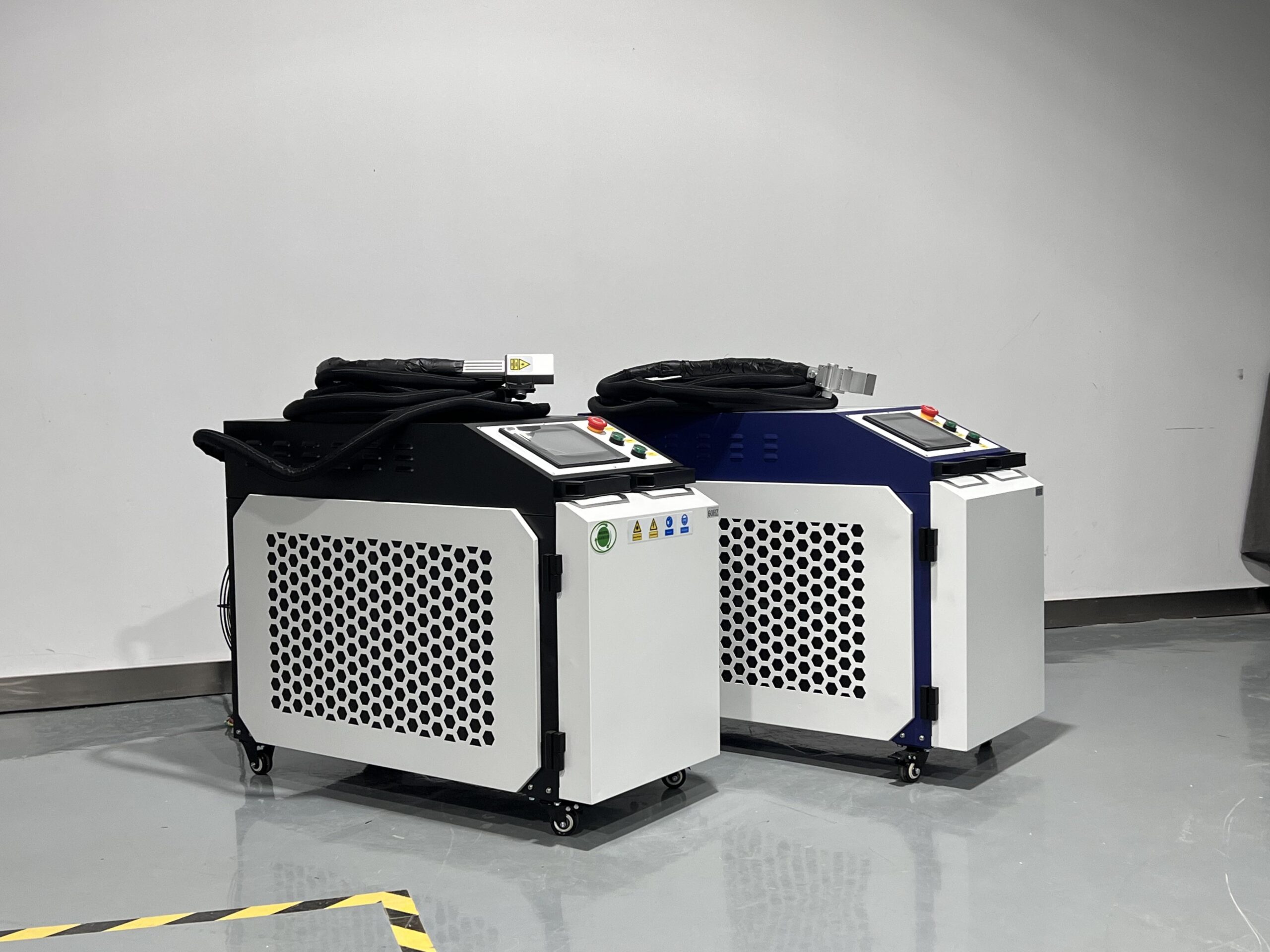
The Strategic Shift in Ho Chi Minh City’s Manufacturing Sector
Ho Chi Minh City (HCMC) has long been the industrial heartbeat of Vietnam, but the recent explosion in e-commerce and global supply chain shifts has placed immense pressure on the logistics infrastructure. This pressure translates directly to the storage racking industry. Warehouse operators no longer require simple shelving; they demand high-density, high-load, and precision-engineered racking systems.
To meet these requirements, HCMC-based fabricators are moving away from traditional hydraulic punching and abrasive sawing. These legacy methods are labor-intensive, prone to inaccuracies, and require multiple setups. Enter the 12kW Universal Profile Steel Laser System. In the industrial parks surrounding HCMC—from Tan Thuan to High-Tech Park—this technology is becoming the benchmark. The 12kW power threshold is particularly significant; it provides the “sweet spot” between high-speed processing of thin-walled tubes and the brute force required to pierce thick structural channels used in heavy-duty pallet racking.
The Power of 12kW: Why Intensity Matters in Racking
In the world of fiber lasers, wattage is more than just a number—it dictates the physics of the cut. A 12kW fiber laser source offers a power density that allows for “high-speed nitrogen cutting” on the medium-gauge steels (3mm to 10mm) typically used in uprights and beams.
For a storage racking manufacturer, the 12kW system provides two distinct advantages. First is the **piercing speed**. In a standard racking upright, there may be hundreds of “teardrop” or rectangular holes for beam connectors. A 12kW laser can pierce these instantaneously, whereas lower-power systems require a staged piercing cycle that adds seconds to every hole. Second is the **cutting feed rate**. When processing heavy-duty C-channels or I-beams for cantilever racking, the 12kW system maintains a stable plasma cloud, ensuring the edges are square and dross-free, which is critical for the structural integrity of the weldments.
Universal Profile Capability: Handling the Complexity of Steel Shapes
Storage racking is rarely made from simple flat sheets. It involves a complex array of geometries: square tubes, rectangular hollow sections (RHS), L-shaped angles, C-channels, and even custom-engineered “open profiles.” The “Universal” aspect of this laser system is its most vital feature for HCMC fabricators.
Equipped with advanced four-chuck systems or specialized centering jigs, these machines can transition from cutting a 100mm square tube to a 200mm structural C-channel without manual reconfiguration. This versatility is essential because a single racking project often requires various profiles. The software driving these systems—often integrated with CAD/CAM suites like Lantek or SigmaTube—automatically compensates for the structural deviations found in hot-rolled steel, ensuring that every bolt hole and connector slot aligns perfectly during site installation. In the humid climate of Southern Vietnam, where material expansion and contraction must be accounted for, this level of digital precision is a game-changer.
The Bottleneck Breaker: Automatic Unloading Systems
One of the most overlooked aspects of high-power laser cutting is the logistics of the machine itself. A 12kW laser cuts so fast that manual unloading becomes a physical impossibility for a standard crew. If the machine stops because the output bed is full, the ROI of the 12kW source is neutralized.
The Automatic Unloading System integrated into these HCMC installations solves this by utilizing synchronized conveyors and robotic pick-and-place arms. As the laser finishes a 6-meter or 12-meter profile, the unloading system gently supports the finished part, preventing the “clash and clang” that leads to surface scratches or structural deformation. For the racking industry, where parts are often powder-coated, maintaining surface integrity during unloading reduces the need for secondary grinding or polishing. Furthermore, these systems can sort parts by job number or component type, feeding directly into the next stage of the production line—welding or painting.
Optimizing the Supply Chain in the Southern Economic Zone
The implementation of these systems in HCMC is not happening in a vacuum. It is part of a broader push toward Industry 4.0. Local manufacturers are using the 12kW laser’s data connectivity to link production schedules with warehouse management systems (WMS).
Because the laser can “nest” parts of different shapes and sizes onto a single length of profile steel, material waste is reduced by up to 30%. In an era of fluctuating steel prices in the Southeast Asian market, this efficiency is the difference between a profitable contract and a loss. Moreover, the ability to produce “Just-In-Time” (JIT) components allows HCMC racking companies to compete with regional giants, offering faster lead times for the massive distribution centers being built in neighboring provinces like Long An and Binh Duong.
Engineering for Structural Integrity and Safety
In storage racking, safety is paramount. A single failed weld or a misaligned connector can lead to catastrophic warehouse collapses. The 12kW laser ensures that every “hook” and “slot” in the racking system is cut with a tolerance of +/- 0.1mm.
Traditional punching can cause “micro-fractures” or work-hardening around the edges of the holes due to the physical force of the die. In contrast, the fiber laser is a non-contact process. The heat-affected zone (HAZ) of a 12kW beam is remarkably narrow, preserving the metallurgical properties of the high-tensile steel used in modern racking. This ensures that when the beams are loaded with several tons of cargo, the stress distribution is exactly as the engineers intended. For HCMC manufacturers exporting to Europe or North America, this precision allows them to meet strict ISO and FEM (European Federation of Materials Handling) standards.
Economic Impact and the Future of HCMC Fabrication
The investment in a 12kW Universal Profile Steel Laser System is significant, but the Total Cost of Ownership (TCO) tells a compelling story. By consolidating sawing, drilling, punching, and notch-cutting into a single automated process, HCMC factories are reducing their floor space requirements and energy consumption per part.
As labor costs in Vietnam continue to rise and the demand for skilled technicians increases, automation via the unloading system reduces the reliance on manual labor for hazardous tasks. The operator shifts from being a manual handler to a system programmer. This elevation of the workforce is a key goal of the Vietnamese government’s industrial strategy.
Looking forward, we can expect to see these systems integrated with Artificial Intelligence (AI) for real-time monitoring of lens health and cut quality. In the bustling industrial suburbs of Ho Chi Minh City, the hum of the 12kW fiber laser is the sound of a new era—one where speed, precision, and automation converge to build the infrastructure of global commerce. For the storage racking industry, the “Universal” laser is no longer a luxury; it is the fundamental tool for survival and growth in a competitive global market.