The Dawn of High-Power Fiber Lasers in Ho Chi Minh City’s Industrial Belt
Ho Chi Minh City (HCMC) has long been the engine room of Vietnam’s industrial growth. As the nation aggressively expands its energy infrastructure to support a booming manufacturing sector, the demand for high-tension power transmission towers has skyrocketed. Historically, these massive structures were fabricated using traditional CNC punching, shearing, and manual plasma cutting. However, the introduction of the 12kW Universal Profile Steel Laser System has fundamentally altered the competitive landscape.
A 12kW fiber laser source provides a “sweet spot” for structural steel fabrication. It offers enough power density to maintain high feed rates through 16mm to 25mm carbon steel—the typical thickness range for primary tower legs—while remaining more energy-efficient and easier to maintain than ultra-high-power 30kW+ systems. In the humid, high-demand environment of HCMC’s industrial parks, like Hiep Phuoc or Tan Thuan, the stability and beam quality of a 12kW system provide the reliability needed for 24/7 production cycles.
Universal Profile Processing: Beyond Flat Sheet Cutting
Power towers are rarely built from flat plates alone. They are intricate lattices of L-shaped angle steel, square tubing, and heavy channels. A “Universal Profile” laser system is distinct from standard flatbed lasers because it incorporates a specialized rotary chuck system and a multi-axis head capable of navigating the “valleys” and “peaks” of structural shapes.
For an HCMC fabricator, this means the ability to load a 12-meter L-angle steel profile and perform all bolt-hole piercing, marking, and length-cutting in one automated sequence. The system’s software accounts for the structural irregularities of hot-rolled steel, using touch-sensing or ultrasonic sensors to compensate for material deviation. This ensures that every bolt hole aligns perfectly during field assembly in remote provinces, a critical factor when erecting towers hundreds of meters high where on-site corrections are nearly impossible.
The Mechanics of ±45° Bevel Cutting
The most significant technological leap in this system is the 5-axis 3D cutting head. Traditional laser cutting produces a 90-degree edge. However, for the heavy-duty welding required in power tower fabrication, edges must be prepped with V, X, or K-shaped grooves to ensure full-penetration welds.
The ±45° beveling capability allows the 12kW laser to tilt in real-time as it traverses the profile. This produces a precise chamfered edge directly on the machine.
1. **Weld Preparation:** By creating a 30° or 45° bevel during the initial cut, the fabricator eliminates the need for manual grinding or secondary milling.
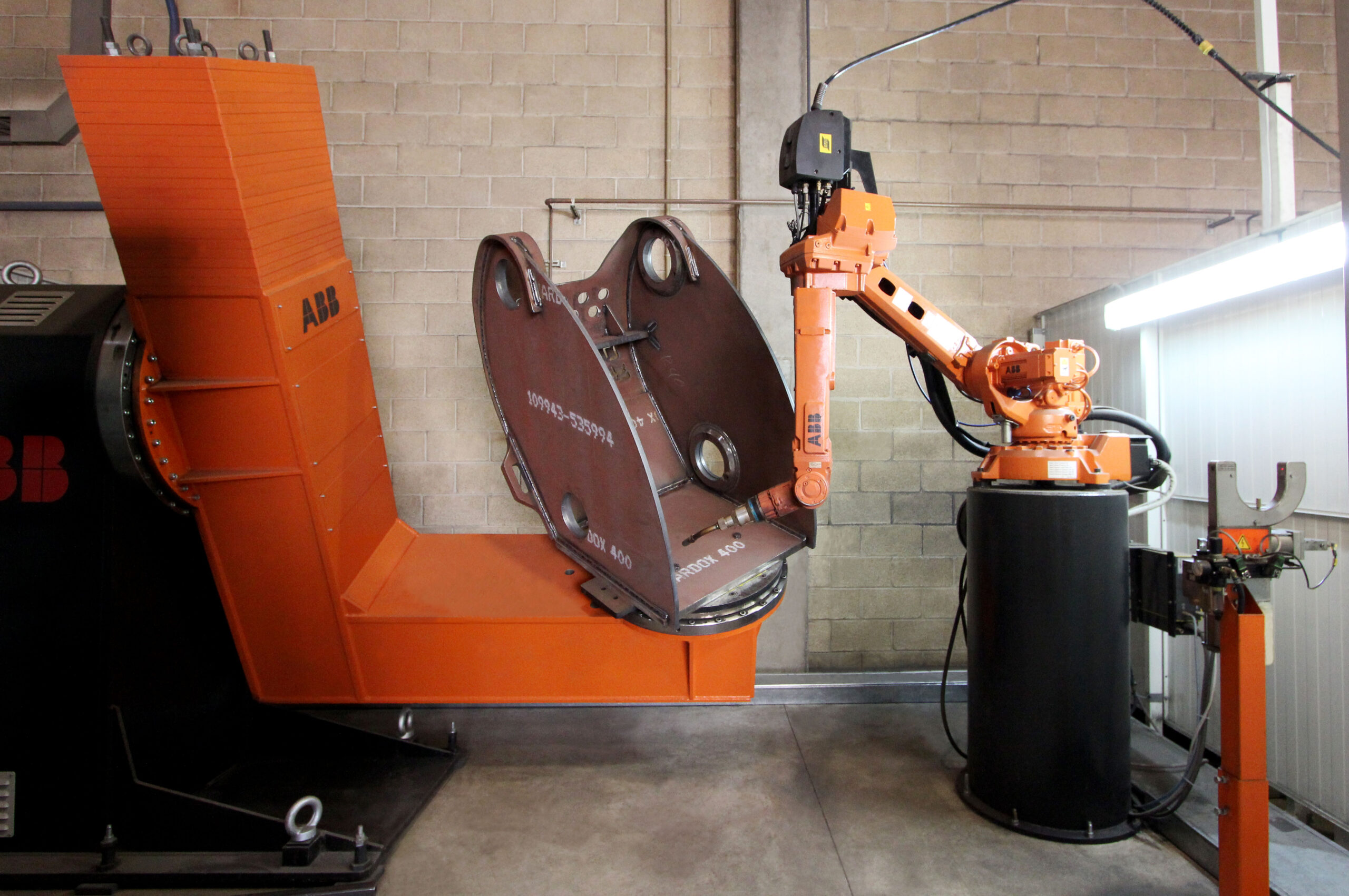
2. **Accuracy:** Manual beveling is prone to human error, leading to inconsistent weld gaps. The laser maintains a tolerance of ±0.1mm, ensuring that automated welding robots (increasingly common in HCMC factories) can operate with perfect repeatability.
3. **Complex Intersections:** When a diagonal brace meets a vertical tower leg, the intersection geometry is complex. The 3D head can cut “saddle” shapes and compound miters that allow for a flush fit, significantly increasing the structural integrity of the tower.
Optimizing Power Tower Fabrication Workflows
The fabrication of power towers involves thousands of unique parts. In a traditional HCMC workshop, a single angle-steel component might move from a saw to a drill line, then to a manual beveling station. Each move introduces “stacking errors” and increases labor costs.
The 12kW Universal Profile system collapses these steps into a single workstation.
* **Nesting Efficiency:** Advanced nesting software optimizes the layout of parts on a 12-meter beam, reducing “drop” (scrap) by up to 15%. Given the rising cost of raw steel in Southeast Asia, these material savings can pay for the machine’s financing over a few years.
* **Throughput:** A 12kW laser can pierce 20mm steel in a fraction of a second. Compared to mechanical drilling, the laser can produce all the mounting holes for a tower segment in minutes rather than hours.
* **Micro-Jointing:** The system can leave tiny tabs on parts, allowing the entire processed profile to stay intact for easier transport within the factory, then “snapped out” for the next stage of galvanized coating.
Heat Management and Material Integrity
A common concern for structural engineers in the power sector is the Heat Affected Zone (HAZ). If a laser applies too much heat, it can alter the metallurgy of the steel, making it brittle. As a fiber laser expert, I emphasize that the 12kW power level actually *improves* material integrity compared to lower-power lasers.
Because the 12kW beam moves significantly faster than a 3kW or 6kW beam, the “dwell time” of the heat on any single point is minimized. This results in an incredibly narrow HAZ. For the Q345 or Q420 high-strength steels often used in Vietnamese power projects, this ensures the tower maintains its rated tensile strength and ductility, even near the cut edges. Furthermore, the use of nitrogen as a shielding gas can produce an oxide-free edge, which is essential for the galvanization process—a standard requirement for towers exposed to Vietnam’s tropical climate and salt air.
The Strategic Importance for Ho Chi Minh City’s Infrastructure
Ho Chi Minh City serves as the primary hub for EPC (Engineering, Procurement, and Construction) companies managing projects across the Mekong Delta and the Central Highlands. By adopting 12kW bevel-cutting technology, local fabricators are not just increasing speed; they are meeting international standards (such as ASTM or EN ISO) that allow them to bid on global infrastructure contracts.
Furthermore, the labor market in HCMC is evolving. There is a shortage of highly skilled manual welders and grinders. This laser system shifts the requirement from physical labor to technical literacy. A single technician operating a 12kW laser can output the same volume as a 10-man team using traditional methods, allowing HCMC firms to scale their operations without a proportional increase in the headcount.
Overcoming Regional Challenges: Power and Environment
Operating a 12kW system in HCMC requires attention to local conditions. High humidity can interfere with laser optics, and fluctuations in the municipal power grid can damage sensitive components.
Expert-level installations in the region now include:
* **Industrial Dehumidification:** Integrated into the laser source cabinet to prevent condensation on the fiber delivery ends.
* **Voltage Stabilization:** Heavy-duty regulators to ensure the 12kW resonator receives a constant, clean sine wave.
* **Chiller Optimization:** Enhanced water cooling systems designed for 35°C+ ambient temperatures, ensuring the laser diode banks remain within their narrow operational temperature window.
Conclusion: The Future of Vietnamese Steel
The 12kW Universal Profile Steel Laser System with ±45° Bevel Cutting is more than just a tool; it is a catalyst for the modernization of Vietnam’s heavy industry. For power tower fabrication, the precision of the ±45° bevel ensures that the massive structures standing over the Vietnamese landscape are safer, more durable, and produced with unprecedented efficiency. As Ho Chi Minh City continues to lead the nation’s industrial charge, the move toward high-power 3D laser processing marks the end of the manual era and the beginning of a digital, automated future in structural steel.