
Introduction to 12kW Tube laser cutting Technology in Mexico City
The industrial landscape of Mexico City (CDMX) and its surrounding metropolitan areas, such as Naucalpan and Tlalnepantla, has undergone a significant technological shift. As the demand for high-precision components in the food processing, pharmaceutical, and automotive sectors grows, the adoption of high-power fiber laser systems has become a necessity. Specifically, the 12kW tube laser cutter represents the pinnacle of current fabrication technology, offering unprecedented speed and thickness capabilities for stainless steel profiles.
For engineering firms and metal service centers in Mexico City, transitioning to a 12kW system is not merely an upgrade in power; it is a fundamental shift in production capacity. The 12kW fiber source provides the photon density required to maintain high feed rates even when processing thick-walled stainless steel tubes, ensuring that the heat-affected zone (HAZ) remains minimal and the structural integrity of the material is preserved. This guide explores the technical nuances, environmental considerations, and operational advantages of deploying 12kW laser cutting technology within the unique geographical and economic context of Central Mexico.
The Technical Superiority of 12kW Fiber Lasers
In the realm of laser cutting, power translates directly to efficiency and edge quality. A 12kW fiber laser utilizes a bank of diode modules to generate a high-intensity beam that is delivered via a flexible fiber optic cable. Unlike traditional CO2 lasers, which rely on mirrors and gas mixtures, the fiber laser is solid-state, meaning it has no moving parts in the light-generating source. This results in significantly lower maintenance costs and higher reliability.
When processing stainless steel, the 12kW threshold allows for “high-pressure nitrogen cutting.” This process uses nitrogen as an assist gas to blow away molten metal before it can react with oxygen. The result is a clean, oxide-free edge that requires no secondary finishing before welding or assembly. In the competitive market of Mexico City, where lead times are critical, eliminating post-processing steps provides a significant logistical advantage.
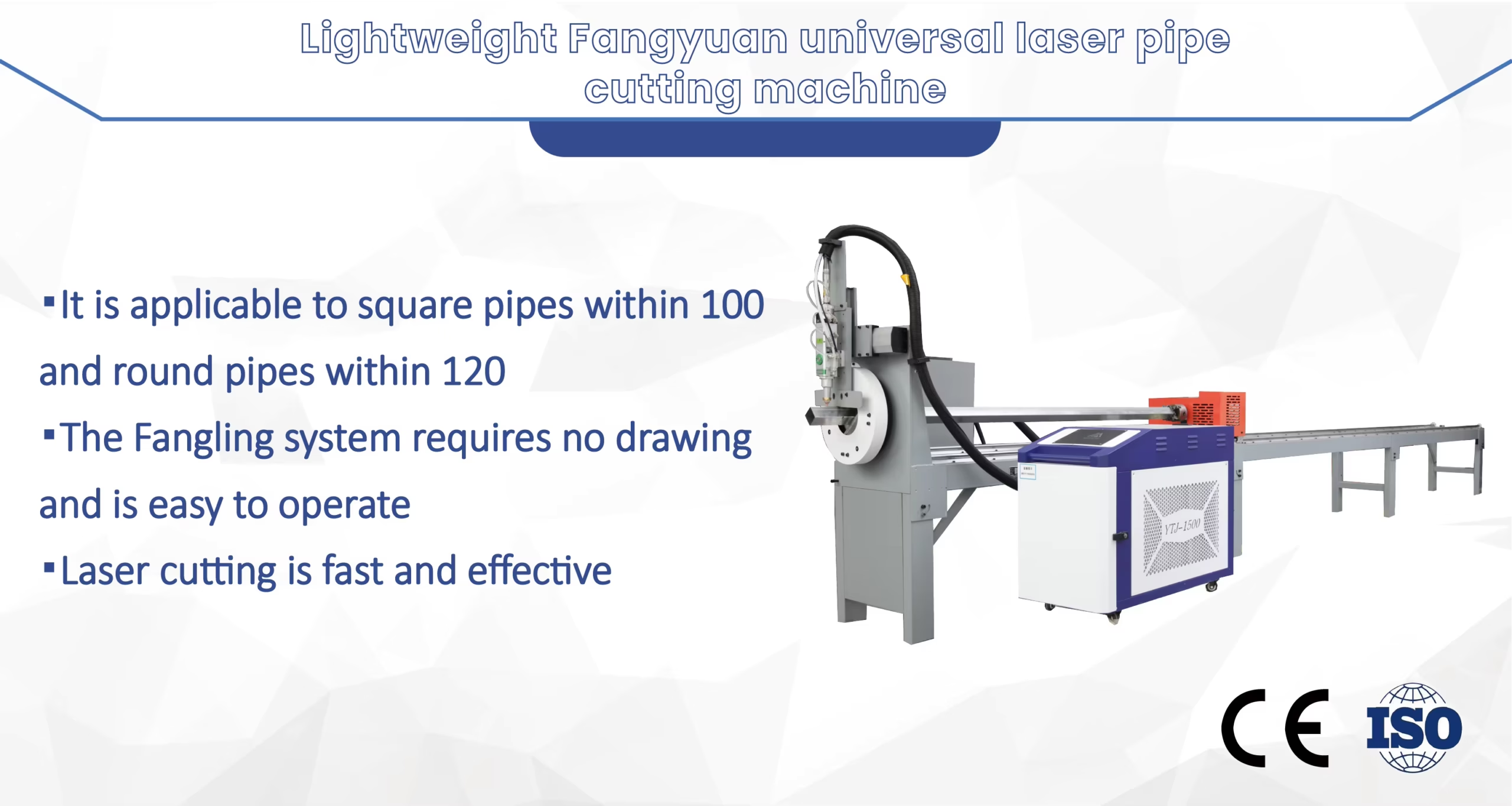 laser cutting machine MAK120″ style=”width: 100%; max-width: 800px; height: auto; margin: 20px 0;”>
Processing Stainless Steel: Material Challenges and Solutions
Stainless steel is prized for its corrosion resistance and aesthetic appeal, but it presents specific challenges for laser cutting. It has a high melting point and lower thermal conductivity compared to carbon steel. Furthermore, its reflective nature can be damaging to lower-quality laser sources. However, modern 12kW fiber lasers are designed with back-reflection protection, allowing them to process polished stainless steel (such as Grade 304 or 316) without risk to the machine’s internal optics.
Thickness and Speed Parameters
With 12kW of power, the “sweet spot” for stainless steel tube cutting expands significantly. While a 3kW or 6kW machine might struggle with wall thicknesses exceeding 6mm, the 12kW system maintains high-speed performance on tubes with wall thicknesses up to 12mm and can effectively cut up to 20mm or more depending on the specific alloy and gas pressure. For the architectural industry in Mexico City, which often requires heavy-duty structural stainless steel for high-rise reinforcements or decorative facades, this power overhead ensures that the machine is never operating at its absolute limit, thereby extending the lifespan of the cutting head components.
Kerf Width and Precision
Precision in tube laser cutting is measured not just by the accuracy of the X and Y axes, but by the stability of the chucks and the focus of the beam. A 12kW system utilizes advanced CNC controllers that adjust the focal point in real-time. This is particularly important for tubes, where the distance between the nozzle and the material surface can vary slightly due to tube eccentricity or minor deformations. The resulting kerf (the width of the cut) is extremely narrow, allowing for complex geometries, interlocking tabs, and “bend-and-weld” designs that reduce the need for complex jigs during the assembly phase.

Environmental Considerations for Mexico City Operations
Operating high-precision machinery in Mexico City requires addressing specific environmental variables. The city’s altitude—approximately 2,240 meters above sea level—affects atmospheric pressure, which in turn influences the behavior of assist gases and the efficiency of cooling systems.
Altitude and Gas Dynamics
At higher altitudes, the air is less dense. For laser cutting, this means that the delivery of nitrogen or oxygen through the nozzle must be carefully calibrated. Engineers must ensure that the gas delivery system can maintain the high pressures (often exceeding 20 bar for stainless steel) required to clear the melt. Furthermore, the cooling capacity of air-cooled chillers is reduced at high altitudes. It is imperative for shops in CDMX to utilize oversized, high-efficiency water chillers to ensure the 12kW resonator and the cutting head remain at a stable operating temperature, preventing thermal drift and maintaining cut consistency throughout long production shifts.
Power Stability and Infrastructure
The industrial electrical grid in certain sectors of the Valley of Mexico can experience fluctuations. A 12kW laser cutting system is sensitive to voltage spikes and drops. To protect the investment, professional installations in Mexico City typically include industrial-grade voltage stabilizers and UPS systems. This ensures that the fiber modules—the most expensive component of the machine—are shielded from electrical inconsistencies that could lead to premature failure or interrupted cutting cycles.
Applications in the Mexican Industrial Sector
The versatility of the 12kW tube laser cutter opens doors to various high-value industries prevalent in the region. By moving beyond simple round and square tubes to complex profiles like D-shapes, C-channels, and H-beams, fabricators can service a wider range of clients.
Food and Pharmaceutical Grade Fabrication
Mexico is a global hub for food and beverage production. Stainless steel is the standard material for these industries due to its hygienic properties. A 12kW laser cutting system allows for the rapid production of conveyor frames, mixing tanks, and bottling line components. The ability to cut clean holes for sensors and valves directly into the tube eliminates the need for manual drilling and deburring, which is essential for maintaining the sanitary standards required by Mexican regulatory bodies like COFEPRIS.
Automotive and Transportation
With the rise of electric vehicle (EV) manufacturing in Mexico, there is an increased demand for lightweight yet strong structural components. Stainless steel alloys and high-strength steels are often used in bus frames and specialized transport vehicles. The 12kW laser can slice through these materials with a speed that matches the high-volume requirements of the automotive supply chain, providing Tier 1 and Tier 2 suppliers in the State of Mexico with a competitive edge in both domestic and export markets.
Optimizing the Workflow: Software and Automation
To truly leverage the power of a 12kW machine, the “upstream” and “downstream” processes must be optimized. In a high-rent industrial environment like Mexico City, maximizing the throughput per square meter of floor space is vital.
CAD/CAM Integration
Modern tube laser cutting relies heavily on sophisticated nesting software. This software takes 3D models (from programs like SolidWorks or AutoCAD) and calculates the most efficient way to cut the parts from a standard tube length (usually 6 or 9 meters). By optimizing the nest, fabricators can reduce material waste—a critical factor when working with expensive stainless steel alloys. Advanced software also allows for “common line cutting,” where two parts share a single cut path, further increasing the speed of the 12kW system.
Automatic Loading Systems
A 12kW laser cuts so quickly that manual loading of tubes often becomes a bottleneck. In high-volume shops, an automatic bundle loader is essential. These systems can hold several tons of raw material and automatically feed the next tube into the chucks once the previous one is finished. This allows for “lights-out” manufacturing, where the machine continues to operate with minimal human intervention, significantly lowering the cost per part and allowing Mexico City businesses to compete with international manufacturers.
Maintenance and Technical Support in Mexico
Investing in a 12kW tube laser cutter is a long-term commitment. Given the complexity of the fiber source and the CNC electronics, local technical support is non-negotiable. Mexico City’s central location makes it a prime spot for service hubs. Owners should ensure that their equipment provider offers local technicians who can respond within 24 hours and maintains a local inventory of “consumables” such as nozzles, protective windows, and ceramic rings.
Preventative Maintenance Schedules
To maintain peak performance in the dusty or humid conditions sometimes found in urban industrial zones, a strict maintenance schedule must be followed. This includes:
- Daily cleaning of the protective lens and nozzle.
- Weekly inspection of the water chiller levels and conductivity.
- Monthly lubrication of the rack and pinion drive system.
- Bi-annual calibration of the laser beam’s centering and focus.
Proper maintenance ensures that the 12kW laser cutting system continues to deliver the precision required for high-end stainless steel fabrication for decades.
Conclusion: The Future of Metal Fabrication in CDMX
The integration of 12kW tube laser cutting technology is transforming the metalworking industry in Mexico City. By providing the power to handle thick stainless steel with speed and precision, these machines allow local fabricators to move up the value chain. As the Mexican economy continues to integrate more deeply into global high-tech supply chains, the ability to produce complex, high-quality components locally is a strategic advantage. For any shop looking to dominate the stainless steel market, the 12kW fiber laser is not just a tool—it is the foundation of modern engineering excellence.
















