Optimizing Aluminum Alloy Fabrication: A Guide to 12kW Tube laser cutting in Tijuana
The manufacturing landscape in Tijuana, Baja California, has undergone a radical transformation over the last decade. As a primary hub for the aerospace, medical device, and automotive industries, the demand for high-precision component fabrication has never been higher. Central to this evolution is the implementation of high-power fiber laser technology. Specifically, the 12kW tube laser cutting machine has emerged as the gold standard for processing aluminum alloys, offering a combination of speed, precision, and edge quality that was previously unattainable with lower-wattage systems or traditional mechanical sawing.
The Technical Superiority of 12kW Fiber Lasers
In the realm of industrial laser cutting, power is not merely about the thickness of the material; it is about the efficiency of energy delivery. Aluminum alloys, known for their high thermal conductivity and high reflectivity, present unique challenges to laser systems. A 12kW fiber laser source provides the necessary power density to overcome the “reflectivity barrier” of aluminum. When the laser beam first hits the surface of an aluminum tube, a significant portion of the energy is reflected. However, the 12kW output ensures that the material reaches its melting point almost instantaneously, transitioning into an absorptive state that allows for high-speed processing.
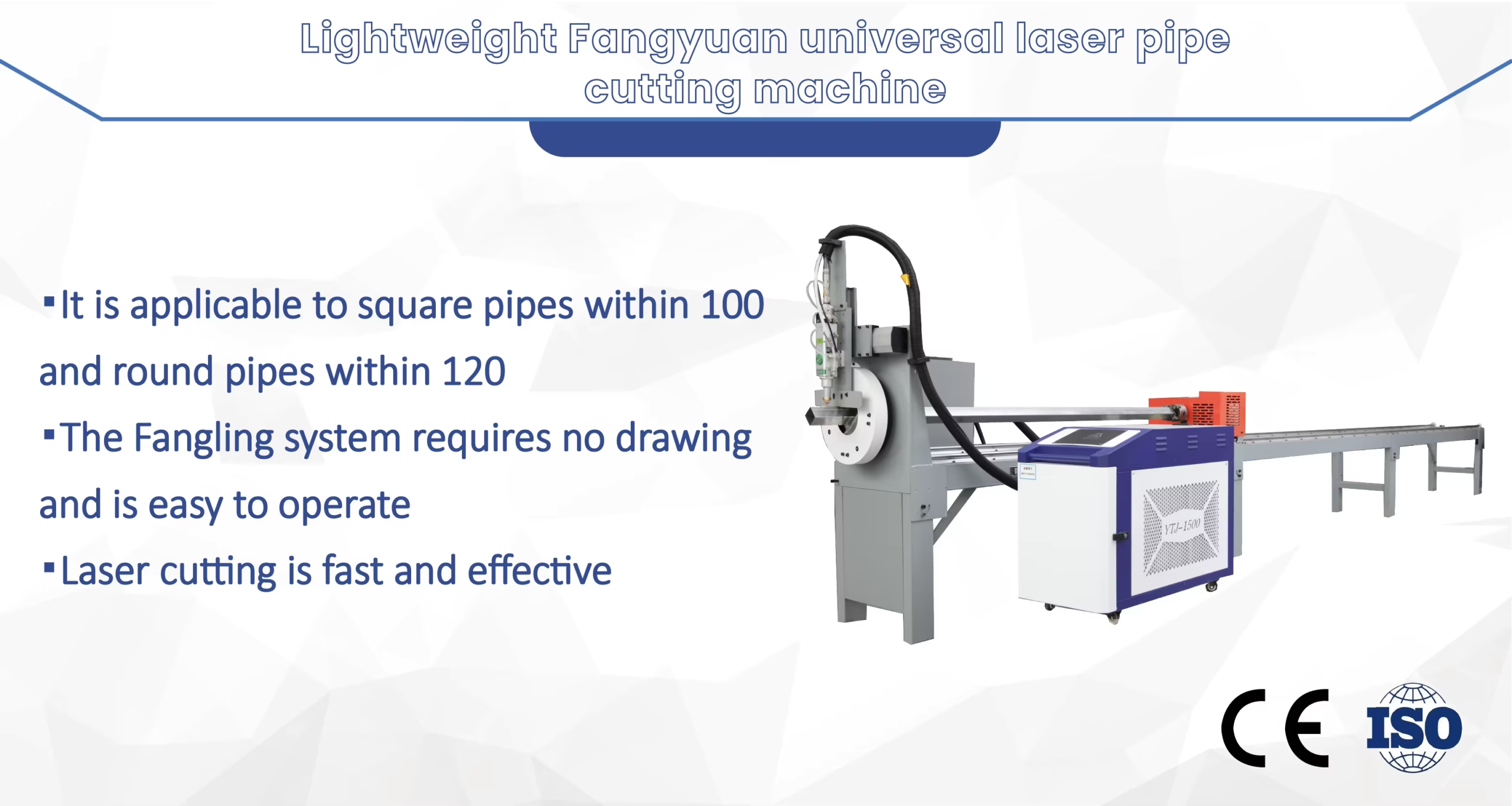
For engineers in Tijuana’s maquiladoras, the move to 12kW means the ability to cut thicker wall sections—up to 15mm or 20mm in some aluminum grades—while maintaining a narrow kerf and minimal heat-affected zone (HAZ). This is critical for structural components used in aerospace frameworks where material integrity is non-negotiable.
Aluminum Alloy Characteristics and Laser Interaction
Not all aluminum is created equal. In the Tijuana manufacturing sector, the most common alloys processed via laser cutting include the 6000 series (architectural and structural) and the 5000 series (marine and general engineering). The 6061-T6 alloy, ubiquitous in the region’s aerospace sector, requires precise parameter management to avoid dross accumulation on the interior of the tube.
The 12kW system utilizes advanced CNC controllers that can modulate pulse frequency and duty cycles in real-time. As the laser cutting head navigates the corners of a square or rectangular tube, the software automatically adjusts the power output to prevent over-burning, a common issue in lower-powered machines where the head must slow down, leading to excessive heat buildup.
Precision Engineering: Chuck Systems and Material Handling
Tube laser cutting is as much about mechanical stability as it is about optical power. A 12kW machine typically features heavy-duty pneumatic or electric chucks capable of handling rapid rotations without losing concentricity. In Tijuana’s high-volume production environments, the speed of the 12kW laser must be matched by the speed of the loading and unloading systems.
Automatic bundle loaders allow for continuous operation, feeding 6-meter or 9-meter raw tubes into the machine with minimal human intervention. This automation is vital for maintaining the competitive edge of Mexican manufacturing facilities, reducing labor costs while increasing throughput. The “four-chuck” system found in high-end 12kW models also minimizes “tailings” or material waste, ensuring that nearly 100% of the aluminum tube is utilized—a significant cost-saving factor given the fluctuating price of aluminum raw materials.

The Role of Assist Gases in Aluminum Processing
For high-quality laser cutting of aluminum, the choice of assist gas is paramount. While oxygen is often used for carbon steel, aluminum is almost exclusively cut using high-pressure nitrogen or compressed air. Nitrogen acts as a shielding gas, preventing oxidation of the cut edge. This results in a bright, clean finish that is ready for secondary processes like welding or anodizing without the need for manual deburring or grinding.
At 12kW, the cutting speed is so high that the nitrogen flow must be perfectly synchronized. The machine’s gas manifold system must handle high flow rates to effectively blow the molten aluminum out of the kerf. In the Tijuana region, where industrial gas supply chains are well-established, many facilities opt for bulk liquid nitrogen tanks to support the high consumption rates of 24/7 laser cutting operations.
Applications in Tijuana’s Key Industries
Tijuana’s strategic location on the US-Mexico border makes it a critical node for North American supply chains. The 12kW tube laser serves several key sectors:
- Aerospace: Manufacturing of lightweight seat frames, fuel lines, and internal structural bracing using 7075 and 6061 aluminum alloys.
- Automotive: Production of chassis components, roll cages, and cooling system manifolds. The transition to electric vehicles (EVs) has increased the demand for lightweight aluminum tubing to offset battery weight.
- Medical Devices: Precision cutting of small-diameter aluminum tubes for hospital equipment, surgical tool handles, and diagnostic machine frames.
- Renewable Energy: Fabrication of mounting structures for solar arrays, where aluminum’s corrosion resistance is vital for outdoor longevity.
Software Integration and Smart Manufacturing
Modern 12kW tube laser cutting systems are integrated with sophisticated CAD/CAM software such as Lantek or TubesT. These platforms allow engineers to import complex 3D geometries and automatically generate nesting patterns that maximize material yield. In the context of “Industry 4.0” in Tijuana, these machines are often networked, allowing production managers to monitor real-time metrics, including cutting time, gas consumption, and maintenance intervals.
The ability to perform complex “bird-mouth” cuts, miters, and interlocking joints directly on the laser cutting machine eliminates the need for secondary milling or drilling operations. This “all-in-one” processing is a cornerstone of lean manufacturing, reducing the number of workstations and the amount of work-in-progress (WIP) inventory on the shop floor.
Maintenance and Operational Longevity
Operating a 12kW fiber laser in a semi-arid environment like Tijuana requires specific attention to maintenance. Dust and humidity can impact the optical path and the longevity of the laser source. High-end machines utilize pressurized, dust-proof cabinets for the electronic components and the laser generator. The chiller system, responsible for cooling the 12kW source and the cutting head, must be sized correctly to handle the ambient temperatures of the region, ensuring that the laser operates within its optimal thermal range.
Regular calibration of the capacitive height sensor in the cutting head is also essential. Since aluminum can sometimes have slight surface irregularities or “bowing” in long tube lengths, the sensor must maintain a precise standoff distance (often less than 1mm) to ensure a consistent focal point and prevent collisions.
Economic Impact and Cross-Border Trade
The investment in 12kW laser cutting technology provides Tijuana-based manufacturers with a significant competitive advantage in the T-MEC (USMCA) framework. By offering high-precision, rapid-turnaround fabrication, local shops can serve as “Tier 1” and “Tier 2” suppliers to major US corporations. The speed of a 12kW laser significantly reduces lead times, making “Just-In-Time” (JIT) delivery across the San Ysidro or Otay Mesa ports a reality.
Furthermore, the high energy efficiency of fiber lasers—converting about 30-40% of electrical energy into laser light compared to the 10% efficiency of old CO2 lasers—reduces the carbon footprint of the manufacturing process, aligning with the global push for “Green Manufacturing” and ESG (Environmental, Social, and Governance) goals.
Conclusion: The Future of Metal Fabrication in Baja California
The 12kW tube laser cutter is more than just a tool; it is a catalyst for industrial growth. For the aluminum alloy market in Tijuana, it represents the pinnacle of efficiency and quality. As industries continue to demand lighter, stronger, and more complex tubular structures, the role of high-power laser cutting will only expand. By mastering the technical nuances of power modulation, gas dynamics, and automated material handling, Tijuana’s manufacturers are well-positioned to remain leaders in the global fabrication arena. The synergy between high-wattage fiber technology and the region’s skilled engineering workforce ensures that the “Made in Mexico” label remains synonymous with precision and excellence.