
Introduction to 12kW Tube laser cutting in Puebla’s Industrial Sector
The industrial landscape of Puebla, Mexico, has undergone a radical transformation over the last decade. As a primary hub for automotive manufacturing, housing giants like Volkswagen and Audi, the region demands precision, speed, and material versatility. Among the most significant technological advancements driving this sector is the 12kW tube laser cutting system. This high-power fiber laser technology has redefined how aluminum alloys are processed, moving away from traditional mechanical sawing and milling toward a fully automated, high-speed thermal process.
A 12kW resonator provides a level of power density that was previously reserved for thick carbon steel. However, when applied to aluminum—a material known for its high reflectivity and thermal conductivity—the 12kW threshold becomes a game-changer. In Puebla’s competitive “Tier 1” and “Tier 2” supplier environment, the ability to process complex tube geometries with high-wattage fiber lasers is no longer a luxury; it is a prerequisite for maintaining global manufacturing standards.
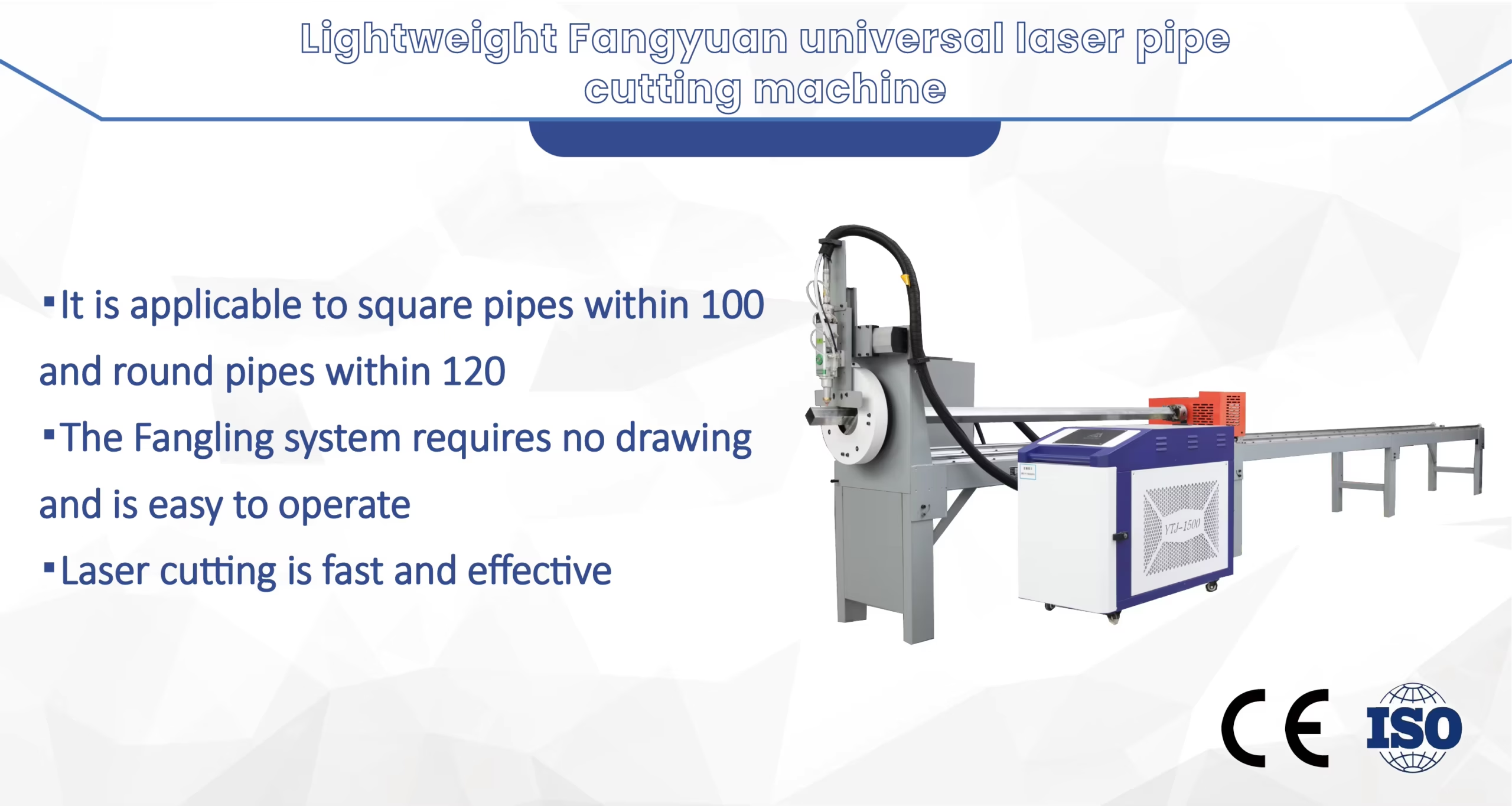 laser cutting machine“>
The Engineering Advantage of 12kW Power for Aluminum Alloys
Aluminum alloys, particularly the 5000 and 6000 series commonly used in the automotive and aerospace sectors of Puebla, present unique challenges for laser cutting. Aluminum is highly reflective in its molten state, which can cause “back-reflection” that damages lower-power laser resonators. A 12kW fiber laser overcomes this through sheer power density and advanced optical isolators.
Overcoming Thermal Conductivity
Aluminum dissipates heat rapidly. In lower-power systems, the heat from the laser often spreads into the surrounding material before the cut is completed, leading to a large Heat Affected Zone (HAZ) and potential warping. By utilizing 12kW of power, the laser cutting speed increases to a point where the beam vaporizes the material faster than the heat can conduct through the rest of the tube. This results in a much narrower kerf and a cleaner edge finish, reducing the need for secondary deburring or finishing processes.
Processing Thick-Walled Aluminum Tubes
While 2kW or 4kW lasers struggle with aluminum walls exceeding 6mm, a 12kW system effortlessly slices through wall thicknesses of 12mm to 15mm. This capability is vital for structural components in heavy-duty transport and infrastructure projects within the Puebla-Tlaxcala corridor. The high wattage ensures that the melt pool is consistent, preventing the formation of dross (slag) on the interior of the tube, which is notoriously difficult to remove in hollow profiles.
Technical Specifications of Tube Laser Cutting Systems
Modern 12kW tube laser cutting machines are sophisticated CNC platforms designed to handle round, square, rectangular, and open profiles (such as C-channels or L-angles). The integration of fiber optic delivery systems allows the 12kW beam to be maintained with minimal power loss from the resonator to the cutting head.
Automated Chucking and Material Handling
To match the speed of a 12kW laser, the mechanical components of the machine must be equally agile. High-speed pneumatic or hydraulic chucks rotate the tube with millisecond precision. In Puebla’s high-volume production lines, automated loading systems are essential. These systems can pre-load several tons of aluminum tubing, feeding them into the machine one by one, measuring their length, and detecting any bow or twist in the material before the laser cutting begins.
Nesting and Material Optimization
Software plays a critical role in the efficiency of 12kW systems. Advanced nesting algorithms allow engineers to “common line cut,” where one laser pass creates the edge for two separate parts. Given the rising cost of aluminum alloys, reducing scrap by even 3-5% through intelligent nesting provides a significant return on investment for local fabricators.

Applications in Puebla’s Automotive and Aerospace Hub
Puebla serves as a strategic center for the North American automotive supply chain. The transition toward Electric Vehicles (EVs) has placed a premium on lightweighting. Aluminum alloys are the material of choice for EV battery trays, chassis components, and space frames. 12kW laser cutting allows for the rapid prototyping and mass production of these complex aluminum tube assemblies.
Chassis and Structural Components
Engineers in Puebla utilize 12kW lasers to create intricate “tab-and-slot” designs in aluminum tubes. This allows parts to be snapped together like a puzzle before welding, ensuring perfect alignment and reducing the need for expensive manual jigging. The precision of the 12kW beam ensures that these tolerances are held within +/- 0.1mm.
Aerospace Tooling and Ducting
The aerospace presence in Central Mexico requires materials that meet stringent AS9100 standards. 12kW laser cutting provides the verticality and edge quality required for aerospace-grade aluminum 7075. The ability to cut complex cooling holes and weight-reduction patterns into curved surfaces is a primary application for 5-axis tube laser heads operating at high power.
Optimizing Gas Selection for Aluminum Cutting
The choice of assist gas is paramount when laser cutting aluminum with high wattage. The assist gas serves two purposes: it clears the molten material from the kerf and protects the focusing lens from splatter.
Nitrogen vs. Oxygen
For aluminum, Nitrogen is the standard assist gas. It is an inert gas that prevents oxidation of the cut edge. When cutting with 12kW, the high-pressure Nitrogen flow ensures a “shiny” cut edge that is immediately ready for welding. Oxygen is rarely used for aluminum as it promotes a violent exothermic reaction that leads to poor surface finish. However, some manufacturers in Puebla are now experimenting with “Mixed Gas” (a combination of Nitrogen and a small percentage of Oxygen) to increase cutting speeds on specific 6000-series alloys without compromising edge quality.
High-Pressure Compressed Air
With the power of 12kW, many shops are moving toward high-pressure compressed air as a cost-effective alternative for thinner aluminum tubes. While the edge may have a slight oxide layer, the speed and significantly lower operating costs make it an attractive option for non-structural or painted components.
Maintenance and Operational Excellence
Operating a 12kW laser cutting system in an industrial environment like Puebla requires a disciplined maintenance regimen. The high power levels mean that any contamination on the optics can lead to catastrophic failure of the cutting head in seconds.
Optical Path Integrity
The “cover glass” or “protective window” must be inspected daily. Even a microscopic speck of aluminum dust can absorb the 12kW energy, heat up, and crack the lens. Clean rooms or pressurized cabinets for the laser source are recommended to combat the dust often found in large-scale fabrication facilities.
Chiller Calibration
A 12kW fiber laser generates substantial heat within the resonator and the cutting head. The cooling system (chiller) must be perfectly calibrated to maintain a constant temperature. In the temperate climate of Puebla, humidity control is also vital to prevent condensation on the internal optics, which could deflect the beam and reduce cutting precision.
The Economic Impact of 12kW Technology in Mexico
The investment in a 12kW tube laser is significant, but the economic justification is found in the throughput. In a typical Puebla-based factory, one 12kW machine can often replace three or four lower-power machines or several traditional mechanical cutting stations. This consolidation reduces the required floor space, lowers labor costs, and decreases energy consumption per part.
Furthermore, the ability to offer 12kW laser cutting services allows local Mexican firms to compete for international contracts that require high-precision aluminum fabrication. By adopting this technology, Puebla continues to solidify its reputation as a center of manufacturing excellence, capable of handling the most demanding materials and geometries in the modern industrial era.
Conclusion
The 12kW tube laser cutting system represents the pinnacle of current fabrication technology for aluminum alloys. Its integration into the industrial fabric of Puebla has enabled local manufacturers to achieve unprecedented levels of productivity and precision. As the automotive industry continues its shift toward aluminum-intensive EV architectures, the role of high-power laser cutting will only grow. For engineers and facility managers in Puebla, mastering the nuances of 12kW fiber lasers—from gas selection to automated nesting—is the key to staying competitive in a globalized market. The future of metal fabrication is fast, precise, and powered by high-wattage fiber technology.
















