The Strategic Impact of 12kW laser cutting in Tijuana’s Stainless Steel Sector
The industrial landscape of Tijuana, Baja California, has undergone a massive transformation over the last decade. As a primary hub for nearshoring and the maquiladora industry, the demand for precision metal fabrication has skyrocketed. At the center of this revolution is the 12kW fiber laser cutting machine. For engineers and plant managers in the region, the transition from lower-wattage systems to 12kW power levels represents more than just a speed upgrade; it is a fundamental shift in the capability to process stainless steel with unprecedented efficiency and edge quality.
In a city that serves the aerospace, medical device, and automotive sectors of both Mexico and the United States, the ability to deliver high-tolerance stainless steel components is a competitive necessity. The 12kW laser cutting technology provides the thermal density required to melt through thick gauges of 304 and 316-grade stainless steel while maintaining a narrow kerf and minimal heat-affected zone (HAZ). This guide explores the technical nuances, economic benefits, and operational strategies for implementing 12kW laser cutting in the unique industrial environment of Tijuana.
Engineering Excellence: Why 12kW is the Standard for Stainless Production
When processing stainless steel, the reflectivity and thermal conductivity of the material present specific challenges. Traditional CO2 lasers or even low-power fiber lasers often struggle with dross accumulation and slower feed rates as material thickness increases. The 12kW fiber laser overcomes these hurdles through sheer power density. By concentrating 12,000 watts of energy into a beam often less than 100 microns in diameter, the machine achieves instantaneous vaporization of the metal.
High-Speed Processing and Throughput
For a job shop in Tijuana, throughput is the primary driver of profitability. A 12kW system can process 3mm stainless steel at speeds exceeding 30 meters per minute. Even at thicknesses of 12mm to 20mm, where lower-power lasers might revert to a slow “slugging” pace, the 12kW maintains a consistent, high-velocity cut. This speed does not just increase the number of parts per hour; it reduces the time the heat source is in contact with the material, which is critical for preventing warping in thin-gauge stainless steel sheets.
Superior Edge Quality and Minimal Post-Processing
One of the most significant advantages of high-power laser cutting is the reduction in secondary operations. In the medical device industry—a major pillar of Tijuana’s economy—stainless steel parts often require a burr-free finish for sterilization and safety. The 12kW laser, when paired with high-pressure nitrogen assist gas, produces a clean, oxide-free edge that is ready for welding or assembly immediately after cutting. This eliminates the need for manual deburring or grinding, significantly lowering labor costs and lead times.
Material Dynamics: Processing 300-Series Stainless Steel
Tijuana’s manufacturing base heavily utilizes 300-series stainless steel, particularly Grade 304 for general industrial use and Grade 316 for marine or medical applications due to its superior corrosion resistance. Cutting these materials requires a deep understanding of how high-power fiber beams interact with chromium and nickel alloys.
Thermal Management in Thick Plates
As the thickness of the stainless steel plate increases, managing the heat becomes more complex. A 12kW laser cutting system utilizes advanced pulsing techniques and beam modulation to ensure that the “pierce” phase—the initial hole-making process—is fast and clean. Without sufficient power, piercing thick stainless steel can lead to “volcanoing,” where molten metal splashes back onto the laser nozzle. The 12kW power reserve allows for a “flash pierce,” which protects the consumables and ensures the integrity of the surrounding material.
Consistency Across the Sheet
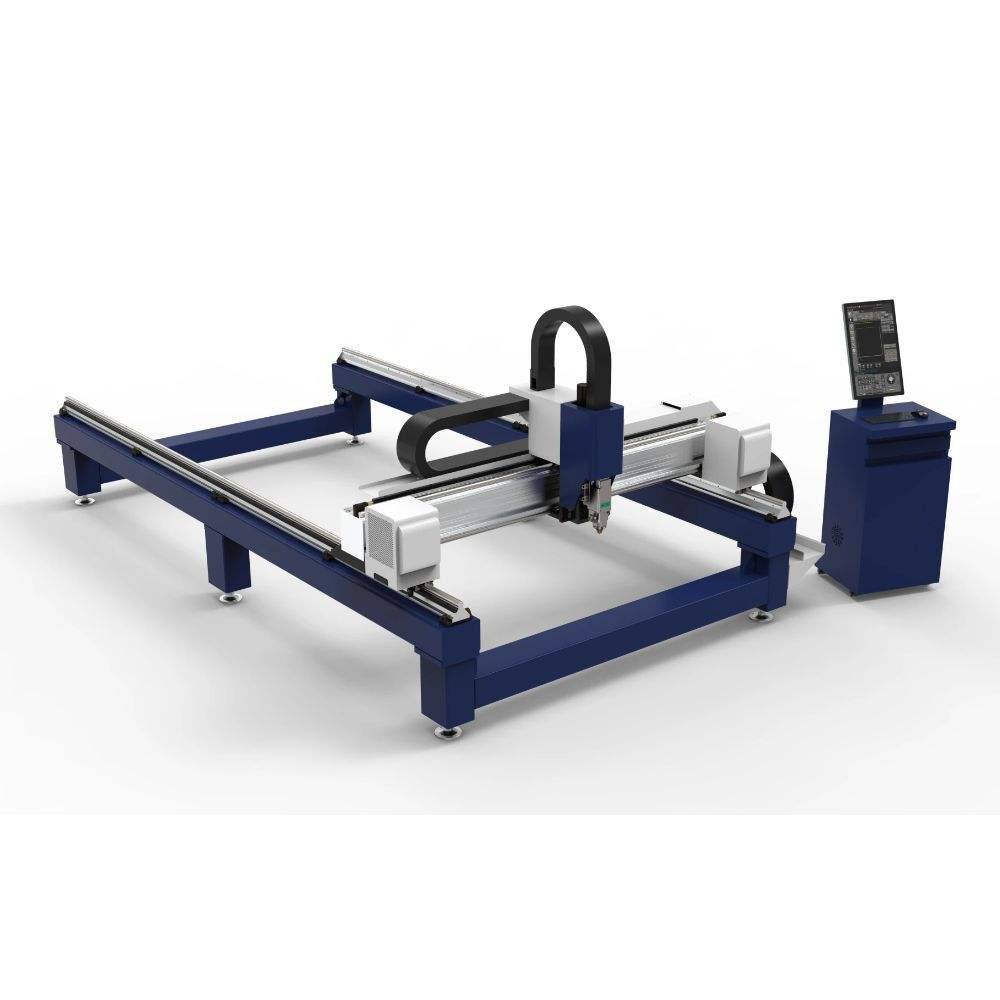
In large-format sheet metal processing, maintaining beam consistency from one corner of the shuttle table to the other is vital. Modern 12kW machines used in Tijuana are equipped with sophisticated collimation systems and auto-focusing heads. These components adjust the focal point in real-time to compensate for any slight deviations in the flatness of the stainless steel sheet, ensuring that every part on a 3000mm x 1500mm table meets the same rigorous specifications.
The Role of Assist Gases in High-Power Laser Cutting
The choice of assist gas is perhaps the most critical variable when using a 12kW laser on stainless steel. While oxygen is often used for carbon steel to add exothermic energy to the cut, it is generally avoided for stainless steel because it creates an oxidized, darkened edge that compromises corrosion resistance and paint adhesion.
Nitrogen: The Gold Standard for Stainless
Nitrogen is the preferred assist gas for 12kW laser cutting of stainless steel. It acts as a mechanical force to blow the molten metal out of the kerf without reacting chemically with the material. This results in a “bright” finish. However, at 12kW, the volume of nitrogen required is substantial. Many high-volume facilities in Tijuana are moving away from liquid nitrogen tanks and toward on-site nitrogen generation systems. These systems can provide the high pressures (up to 25-30 bar) needed to keep pace with the 12kW cutting speeds, offering a significant reduction in long-term operational costs.
Compressed Air Cutting
Recent advancements in 12kW technology have made high-pressure compressed air cutting a viable alternative for certain stainless steel applications. While the edge may have a very slight tint compared to pure nitrogen, the cutting speeds are often even faster, and the cost per meter is significantly lower. For internal structural components where aesthetic perfection is secondary to structural integrity, air cutting with a 12kW laser is becoming a popular choice in the Tijuana maquiladora sector.
Economic Advantages for the Tijuana Maquiladora Industry
Tijuana’s proximity to the US border creates a unique economic pressure: shops must match US quality standards while leveraging Mexican operational efficiencies. The 12kW laser cutting machine is the bridge that makes this possible. By investing in high-power automation, local manufacturers can compete on a global scale.
Reducing the Cost Per Part
While the initial capital expenditure for a 12kW fiber laser is higher than a 4kW or 6kW unit, the cost per part is lower. This is due to the exponential increase in cutting speed. If a 12kW machine can produce three times the parts in the same shift as a 4kW machine, the overhead costs (electricity, rent, labor) are distributed across a much larger volume of product. In the high-volume environment of Tijuana’s industrial parks, this ROI is often realized within 18 to 24 months.
Labor Efficiency and Automation
Finding skilled labor is a challenge worldwide, and Tijuana is no exception. A 12kW laser cutting system often comes equipped with automated loading and unloading cycles. This allows a single operator to manage multiple machines or focus on quality control rather than manual material handling. The precision of the 12kW beam also means that parts fit together more accurately in the welding department, reducing the skill level required for assembly and decreasing the rate of scrap.
Optimizing Maintenance and Longevity in Coastal Industrial Zones
Operating high-tech machinery in Tijuana presents specific environmental challenges. The city’s coastal proximity means that salt air and humidity can affect sensitive electronic and optical components. For a 12kW laser cutting system, maintenance is not optional—it is a prerequisite for survival.
Environmental Control and Chiller Systems
A 12kW fiber laser generates a significant amount of heat within the power source and the cutting head. A robust, dual-circuit industrial chiller is essential. Furthermore, the laser source should be housed in a climate-controlled cabinet to protect the diodes from the humidity fluctuations common in the Baja California region. Regular inspection of the bellows and the external optics is necessary to prevent dust and particulate matter—often prevalent in busy industrial zones like Otay Mesa—from interfering with the beam path.
Local Support and Technical Expertise
For companies in Tijuana, choosing a 12kW laser cutting provider with a local service presence is vital. Downtime in a just-in-time (JIT) manufacturing environment is catastrophic. Ensuring that technicians can arrive on-site within hours, rather than days, and that spare parts (such as nozzles, ceramic rings, and protective windows) are stocked locally is a key factor in the long-term success of any stainless steel fabrication project.
Conclusion: The Future of Metal Fabrication in Baja
The adoption of 12kW laser cutting technology is a clear indicator of Tijuana’s maturation as a world-class manufacturing hub. By focusing on the specific requirements of stainless steel—precision, speed, and edge quality—local manufacturers are positioning themselves at the forefront of the global supply chain. As power levels continue to climb and automation becomes more integrated, the 12kW fiber laser will remain the workhorse of the industry, turning raw stainless steel sheets into the complex components that power the modern world.
Whether you are producing medical surgical trays, aerospace brackets, or food-grade kitchen equipment, the 12kW laser provides the technical foundation needed to exceed client expectations. In the competitive landscape of Tijuana, where the “Made in Mexico” label is increasingly synonymous with high-tech excellence, the 12kW laser is not just a tool; it is a strategic asset for the future of engineering.