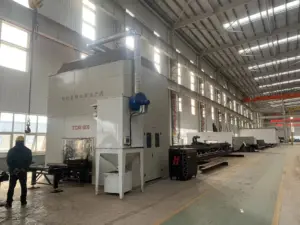
Introduction to 12kW Fiber Laser Technology in the Mexican Market
The industrial landscape of Mexico City (CDMX) and its surrounding metropolitan areas, such as Naucalpan and Tlalnepantla, has seen a significant shift toward high-capacity automation. As a primary hub for automotive, aerospace, and HVAC manufacturing, the demand for precision and throughput has made the 12kW fiber laser a cornerstone of modern production lines. When dealing with galvanized steel—a material ubiquitous in the construction and appliance industries—the jump to 12kW power represents more than just a speed increase; it represents a fundamental change in the quality of the metallurgical finish.
laser cutting at 12,000 watts allows fabricators to overcome the traditional hurdles associated with reflective coatings and volatile surface layers. In an environment like Mexico City, where the industrial sector is under constant pressure to optimize energy costs and reduce secondary processing, the efficiency of a high-power fiber resonator is unmatched. This guide explores the technical nuances of operating a 12kW sheet metal laser, specifically tailored for the unique atmospheric and industrial conditions of the Mexican capital.

The Physics of Laser Cutting Galvanized Steel
Galvanized steel presents a unique challenge for thermal cutting processes due to the zinc coating applied to the base carbon steel. Zinc has a significantly lower melting point (approximately 419°C) and boiling point (907°C) compared to the steel substrate. During the laser cutting process, the zinc layer vaporizes before the steel melts, which can lead to turbulence in the melt pool and potential contamination of the laser optics if not managed correctly.
Managing the Zinc Vaporization
With a 12kW power source, the energy density at the focal point is sufficient to vaporize the zinc and melt the steel so rapidly that the “interaction zone” is minimized. This high-speed processing prevents the zinc from delaminating or bubbling excessively along the cut edge. For engineers in Mexico City, where humidity can fluctuate, maintaining a dry and stable assist gas environment is critical to ensure that the vaporized zinc does not react with atmospheric moisture to form heavy oxides on the cut surface.
Reflectivity and Beam Absorption
While fiber lasers operate at a wavelength (typically 1.064 μm) that is highly absorbed by metallic surfaces, the shiny nature of fresh galvanization can still pose a risk of back-reflection at lower power levels. A 12kW system provides the “brute force” necessary to immediately pierce the material and establish a stable keyhole, virtually eliminating the risk of reflected light damaging the fiber delivery cable or the resonator itself.
Atmospheric Considerations for Mexico City (Altitude and Pressure)
Operating high-precision machinery in Mexico City requires an understanding of the local geography. At an elevation of approximately 2,240 meters (7,350 feet), the atmospheric pressure is significantly lower than at sea level (roughly 75-80 kPa vs 101.3 kPa). This has two primary effects on laser cutting operations.
Assist Gas Dynamics
The lower atmospheric pressure affects the density of the assist gas as it exits the nozzle. Whether using Nitrogen or High-Pressure Air, the flow dynamics change at high altitudes. Engineers must often compensate by increasing the gas pressure by 10-15% compared to manufacturer specifications derived at sea level. This ensures that the kinetic energy of the gas is sufficient to clear the molten slag from the kerf, which is particularly important when cutting galvanized steel to prevent “dross” or burrs from forming on the bottom edge.
Cooling System Efficiency
The thinner air in CDMX is less efficient at dissipating heat. The chiller unit for a 12kW laser—which is responsible for cooling both the resonator and the cutting head—must work harder. It is vital to ensure that the chiller is rated for the altitude or has sufficient overhead capacity. Overheating can lead to beam instability or “thermal lensing,” where the focus position shifts during long production runs, a common issue when processing large batches of galvanized ductwork or structural components.

Optimizing 12kW Parameters for Galvanized Sheets
To achieve a “burr-free” finish on galvanized steel, the 12kW laser must be tuned specifically for the thickness of the sheet. Most galvanized applications in the Mexican market range from 0.5mm to 3.0mm, though 12kW machines can easily handle much thicker plates.
Gas Selection: Nitrogen vs. Oxygen vs. Air
For galvanized steel, Nitrogen is the preferred assist gas. It acts as a shielding agent, preventing the oxidation of the steel and the zinc at the cut edge. This results in a clean, silver finish that is ready for welding or painting without secondary grinding. However, given the cost of Nitrogen in central Mexico, many shops are moving toward “High-Pressure Air” cutting. With 12kW of power, the machine can cut through 3mm galvanized sheet using compressed air at speeds exceeding 40 meters per minute, providing a cost-effective balance between speed and edge quality.
Nozzle Selection and Focal Position
A double-layer nozzle is typically recommended for galvanized materials. This design helps stabilize the gas flow and protects the protective window from zinc splatter. For a 12kW beam, the focal point is usually set slightly below the surface of the material (negative focus) to widen the kerf slightly, allowing the high-pressure gas to evacuate the zinc-rich melt more effectively.
Infrastructure and Power Stability in the Valle de México
A 12kW fiber laser is a significant electrical load. In industrial zones like Iztapalapa or the State of Mexico, power grid fluctuations can be a concern. A 12kW laser cutting system typically requires a total power input of 60kW to 100kW when accounting for the chiller, dust collector, and motion system.
Voltage Regulation
It is mandatory to install a high-capacity industrial voltage stabilizer and a dedicated transformer. Fiber lasers are sensitive to voltage spikes and harmonic distortions. A stable power supply ensures that the laser pulse remains consistent, which is critical when cutting the sensitive zinc coating of galvanized steel. Inconsistent power can lead to “micro-stuttering” in the cut, which manifests as rough edges or increased dross.
Dust Extraction and Filtration
Laser cutting galvanized steel produces zinc oxide fumes, which are toxic if inhaled and can be abrasive to the machine’s mechanical components. In Mexico City, environmental regulations (SEDEMA) regarding industrial emissions are becoming increasingly stringent. A high-efficiency dust extraction system with HEPA filtration is necessary. Furthermore, the filters must be cleaned or replaced more frequently when processing galvanized material compared to standard carbon steel, as zinc oxide dust is particularly fine and “sticky.”
Economic Impact and ROI for Mexican Fabricators
The investment in a 12kW system is significant, but the return on investment (ROI) in the Mexico City market is driven by throughput. For a workshop producing automotive parts or large-scale construction brackets, the 12kW laser can replace two or three lower-power machines.
Throughput Advantages
In the 1mm to 3mm galvanized range, a 12kW laser is roughly 3 to 4 times faster than a 4kW laser. This allows companies to take on larger contracts with tighter deadlines, a common scenario in the fast-paced “Just-In-Time” supply chains of CDMX. Moreover, the ability to cut with air instead of expensive gases significantly reduces the “cost per part.”
Maintenance and Local Support
For operators in Mexico, local technical support is vital. The complexity of a 12kW cutting head—featuring autofocus, pressure sensors, and temperature monitoring—requires specialized calibration. Ensuring that your supplier has a service presence in Mexico City or Querétaro is essential for minimizing downtime. Regular maintenance should focus on the cleanliness of the optical path and the calibration of the height sensor, which can be affected by the conductive nature of zinc dust.
Safety Protocols and Operator Training
The intensity of a 12kW laser beam is extreme. The “Class 4” radiation produced can cause permanent eye damage or skin burns instantly, even from reflections. In a busy Mexican fabrication shop, safety culture is paramount.
Protective Enclosures
All 12kW laser cutting machines must be fully enclosed with laser-safe glass (OD6+ or higher rating). Operators must be trained to never override safety interlocks. When processing galvanized steel, the bright white flare produced by the burning zinc can also cause “welder’s flash” or eye fatigue, so viewing the process through the protective windows is always recommended over direct observation.
Fume Management
As mentioned, zinc fumes are a health hazard. Proper ventilation of the work area, in addition to the machine’s internal extraction, is necessary to comply with Mexican labor safety standards (NOM-010-STPS). Operators should be equipped with appropriate PPE and undergo regular health checks if the machine is running galvanized material 24/7.
Conclusion: The Future of Fabrication in CDMX
The 12kW sheet metal laser is a transformative tool for the Mexican manufacturing sector. By mastering the variables of galvanized steel—from the physics of zinc vaporization to the atmospheric adjustments required for Mexico City’s altitude—fabricators can achieve world-class production standards. As the region continues to grow as a global manufacturing powerhouse, the adoption of high-power laser cutting technology will be the dividing line between shops that simply compete and those that lead the market in efficiency, quality, and innovation.