
Mastering 12kW Sheet Metal laser cutting for Brass in Tijuana’s Industrial Sector
The industrial landscape of Tijuana, Baja California, has undergone a massive transformation over the last decade. As a primary hub for the Maquiladora industry, the city has shifted from basic assembly to high-precision manufacturing. At the center of this evolution is the adoption of high-power fiber laser technology. Specifically, the 12kW sheet metal laser has become the gold standard for processing non-ferrous metals like brass, which were historically difficult to manage with lower-wattage systems. This guide explores the technical nuances, operational advantages, and strategic importance of 12kW laser cutting for brass within the unique economic context of the Tijuana-San Diego border region.
The Rise of 12kW Fiber Laser Technology
In the realm of thermal fabrication, the jump from 4kW or 6kW to 12kW is not merely an incremental upgrade; it is a generational leap in capability. For engineering firms in Tijuana, the 12kW fiber source provides the power density required to maintain stable “keyhole” welding and cutting dynamics in materials that are naturally reflective. Fiber lasers operate at a wavelength of approximately 1.06 microns, which is absorbed much more efficiently by metals than the 10.6 microns of traditional CO2 lasers. However, even with fiber technology, brass remains a challenge due to its high thermal conductivity and high reflectivity. The 12kW threshold provides the sheer “brute force” energy required to overcome the initial reflectance of the brass surface, ensuring a clean pierce and a consistent cut path.
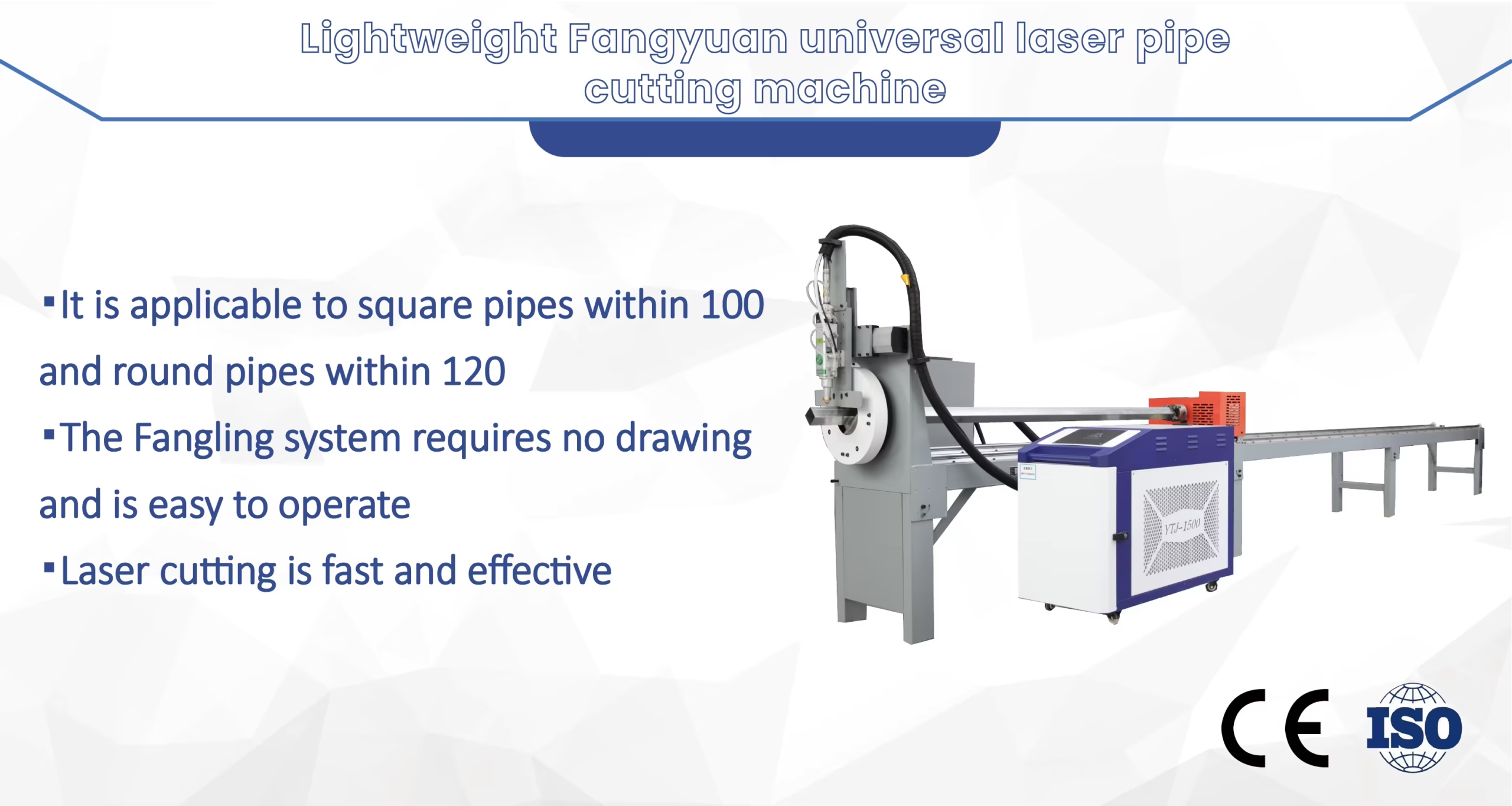 laser cutting machine MAK120″ style=”width: 100%; max-width: 800px; height: auto; margin: 20px 0;”>
The Physics of Laser Cutting Brass
Brass is an alloy of copper and zinc, both of which are excellent conductors of heat and reflectors of light. When a laser beam hits a brass sheet, a significant portion of the energy is reflected back toward the source, which can potentially damage the laser’s optical components. Furthermore, the heat is rapidly dissipated throughout the sheet, making it difficult to maintain a localized melt pool.
By utilizing a 12kW laser cutting system, operators can achieve a power density that vaporizes the material almost instantly. This rapid vaporization reduces the time the material has to reflect light or conduct heat away from the kerf. In Tijuana’s high-output environments, this translates to faster feed rates and significantly reduced “heat-affected zones” (HAZ), which is critical for maintaining the structural integrity and aesthetic quality of brass components used in electronics and decorative architecture.
Tijuana: A Strategic Hub for Precision Fabrication
Tijuana’s proximity to the United States makes it a vital link in the global supply chain, particularly for the aerospace, medical device, and automotive sectors. Many of these industries require specialized brass components—ranging from electrical connectors to high-pressure valves. The implementation of 12kW laser cutting technology allows local shops to compete on a global scale, offering the precision of a boutique laboratory with the volume capacity of a major industrial plant.
Logistically, Tijuana-based manufacturers benefit from the North American “nearshoring” trend. By housing 12kW laser cutting capabilities locally, companies can reduce lead times for California-based clients, avoiding the shipping delays associated with overseas production. The ability to process thick brass plate (up to 12mm or 15mm with high edge quality) on-site provides a significant competitive advantage in the binational regional economy.
Optimizing Parameters for 12kW Brass Processing
Achieving a perfect finish on brass requires more than just raw power; it requires meticulous control over the assist gas and focal position. For 12kW laser cutting, nitrogen is typically the assist gas of choice for brass. Nitrogen acts as a mechanical force to blow the molten metal out of the kerf without causing oxidation. This results in a bright, clean edge that often requires no secondary finishing—a major cost-saver for Tijuana’s high-volume manufacturers.
Focal position is another critical variable. When cutting brass with a 12kW source, the focus is often set deeper into the material compared to stainless steel. This ensures that the energy is concentrated where it can most effectively counteract the material’s natural reflectivity. Modern 12kW heads are equipped with auto-focusing sensors that adjust in real-time, compensating for any slight deviations in sheet flatness, which is common in cold-rolled brass stock.

Overcoming the Reflectivity Challenge
One of the primary concerns for engineers in the laser cutting field is “back-reflection.” When processing brass, the reflected laser light can travel back through the delivery fiber and damage the laser diodes. However, 12kW machines designed for industrial use in the 2020s are equipped with advanced back-reflection isolation systems. These systems detect reflected light and instantly modulate the beam or shut down the source to prevent damage. In the fast-paced production environments of Tijuana, where machine downtime can cost thousands of dollars per hour, these protective measures are indispensable.
Furthermore, the high wattage allows for “high-speed piercing.” Traditional piercing methods on brass could take several seconds, increasing the risk of back-reflection. A 12kW system can pierce 10mm brass in a fraction of a second, significantly reducing the window of vulnerability for the optics and increasing the overall throughput of the laser cutting cycle.
Applications of Laser-Cut Brass in Modern Industry
The versatility of brass makes it a preferred material for various applications serviced by Tijuana’s manufacturing sector. In the medical industry, brass is used for its antimicrobial properties and its ability to be machined into complex geometries. 12kW laser cutting allows for the production of intricate surgical instrument components with high repeatability.
In the electrical sector, the high conductivity of brass is utilized in busbars and heavy-duty switchgear. The 12kW laser can cut through thick brass sheets used for these components while maintaining a vertical edge profile, which is essential for proper fitment in electrical assemblies. Additionally, the architectural sector in the San Diego-Tijuana region frequently utilizes laser-cut brass for custom signage and decorative facades, where the precision of the 12kW beam enables the execution of highly complex geometric patterns that would be impossible with mechanical routing or punching.
Maintenance and Environmental Considerations in Tijuana
Operating a 12kW laser cutting system in a coastal industrial city like Tijuana requires specific attention to environmental factors. The humidity and salt content in the air can affect the longevity of external chillers and dust extraction systems. Engineering teams must ensure that the laser’s internal environment is strictly controlled, with high-efficiency particulate air (HEPA) filtration and dehumidification systems in place.
Preventative maintenance for a 12kW system involves regular inspection of the protective windows and the nozzle. When cutting brass, the nozzle is subjected to significant heat and potential “spatter.” Using chrome-plated or high-durability copper nozzles can extend the life of these consumables. Furthermore, because laser cutting brass produces fine metal dust, a robust filtration system is necessary to comply with Mexican environmental regulations (NOMs) and to protect the health of the workforce.
The Economic Impact of 12kW Capabilities
From a business perspective, the investment in 12kW laser cutting technology by Tijuana firms represents a shift toward higher value-added services. By reducing the cost per part through faster cutting speeds and lower gas consumption per meter, local fabricators can offer more competitive pricing to the US market. The 12kW laser effectively doubles or triples the productivity of a 4kW machine, allowing a single operator to produce the output of an entire department of older machines.
This efficiency is vital for the “Just-in-Time” (JIT) manufacturing models favored by the aerospace and automotive companies operating in Baja California. When a production line in California needs a specific brass shim or bracket, a Tijuana-based 12kW laser cutting facility can receive the CAD file, process the material, and deliver the finished parts across the border in a matter of hours, rather than weeks.
Conclusion: The Future of Laser Fabrication in Baja
The 12kW sheet metal laser has redefined what is possible for brass fabrication in Tijuana. By combining high power density with advanced optical protection and precise motion control, these machines have turned a “difficult” material into a standard production item. As the region continues to attract high-tech investment, the reliance on high-power laser cutting will only grow. For engineers and facility managers, staying at the forefront of this technology is not just about speed—it is about achieving the level of precision and reliability that modern global industry demands. Whether it is for intricate medical components or heavy-duty industrial busbars, the 12kW fiber laser stands as the ultimate tool for mastering brass in the heart of Mexico’s manufacturing powerhouse.
















