
Optimizing 12kW Fiber laser cutting for Aluminum Alloys in Mexico City
The industrial landscape of Mexico City (CDMX) and its surrounding metropolitan areas has undergone a significant transformation with the integration of high-power fiber laser technology. Among the most versatile tools in modern fabrication is the 12kW fiber laser. This power level represents a critical “sweet spot” for manufacturers, offering a balance between high-speed processing of thin sheets and the ability to penetrate thick plates with precision. When dealing with aluminum alloys—materials known for their high reflectivity and thermal conductivity—the 12kW threshold provides the necessary energy density to overcome traditional machining barriers.
However, operating a 12kW laser cutting system in Mexico City presents a unique set of engineering challenges. The city’s high altitude (approximately 2,240 meters above sea level) affects atmospheric pressure, air density, and cooling efficiency. This guide explores the technical nuances of laser cutting aluminum alloys in this specific geographic and industrial context, focusing on parameter optimization, gas dynamics, and machine maintenance.
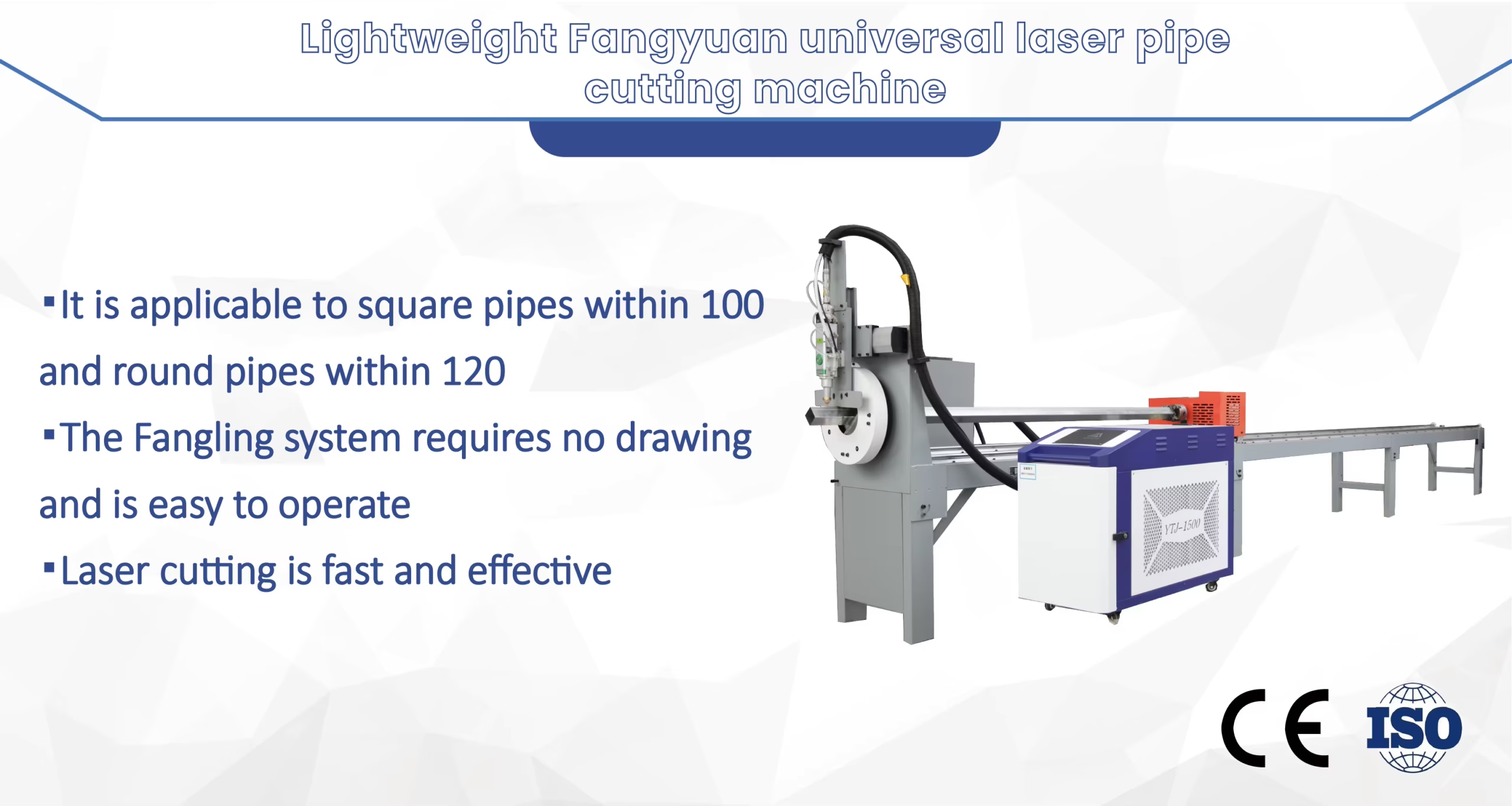 laser cutting machine” style=”width: 100%; max-width: 800px; height: auto; margin: 20px 0;”>
The Physics of 12kW Laser Interaction with Aluminum
Aluminum alloys, particularly the 5000 and 6000 series commonly used in Mexican automotive and aerospace sectors, are notoriously difficult to process with lower-power lasers. Aluminum reflects a significant portion of the laser beam’s energy in its solid state. A 12kW fiber laser utilizes a 1.07-micron wavelength, which is better absorbed by aluminum than the 10.6-micron wavelength of older CO2 lasers. The high power density of a 12kW source allows the beam to “punch through” the initial reflective barrier almost instantaneously, establishing a stable keyhole for the laser cutting process.
The high thermal conductivity of aluminum means that heat dissipates rapidly from the cutting zone into the surrounding material. Without sufficient power, this leads to a wide heat-affected zone (HAZ) and significant dross (slag) formation on the underside of the part. The 12kW output allows for higher feed rates, which minimizes the time the beam spends on any single point, thereby narrowing the HAZ and producing a cleaner, more precise edge finish.
Altitude Considerations: The Mexico City Factor
Engineering a laser cutting workflow in Mexico City requires accounting for the reduced atmospheric pressure. At 2,240 meters, the air is roughly 20-25% less dense than at sea level. This has three primary impacts on 12kW laser operations:
1. Auxiliary Gas Dynamics: Laser cutting relies on assist gases (Nitrogen, Oxygen, or Compressed Air) to eject molten material from the kerf. In lower atmospheric pressure, the behavior of the gas jet as it exits the nozzle changes. Engineers must often increase the gas pressure or adjust nozzle geometry to compensate for the different expansion rates of the gas, ensuring that the molten aluminum is efficiently cleared to prevent “re-welding” of the cut.
2. Cooling System Efficiency: Chiller units, essential for maintaining the temperature of the 12kW resonator and the cutting head, operate less efficiently at high altitudes. The lower air density reduces the heat exchange capacity of air-cooled condensers. In Mexico City, it is often necessary to oversize the chiller or ensure a high-volume, temperature-controlled environment to prevent thermal instability in the laser source.
3. Beam Path Integrity: While fiber lasers use a sealed delivery system, the external optical components and the cutting head are still subject to the local environment. Lower air density can theoretically affect the refractive index of the air, although the primary concern remains the cleanliness of the air in a high-altitude, high-pollution urban environment like CDMX. Advanced filtration is non-negotiable.

Parameter Optimization for Aluminum Alloys
Achieving a “mirror finish” on aluminum with a 12kW laser requires precise control over several variables. In Mexico City’s industrial shops, the following parameters are critical:
Assist Gas Selection: Nitrogen vs. Oxygen
For most aluminum applications, Nitrogen is the preferred assist gas. It acts as a shielding agent, preventing the oxidation of the cut edge. This is vital for parts that will later be welded or painted, as the absence of an oxide layer ensures better adhesion and weld integrity. With 12kW of power, Nitrogen cutting (often called “high-pressure fusion cutting”) can be performed on aluminum plates up to 30mm or more, depending on the alloy.
Oxygen is rarely used for aluminum because it creates a violent exothermic reaction that leads to poor edge quality. However, for specific thick-plate applications where edge aesthetics are secondary to speed, a 12kW system can utilize specialized “air cutting” techniques, provided the air is ultra-dry and oil-free—a challenge in the humid summer months of the Valley of Mexico.
Focus Position and Nozzle Diameter
Aluminum requires a different focus strategy compared to carbon steel. For 12kW laser cutting of thick aluminum, the focus is typically set “deep” into the material (negative focus). This ensures that the kerf is wide enough at the bottom to allow the assist gas to blow out the dross. Nozzle selection usually leans toward larger diameters (2.5mm to 4.0mm) to provide a high volume of gas at the point of contact.
Maintenance Protocols in High-Altitude Environments
Operating a 12kW laser in an environment like Mexico City demands a rigorous maintenance schedule. Aluminum dust is not only abrasive but also highly flammable and potentially explosive when suspended in the air. The dust collection systems must be rated for “Explosive Dust” and must be serviced more frequently due to the lower air density, which can affect the suction power of standard centrifugal fans.
Optical Contamination: The 12kW beam is extremely sensitive to contaminants. Even a microscopic particle of dust on the protective window can absorb enough energy to shatter the lens. Given the particulate matter levels in CDMX, the “clean room” integrity of the laser head must be checked daily. Using high-purity gases (99.999% Nitrogen) is essential to prevent internal contamination of the beam path.
The Economic Impact on the Mexican Manufacturing Sector
The adoption of 12kW laser cutting technology is a significant competitive advantage for Mexican “talleres” (workshops) and “maquiladoras.” As the automotive industry shifts toward electric vehicles (EVs), the demand for lightweight aluminum components has surged. A 12kW machine can process aluminum battery trays, structural components, and heat sinks at speeds that 4kW or 6kW machines simply cannot match.
Furthermore, the ability to cut thick aluminum plates (25mm+) with high precision allows local manufacturers to move away from traditional milling or waterjet cutting, which are significantly slower and more expensive per part. This transition supports the “Nearshoring” trend, allowing Mexican suppliers to meet the stringent quality and lead-time requirements of North American partners.
Safety Standards and Operator Training
A 12kW laser is a Class 4 radiation hazard. In Mexico, compliance with NOM (Normas Oficiales Mexicanas) regarding industrial safety is mandatory. Operators must be trained specifically in the behavior of fiber lasers. Unlike CO2 lasers, the fiber laser beam can be reflected more easily by aluminum, and the 1.07-micron wavelength is particularly dangerous to the human eye, as it can pass through the cornea and cause permanent retinal damage before the blink reflex can react.
Proper housing of the machine in a light-tight enclosure with laser-rated safety glass is standard. Additionally, operators must be trained in the specific fire risks associated with aluminum laser cutting. The combination of high-power energy and fine aluminum powder requires specialized fire suppression systems, such as Class D extinguishers, to be readily available.
Conclusion
The deployment of 12kW laser cutting systems for aluminum alloys in Mexico City represents the pinnacle of current fabrication technology. By understanding the interplay between high-power fiber optics and the unique atmospheric conditions of the Mexican highlands, manufacturers can achieve unprecedented levels of productivity. Success lies in the details: compensating for altitude in gas delivery, maintaining rigorous optical cleanliness in an urban environment, and leveraging the sheer speed of 12kW to produce high-quality, dross-free aluminum components. As the region continues to grow as a global manufacturing hub, the mastery of these high-power systems will be the defining factor for industrial excellence.
















