
Optimizing 12kW Sheet Metal laser cutting for Aluminum Alloys in Leon’s Industrial Sector
The industrial landscape of Leon, Guanajuato, has undergone a radical transformation over the last decade. As a central pillar of Mexico’s “Bajío” region, Leon has evolved from its traditional leather and footwear roots into a sophisticated hub for automotive, aerospace, and heavy machinery manufacturing. At the heart of this evolution is the adoption of high-power fiber technology, specifically the 12kW sheet metal laser. This power level represents a critical threshold for facilities dealing with non-ferrous metals, particularly aluminum alloys, which are notorious for their high reflectivity and thermal conductivity.
Utilizing a 12kW system for laser cutting provides a competitive edge that lower-wattage machines cannot match. When processing aluminum, the increased power density allows for faster piercing and cleaner edges on thicker plates, directly impacting the throughput of Tier 1 and Tier 2 automotive suppliers located in the Leon industrial parks. This guide explores the technical nuances, operational parameters, and strategic advantages of deploying 12kW fiber lasers for aluminum alloy fabrication in this high-demand environment.
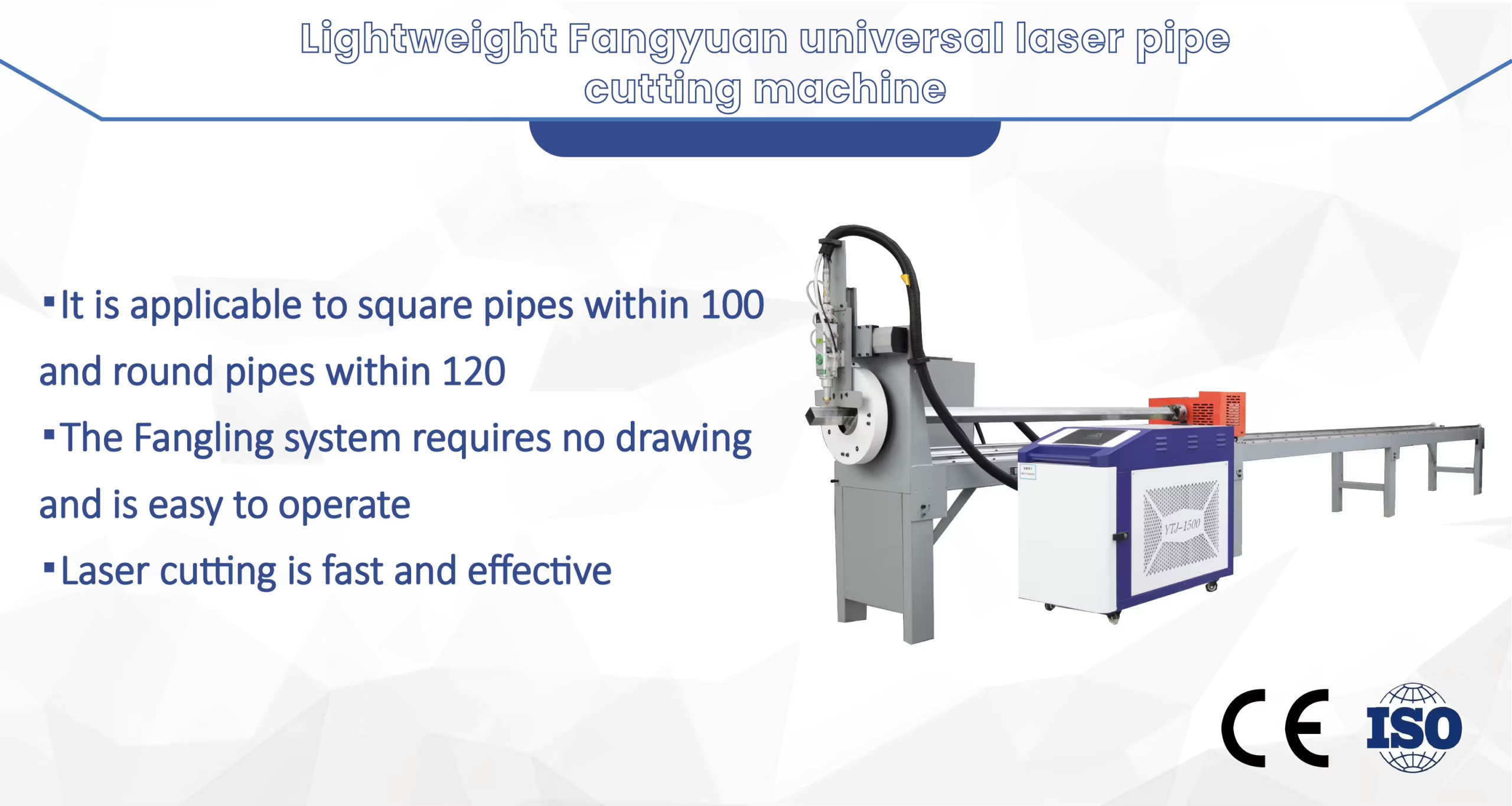 laser cutting machine“>
The Technical Advantage of 12kW Power Density
In the realm of laser cutting, power is not merely about the maximum thickness a machine can sever; it is about the quality and speed of the process. For aluminum alloys, which possess a high thermal conductivity, the heat generated by the laser is rapidly dissipated throughout the workpiece. A 12kW fiber laser overcomes this by delivering an immense amount of energy to a localized spot faster than the material can conduct the heat away. This results in a smaller heat-affected zone (HAZ) and a more stable melt pool.
Furthermore, aluminum is highly reflective in its solid state. Standard fiber lasers operate at a wavelength of approximately 1.06 microns, which aluminum initially reflects. However, the 12kW output provides enough “punch” to transition the material from solid to liquid almost instantaneously. Once the material is molten, its reflectivity drops significantly, allowing the beam to couple with the material efficiently. This high-power approach minimizes the risk of back-reflection, which can damage the internal optics of lower-powered laser sources.
Aluminum Alloy Selection and Behavior
Not all aluminum is created equal. In Leon’s manufacturing sector, three main series of aluminum alloys dominate the production lines: the 1000 series (pure aluminum), the 5000 series (magnesium-alloyed), and the 6000 series (silicon and magnesium-alloyed). Each responds differently to the 12kW laser cutting process.
- 5000 Series (e.g., 5052, 5083): These alloys are widely used in marine and automotive structures due to their corrosion resistance. They cut exceptionally well with 12kW lasers, yielding a smooth surface finish and high feed rates.
- 6000 Series (e.g., 6061): Common in structural applications, these alloys contain silicon, which can affect the dross formation. The 12kW power allows for high-pressure nitrogen cutting that “blows” the silicon-rich melt out of the kerf before it can solidify on the bottom edge.
- 1000 Series: Being the most reflective, these require the high peak power of a 12kW source to ensure consistent piercing without beam instability.

Critical Process Parameters for 12kW Systems
To achieve engineering-grade results in Leon’s competitive market, operators must fine-tune several variables. The 12kW laser cutting process is a delicate balance of physics and fluid dynamics. Key parameters include:
Assist Gas Strategy: Nitrogen vs. Oxygen
For aluminum, nitrogen is the industry standard assist gas. When using a 12kW laser, nitrogen serves two purposes: it prevents oxidation (keeping the edge bright and weld-ready) and it mechanically expels the molten aluminum from the cut. Because aluminum has a low melting point but high viscosity, high-pressure nitrogen (often exceeding 15-20 bar) is necessary to achieve a burr-free finish. While oxygen can be used to increase speed in very thick plates, it results in a heavily oxidized, darkened edge that usually requires secondary finishing, which is often unacceptable for Leon’s aerospace components.
Nozzle Selection and Stand-off Distance
With 12kW of power, the nozzle is subjected to significant heat. Double-layer nozzles are typically preferred for aluminum to stabilize the gas flow. A smaller stand-off distance (the gap between the nozzle and the plate) is critical—usually between 0.5mm and 1.0mm. This ensures that the high-pressure gas jet is concentrated directly into the kerf, preventing the “widening” of the cut and ensuring that the 12kW beam remains focused on the material’s center of gravity.
Focus Position and Beam Shaping
Modern 12kW laser cutting heads often feature automated zoom optics. For aluminum, the focus is generally set “negative,” meaning the focal point is positioned inside the material or even near the bottom of the plate. This creates a slightly wider kerf at the bottom, which facilitates the easy exit of molten metal. High-power systems also allow for “beam shaping,” where the intensity distribution of the laser spot is modified to optimize the melt flow, a feature that significantly improves the edge quality of 20mm+ aluminum plates.
The Leon Advantage: Regional Industrial Integration
Leon is strategically positioned within the “Diamond of Mexico,” making it a logistical epicenter. For companies operating 12kW laser cutting machinery here, the proximity to specialized gas suppliers and maintenance technicians is a major advantage. High-power lasers require a consistent supply of high-purity nitrogen; Leon’s infrastructure supports the bulk liquid nitrogen installations required to keep a 12kW machine running across multiple shifts.
Moreover, the local workforce in Guanajuato has become increasingly specialized. Technical universities in the region are now producing engineers who understand CNC programming and the thermodynamics of fiber lasers. This local expertise ensures that 12kW machines are not just “running,” but are optimized for maximum material yield and minimum cycle times, which is essential for the high-volume production schedules typical of the automotive industry.
Maintenance Protocols for High-Power Fiber Lasers
A 12kW laser cutting system is a significant capital investment. In the dusty or high-humidity environments sometimes found in industrial zones, maintenance is paramount. For aluminum cutting, the primary concern is the “fine dust” or aluminum oxide particles generated during the process. These particles are conductive and abrasive.
Dust Extraction and Filtration
A high-capacity dust collector is non-negotiable. Aluminum dust is also potentially explosive in specific concentrations. Therefore, the extraction systems in Leon’s fabrication shops must be equipped with explosion-venting and specialized filters to handle the high volume of particulates produced by a 12kW beam at high feed rates.
Optical Path Integrity
At 12kW, even a microscopic speck of dust on the protective window (cover glass) can absorb enough energy to shatter the lens or damage the cutting head. Operators must perform daily inspections of the optics in a “clean room” environment. The use of high-quality, original manufacturer consumables is critical; “knock-off” nozzles or windows often fail under the thermal stress of a 12kW beam, leading to costly downtime.
Conclusion: The Future of Fabrication in Leon
The transition to 12kW laser cutting for aluminum alloys is more than a technical upgrade; it is a strategic necessity for Leon’s manufacturing sector to remain globally competitive. As the automotive industry shifts toward electric vehicles (EVs), the demand for lightweight aluminum components will only increase. The 12kW fiber laser provides the speed, precision, and versatility required to meet these future challenges.
By mastering the interplay between high-power density, assist gas dynamics, and material science, fabricators in Leon can produce components that meet the most stringent international standards. Whether it is for structural aerospace parts or intricate automotive heat sinks, the 12kW sheet metal laser stands as the pinnacle of modern fabrication technology, driving the industrial heart of Mexico toward a more efficient and productive future.
















