
Introduction to 12kW Precision Laser Systems in the Mexico City Industrial Sector
The industrial landscape of Mexico City (CDMX) and its surrounding metropolitan areas, such as Tlalnepantla, Naucalpan, and Querétaro, is currently undergoing a massive technological transformation. As nearshoring continues to drive global manufacturing toward North America, the demand for high-precision, high-output fabrication has never been higher. At the center of this revolution is the 12kW precision laser system, a powerhouse of fiber laser technology specifically engineered to handle the rigorous demands of stainless steel processing.
For engineering firms and metal service centers in Mexico City, upgrading to a 12kW system represents more than just an increase in raw power. It is a strategic move toward operational efficiency, allowing for faster cycle times, reduced secondary finishing, and the ability to process thicker gauges of stainless steel that were previously the domain of plasma or waterjet cutting. This guide explores the technical nuances of implementing 12kW laser cutting technology within the unique environmental and economic context of the Mexican capital.
The Technical Architecture of 12kW Fiber Lasers
A 12kW fiber laser system operates by generating a high-intensity beam through a series of laser diodes, which is then amplified in a fiber-optic cable doped with rare-earth elements like ytterbium. The resulting beam is delivered via a flexible transport fiber to the cutting head. At 12,000 watts, the energy density at the focal point is sufficient to vaporize stainless steel almost instantaneously.
Beam Quality and Power Density
In the realm of precision engineering, power without control is inefficient. The 12kW systems used in modern laser cutting applications are characterized by their Beam Parameter Product (BPP). A lower BPP indicates a beam that can be focused into a smaller spot size, which is critical for maintaining narrow kerf widths and minimizing the Heat Affected Zone (HAZ). For stainless steel, this precision ensures that the corrosion-resistant properties of the alloy are not compromised by excessive thermal input during the cutting process.
Dynamic Motion Control and Acceleration
To fully utilize 12,000 watts of power, the machine’s gantry and motion system must be capable of extreme speeds. High-end systems utilize linear motors or precision rack-and-pinion drives capable of accelerations exceeding 2.0G. In the fast-paced manufacturing hubs of Mexico City, where “Just-In-Time” (JIT) delivery is the standard for automotive and aerospace suppliers, the ability of a 12kW machine to maintain accuracy at high traverse speeds is a significant competitive advantage.
Optimizing Stainless Steel Fabrication
Stainless steel is a staple material in Mexico City’s diverse industrial base, ranging from food processing equipment and pharmaceutical vats to architectural cladding. However, stainless steel presents unique challenges, including high reflectivity and a high melting point. A 12kW system is uniquely suited to overcome these hurdles.
Thickness Capabilities and Piercing Speed
While lower-power lasers (3kW to 6kW) can cut stainless steel, they often struggle with thicknesses exceeding 12mm, requiring slow feed rates and long piercing times. A 12kW laser cutting system effectively pushes the “sweet spot” for high-speed production up to 25mm and even 30mm for stainless steel. The high wattage allows for “flash piercing,” where the beam penetrates the plate in a fraction of a second, significantly reducing the overall processing time for parts with high hole counts.
Surface Finish and Edge Quality
One of the primary concerns for engineers in CDMX is the edge quality of stainless steel components. Using nitrogen as an assist gas with a 12kW laser prevents oxidation, resulting in a bright, clean edge that requires no post-process grinding. This is particularly vital for the medical and food industries in Mexico, where bacterial growth must be prevented by ensuring perfectly smooth surfaces. The 12kW power level allows for the use of higher nitrogen pressures while maintaining high feed rates, ensuring that the molten material is ejected cleanly from the kerf.

Environmental and Logistical Considerations in Mexico City
Operating high-precision machinery in Mexico City requires an understanding of the local environment. The city’s high altitude (2,240 meters above sea level) and varying humidity levels can impact the performance of industrial cooling systems and gas dynamics.
Altitude and Cooling Efficiency
At higher altitudes, air is less dense, which can reduce the efficiency of air-cooled chillers used to regulate the temperature of the laser source and the cutting head. When installing a 12kW system in CDMX, it is essential to specify oversized cooling units or water-to-water heat exchangers to ensure the laser remains within its optimal operating temperature range (typically 20°C to 25°C). Consistent thermal management is the key to maintaining beam stability and preventing “mode hopping” during long production runs.
Gas Supply Infrastructure
The 12kW laser cutting process is a heavy consumer of nitrogen. For shops located in industrial zones like Vallejo or Iztapalapa, establishing a reliable bulk liquid nitrogen supply is critical. Many high-volume fabricators in Mexico City are now opting for on-site nitrogen generators or high-pressure cylinder manifolds to ensure uninterrupted production. The purity of the nitrogen (typically 99.99% or higher) is paramount to achieving the “mirror finish” expected in high-end stainless steel fabrication.
Economic Impact and ROI for Mexican Fabricators
Investing in a 12kW precision laser system is a significant capital expenditure, but the Return on Investment (ROI) in the Mexican market is often realized faster than in other regions due to the sheer volume of work flowing into the country.
Throughput and Cost Per Part
The primary driver of ROI is the reduction in cost per part. A 12kW laser can cut 6mm stainless steel up to three times faster than a 6kW laser. When factoring in labor costs, electricity, and gas consumption, the higher speed of the 12kW system results in a lower total cost per meter of cut. In the competitive bidding environment of Mexico’s manufacturing sector, this allows shops to offer more aggressive pricing while maintaining higher profit margins.
Versatility and Market Expansion
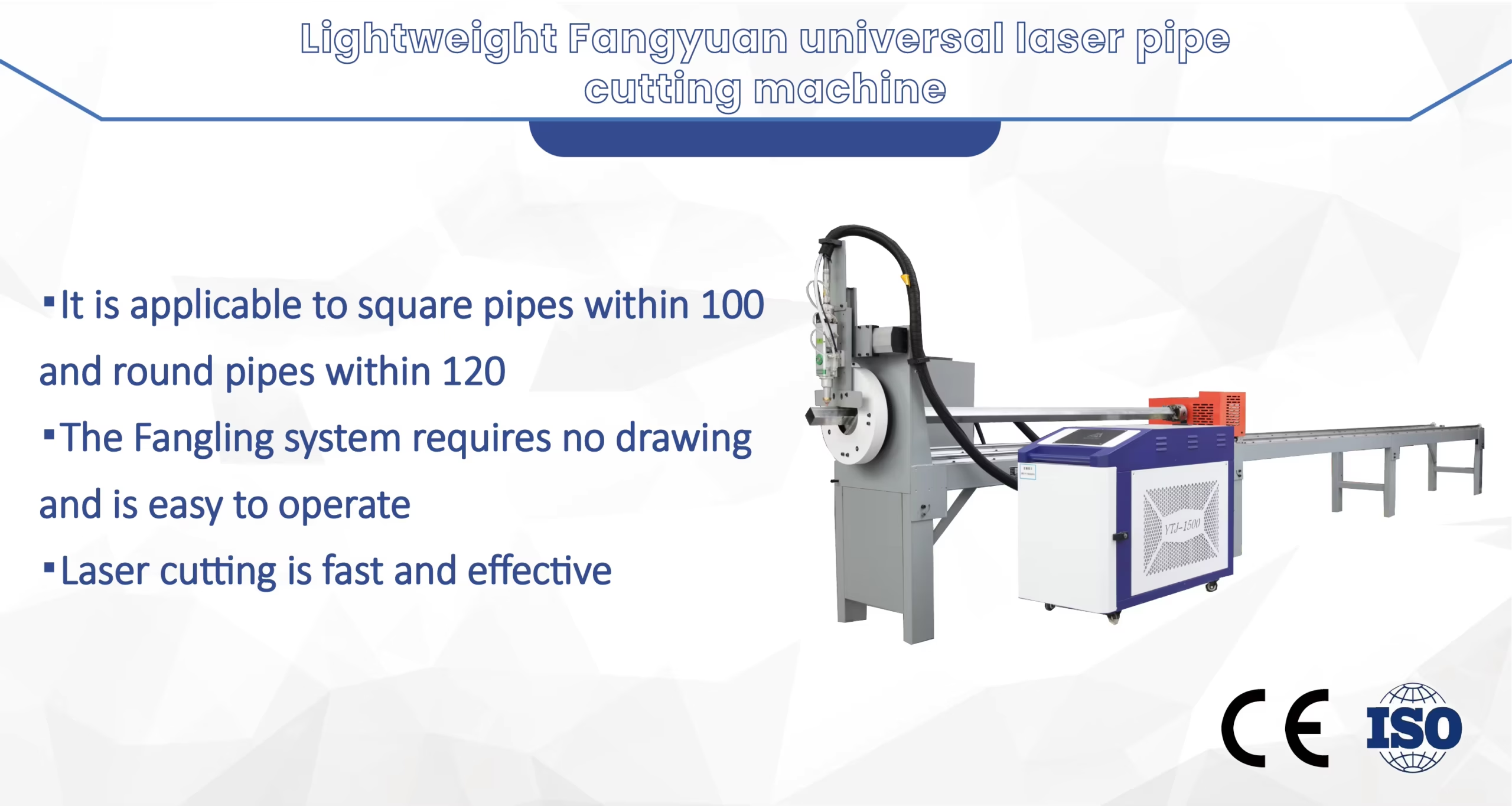
With a 12kW system, a fabrication shop in Mexico City can diversify its service offerings. The ability to cut thick stainless steel plates alongside thin-gauge sheets means the shop can serve the heavy machinery industry and the delicate electronics sector simultaneously. Furthermore, these systems are often equipped with “tube cutting” attachments, allowing for the processing of stainless steel profiles and pipes, which are in high demand for the construction of infrastructure projects across Mexico.
Maintenance and Technical Support in CDMX
To maintain the precision of a 12kW laser, a rigorous preventative maintenance schedule is mandatory. The dust and particulate matter common in urban industrial environments like Mexico City can infiltrate optical components if not properly managed.
Optical Health and Calibration
The protective windows and focusing lenses of a 12kW cutting head are subject to immense thermal stress. Regular inspection and cleaning are necessary to prevent “thermal lensing,” where contaminants on the lens cause the beam to defocus, leading to poor cut quality or even damage to the cutting head. Local technical support in Mexico is crucial; having technicians who can provide rapid response and spare parts within the CDMX metropolitan area minimizes downtime.
Software Integration and Industry 4.0
Modern 12kW systems are integrated with advanced CAD/CAM software that optimizes nesting and tool paths. For engineers in Mexico City, adopting Industry 4.0 standards—such as real-time monitoring of machine status and gas consumption—allows for better data-driven decision-making. These systems can provide detailed reports on production efficiency, helping managers identify bottlenecks in the fabrication workflow.
Conclusion: The Future of Metal Fabrication in Mexico
The adoption of 12kW precision laser cutting systems is a testament to the maturity of Mexico City’s industrial sector. By combining high-power fiber laser technology with the specific requirements of stainless steel processing, Mexican fabricators are positioning themselves as global leaders in high-quality manufacturing. As the city continues to grow as a hub for innovation and production, the 12kW laser will remain the cornerstone of efficient, precise, and profitable metal fabrication.
Whether it is for the production of complex automotive components or large-scale industrial tanks, the 12kW laser offers the speed, versatility, and precision necessary to meet the challenges of tomorrow. For engineering firms in Mexico City, the transition to high-power laser technology is not just an upgrade—it is the foundation for future growth in an increasingly demanding global market.
















