Introduction to 12kW Precision Laser Systems in Modern Fabrication
The industrial landscape of Leon has undergone a significant transformation over the last decade, transitioning from traditional mechanical fabrication to high-precision automated solutions. At the forefront of this shift is the 12kW precision laser system. As manufacturing demands increase for faster turnaround times and tighter tolerances, especially within the automotive and heavy machinery sectors prevalent in the region, the adoption of high-power fiber lasers has become a strategic necessity. A 12kW system is not merely a tool for separation; it is a sophisticated engineering platform capable of redefining the throughput and quality standards of any production facility.
The core advantage of a 12kW laser lies in its power density. While lower-wattage systems are efficient for thin gauges, the 12kW threshold provides the thermal energy required to process thick-section carbon steel with unprecedented speed. This guide explores the technical nuances of operating these systems, the metallurgical implications for carbon steel, and why Leon’s industrial corridor is the ideal environment for such advanced technology.
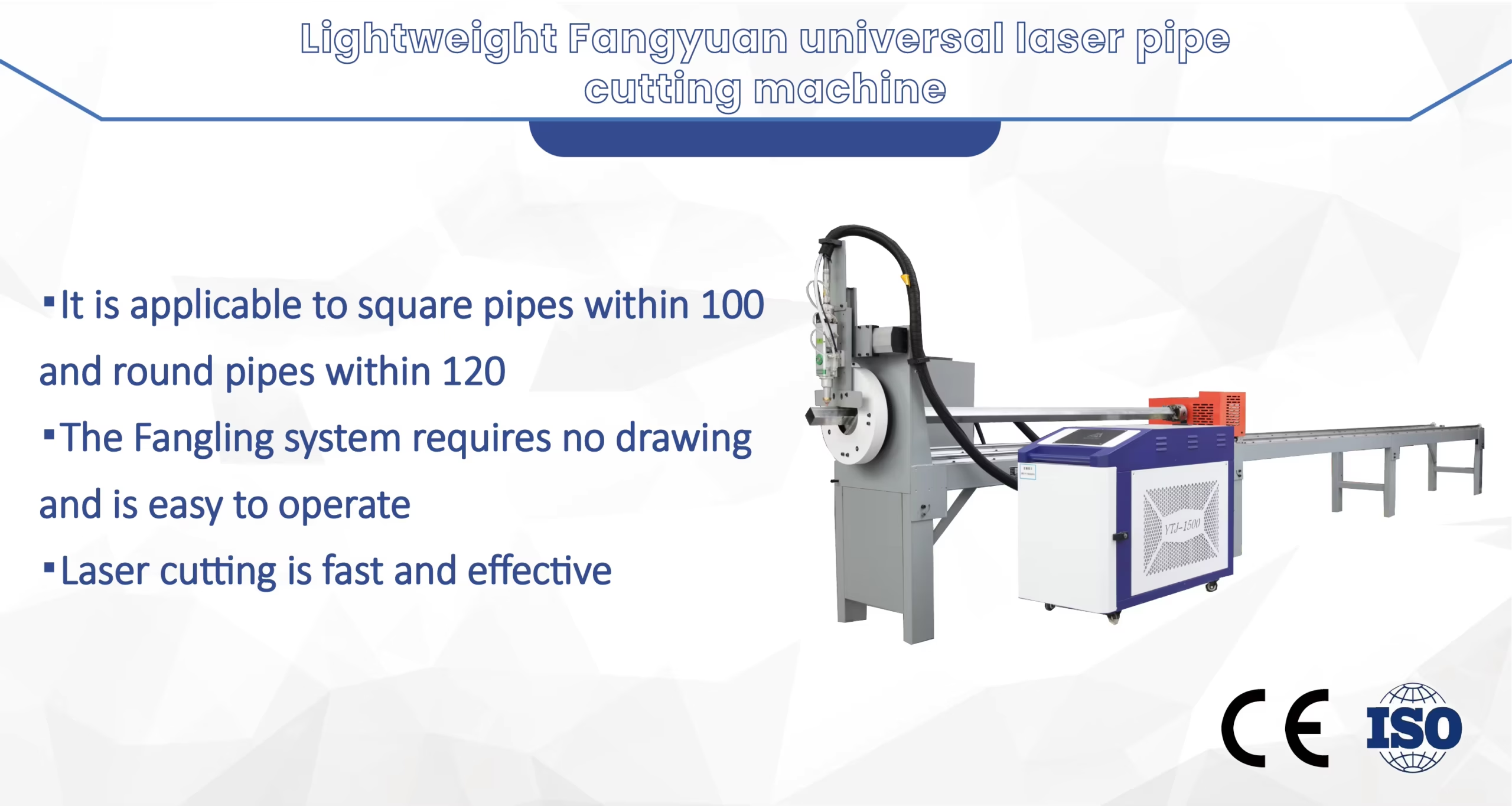
The Engineering Behind 12kW laser cutting
To understand the efficacy of a 12kW system, one must analyze the physics of the laser cutting process. Fiber laser technology utilizes a solid-state gain medium, where the laser beam is generated within an optical fiber doped with rare-earth elements. This beam is then delivered via a flexible fiber optic cable to the cutting head, where it is focused into a microscopic spot size.
Beam Quality and Power Density
At 12,000 watts, the power density at the focal point is immense. This allows the laser to reach the melting point of carbon steel almost instantaneously. In precision engineering, the “Beam Parameter Product” (BPP) is a critical metric. A 12kW system designed for precision ensures that despite the high power, the beam remains stable and concentrated. This stability is what allows for the “bright surface” finish on thicker carbon steel plates, which was previously difficult to achieve with CO2 or lower-power fiber lasers.
Thermal Management and Motion Control
A precision system is only as good as its motion platform. To handle 12kW of power, the machine’s gantry must be capable of high acceleration and deceleration (often exceeding 2.0G) without introducing vibrations. In Leon’s high-output shops, these machines utilize linear motors or high-precision rack-and-pinion systems to ensure that the laser cutting path remains accurate to within microns, even when traveling at speeds exceeding 100 meters per minute on thin materials.
Processing Carbon Steel: Metallurgical Considerations
Carbon steel is the backbone of the construction and automotive industries in Leon. However, its reaction to high-heat processes requires careful management. When using a 12kW laser, the interaction between the beam and the material is governed by the alloy’s carbon content and the assist gas used during the process.
Oxygen vs. Nitrogen Assist Gas
Traditionally, carbon steel is cut using oxygen as an assist gas. The oxygen reacts exothermically with the iron, adding thermal energy to the cut and allowing for the processing of very thick plates (up to 30mm or 40mm with 12kW). However, this leaves an oxide layer on the edge that must be removed before painting or welding. With 12kW of power, many facilities in Leon are switching to high-pressure nitrogen or air cutting for carbon steel up to 12mm. This “high-speed melt and blow” method results in a clean, oxide-free edge, significantly reducing secondary processing costs.
Minimizing the Heat-Affected Zone (HAZ)
One of the primary concerns in precision engineering is the Heat-Affected Zone. Excessive heat can alter the mechanical properties of carbon steel, leading to brittleness or warping. The 12kW laser mitigates this by moving so rapidly that the heat has less time to conduct into the surrounding material. This localized heat input ensures that the structural integrity of the component is maintained, which is vital for safety-critical parts in the automotive supply chain.
 laser cutting machine” style=”width: 100%; max-width: 800px; height: auto; margin: 20px 0;”>
Why Leon is the Hub for 12kW Technology
Leon, Guanajuato, sits at the heart of Mexico’s “Bajío” region, a powerhouse of industrial manufacturing. The local economy’s reliance on heavy fabrication makes the 12kW laser a transformative asset. Companies specializing in agricultural equipment, bus manufacturing, and structural steel components require the ability to cut thick carbon steel with high repeatability.
Meeting Tier 1 Automotive Standards
The automotive clusters in and around Leon demand components that meet strict ISO and IATF standards. The precision offered by a 12kW laser cutting system ensures that holes are perfectly circular and dimensions are consistent across thousands of parts. This level of repeatability is essential for robotic assembly lines where even a millimeter of deviation can stall production.
Local Talent and Technical Support
The concentration of industry in Leon has fostered a skilled workforce of CNC operators and laser technicians. Implementing a 12kW system in this region benefits from a robust ecosystem of gas suppliers (Oxygen, Nitrogen, and Compressed Air) and technical service providers who understand the specific environmental conditions—such as altitude and humidity—that can affect laser performance.
Optimizing the 12kW Laser Cutting Workflow
To maximize the Return on Investment (ROI) of a 12kW system, fabrication shops in Leon must focus on workflow optimization. This involves more than just the cutting process; it encompasses nesting, material handling, and software integration.
Advanced Nesting Software
With the speed of a 12kW laser, the bottleneck often shifts from the machine to the programming desk. Precision laser cutting requires sophisticated CAD/CAM software that can handle “fly cutting” (cutting a line of holes without stopping the head) and “common line cutting” (sharing a single cut path between two parts to save material). In carbon steel fabrication, where material costs represent a significant portion of the job, achieving a 90% or higher material utilization rate is critical.
Automated Material Handling
A 12kW laser can process a standard 5’x10′ sheet of 1/4″ carbon steel in a matter of minutes. Manual loading and unloading cannot keep up with this pace. Many facilities in Leon are integrating “load/unload” towers or pallet changers. These systems ensure that the laser is firing for the maximum possible percentage of the shift, turning the 12kW system into a 24/7 production engine.
Maintenance and Longevity of High-Power Systems
Operating a 12kW precision laser requires a disciplined maintenance regimen. The high power levels mean that any contamination on the optics can lead to rapid component failure. In the industrial environment of Leon, dust and ambient temperature must be controlled.
Optical Path Integrity
The cutting head is the most sensitive component. It contains protective windows, collimating lenses, and focusing lenses. Operators must perform daily inspections to ensure no “burn spots” are present. Even a microscopic speck of dust can absorb the 12kW energy, heating up and cracking the lens. Precision systems often include internal sensors that monitor the temperature and condition of the optics in real-time, providing alerts before a failure occurs.
Chiller Calibration
The 12kW laser source generates a substantial amount of heat that must be dissipated. A high-capacity industrial chiller is required to maintain the laser source and the cutting head at a constant temperature. In Leon’s warmer months, ensuring the chiller is descaled and the coolant levels are optimal is paramount to preventing thermal drift, which can affect the precision of the laser cutting path.
Economic Impact and Future Outlook
The transition to 12kW technology represents a significant capital expenditure, but the economic justification is clear. For a fabrication shop in Leon, the cost per part is drastically reduced due to the increased speed. A job that took 10 hours on a 4kW machine might take only 2 hours on a 12kW system, effectively quintupling the capacity of the shop without increasing the footprint or the labor count.
Energy Efficiency
Modern 12kW fiber lasers are remarkably energy-efficient compared to older CO2 technology. They have a wall-plug efficiency of approximately 30-40%, whereas CO2 lasers were often below 10%. This reduction in electricity consumption is a vital factor for the sustainability goals of many modern corporations operating in Leon.
The Future: Beyond 12kW
While 12kW is currently the “sweet spot” for many carbon steel applications, the industry is already seeing 20kW and 30kW systems. However, for the majority of precision fabrication needs in Leon, the 12kW system offers the best balance of power, edge quality, and operational cost. As the region continues to grow as a global manufacturing hub, the precision laser cutting of carbon steel will remain the foundation of its industrial success.
Conclusion
Mastering a 12kW precision laser system requires a blend of metallurgical knowledge, mechanical engineering expertise, and strategic workflow planning. For manufacturers in Leon, this technology offers a gateway to higher markets, allowing them to compete on a global scale by providing high-quality carbon steel components with unparalleled efficiency. By understanding the nuances of the laser cutting process, from gas selection to optical maintenance, facilities can ensure their 12kW systems remain a cornerstone of their production capabilities for years to come.