
Engineering Guide: 12kW Precision Laser Systems for Brass Fabrication in the Toluca Industrial Sector
The industrial landscape of Toluca, Mexico, has undergone a significant transformation over the last decade. As a primary hub for automotive and domestic appliance manufacturing, the demand for high-precision components has reached an all-time high. For kitchenware factory owners and lead engineers, the transition from traditional mechanical stamping to fiber laser technology is no longer a luxury—it is a competitive necessity. This guide analyzes the technical specifications and operational advantages of the 12kW Precision Laser System, specifically optimized for brass fabrication using a tube-welded standard bed.
The Technical Superiority of the 12kW Fiber Laser Source
In the context of kitchenware manufacturing, brass is a preferred material for high-end faucets, decorative handles, and structural trim due to its antimicrobial properties and aesthetic appeal. However, brass is a highly reflective non-ferrous metal, which historically posed significant challenges for lower-wattage laser systems.
A 12kW fiber laser source provides the necessary photon density to overcome the reflectivity of brass. At this power level, the beam quality (BPP) is refined to ensure that the initial “pierce” is instantaneous, preventing back-reflection that could damage the optical resonators. Data suggests that a 12kW system can process 6mm brass at speeds exceeding 12 meters per minute, a 300% increase over 4kW systems. This throughput is vital for Toluca-based factories aiming to meet just-in-time (JIT) delivery schedules for international distributors.

Structural Integrity: The Tube-welded Standard Bed
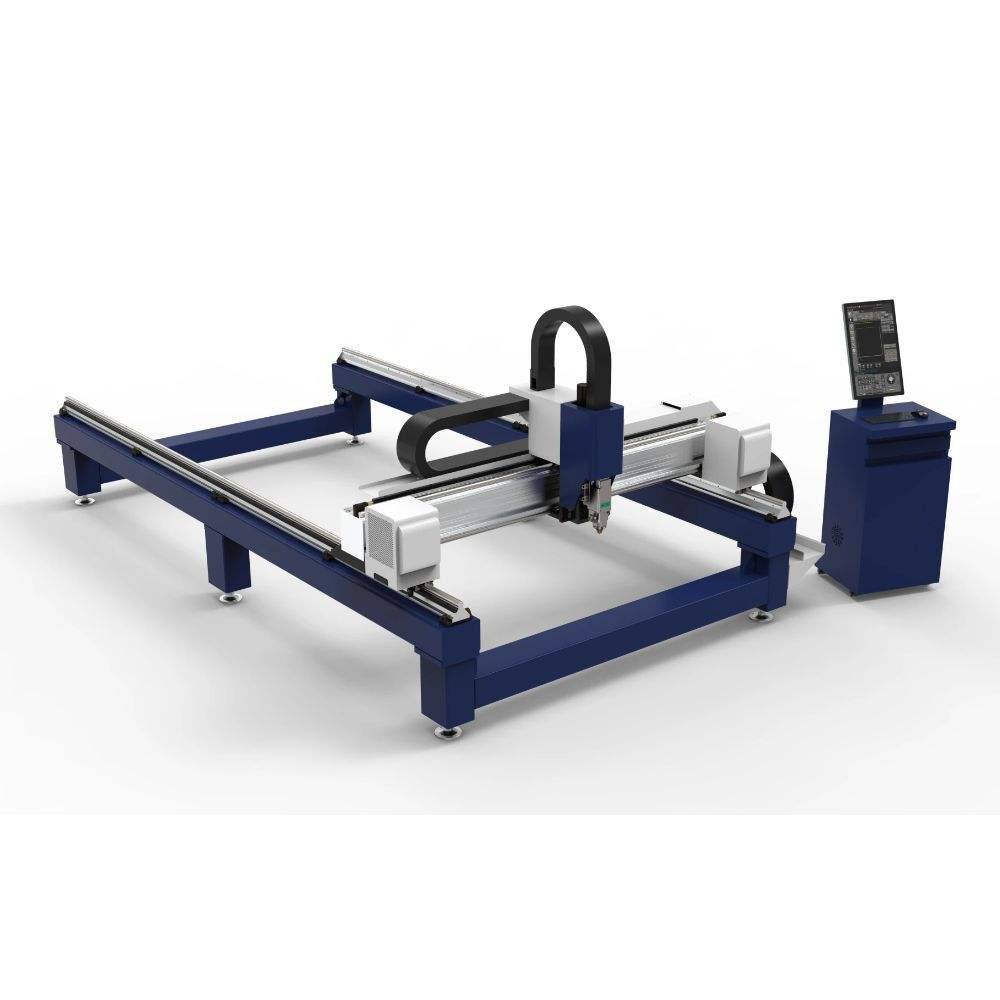
The foundation of any high-precision laser system is its bed. For the 12kW model, the tube-welded standard bed represents an engineering balance between high rigidity and thermal stability. Unlike cast iron beds which are heavy and expensive to transport, or light-duty sheet-metal frames that vibrate at high speeds, the tube-welded bed is constructed from high-strength industrial rectangular tubes.
The engineering process involves multi-segment welding followed by a rigorous stress-relief annealing process. In Toluca’s variable climate, thermal expansion can often lead to microscopic misalignments in CNC machinery. The tube-welded bed undergoes vibration aging and natural aging processes to ensure that internal stresses are eliminated. This results in a tensile strength that maintains a precision tolerance of ±0.02mm over a decade of operation. For kitchenware engineers, this means that the 10,000th brass handle cut will be identical to the first, ensuring brand consistency.
Optimizing Brass Cutting: Precision and Kerf Management
Cutting brass requires a specific gas dynamics strategy. While oxygen can be used, nitrogen is the preferred auxiliary gas for 12kW systems in the kitchenware sector to prevent oxidation of the cut edge. A 12kW system allows for “High-Pressure Nitrogen Cutting,” which blows away the molten brass instantly, resulting in a mirror-like finish that requires zero post-processing or polishing.
Key technical parameters for brass precision include:
1. Focal Position: For brass, the focal point is typically set deeper into the material compared to carbon steel to ensure a wider kerf bottom, facilitating easier dross removal.
2. Nozzle Selection: Double-layer chrome-plated nozzles are recommended to withstand the heat and prevent copper-vapor buildup.
3. Frequency Modulation: Utilizing a pulse-width modulation (PWM) approach at 12kW allows for intricate filigree work on decorative brass plates without melting the fine details.
The Toluca Market Advantage: Energy Efficiency and ROI
Toluca’s industrial parks, such as Parque Industrial Lerma, operate under specific energy regulations. A 12kW system is remarkably efficient when compared to CO2 lasers or older plasma cutters. The wall-plug efficiency of a 12kW fiber laser is approximately 35-40%, meaning less wasted energy as heat and lower cooling requirements.
For a kitchenware factory owner, the Return on Investment (ROI) is calculated through “Cost Per Part.” By increasing the cutting speed and reducing the need for secondary grinding or deburring, the 12kW system reduces the labor cost per unit by an average of 45%. In a market where labor costs are rising, automating the precision cutting of brass components allows Toluca factories to remain competitive against overseas imports.
Advanced Motion Control and Gantry Dynamics
The 12kW system utilizes an aviation-grade aluminum gantry. This material choice is critical because it offers the lightness required for high-speed acceleration (up to 1.5G) while maintaining the structural stiffness needed to support the heavy 12kW cutting head. In Toluca’s manufacturing environment, where high-volume production of small brass fittings is common, the ability of the machine to “corner” at high speeds without overshooting the programmed path is essential.
The integration of EtherCAT-based bus control systems allows for real-time communication between the CNC controller and the laser source. This ensures that the laser power is adjusted instantaneously based on the velocity of the cutting head—a feature known as “Power Ramping.” When the head slows down for a sharp corner on a brass faucet flange, the power drops accordingly to prevent “over-burning” or melting the corner.
Maintenance Protocols for High-Power Systems in Industrial Mexico
Operating a 12kW laser in an industrial environment like Toluca requires a disciplined maintenance schedule. The high altitude of Toluca (approximately 2,660 meters) can affect cooling efficiency. Engineers must ensure that the dual-circuit water chiller is rated for the local atmospheric pressure to prevent cavitation in the cooling pumps.
Daily maintenance should focus on the protective window of the laser head. Even a microscopic speck of brass dust can absorb 12kW of energy, leading to a “thermal lens” effect or the total destruction of the lens. Standardized cleaning procedures using optical-grade isopropyl alcohol and lint-free swabs are mandatory. Additionally, the tube-welded bed should be inspected for leveling every six months, as the seismic activity in central Mexico can occasionally shift factory floor foundations.
Environmental and Safety Considerations
The 12kW laser is a Class 4 radiation source. In a professional kitchenware factory, the system must be fully enclosed with OD6+ rated protective glass. Furthermore, cutting brass produces fine metallic dust and fumes that contain zinc. An integrated dust extraction system with a HEPA filter is not just an environmental recommendation; it is a health requirement for the Toluca workforce. Modern 12kW systems feature a partitioned dust extraction design, where the suction follows the laser head, maximizing the removal of particulates at the source.
Conclusion: Scaling Production for the Future
For the kitchenware factory owners of Toluca, the 12kW Precision Laser System is more than a tool—it is a platform for innovation. The combination of a robust tube-welded standard bed and the raw power of a 12kW fiber source enables the fabrication of complex brass geometries that were previously impossible or too expensive to produce.
As the Mexican market continues to demand higher quality and more intricate designs in home goods, engineers must leverage these data-driven technologies to optimize their production lines. By focusing on the technical advantages of high-power fiber lasers and the stability of engineered machine beds, Toluca’s industrial sector is well-positioned to lead the next generation of global manufacturing.
















