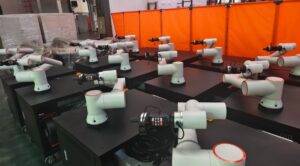
Introduction to 12kW Precision Laser System Technology in Leon
The industrial sector in Leon, Guanajuato, has long been recognized as a cornerstone of Mexican manufacturing. While historically dominated by the leather and footwear industries, the region has rapidly evolved into a sophisticated hub for automotive, aerospace, and heavy machinery production. At the heart of this evolution is the integration of high-power 12kW precision laser systems. These machines represent the pinnacle of modern laser cutting technology, offering the power density required to process non-ferrous metals—specifically aluminum alloys—with unprecedented speed and accuracy.
A 12kW fiber laser is not merely an incremental improvement over lower-wattage systems; it is a transformative tool for high-volume production environments. In the competitive landscape of Leon’s industrial parks, the ability to deliver clean, precise cuts on thick aluminum plates determines a facility’s throughput and profitability. This guide explores the technical nuances of utilizing 12kW systems for aluminum alloy fabrication, focusing on the specific needs of the regional market.
The Physics of High-Power Laser Cutting on Aluminum Alloys
Aluminum alloys present unique challenges in laser cutting due to their high thermal conductivity and high reflectivity. Unlike carbon steel, which absorbs laser energy efficiently, aluminum tends to reflect a significant portion of the beam, especially in the initial piercing phase. A 12kW system overcomes these hurdles through sheer power density and advanced beam modulation.
Overcoming Reflectivity with 12kW Fiber Technology
The 1.06-micron wavelength of fiber lasers is much better absorbed by aluminum than the 10.6-micron wavelength of older CO2 lasers. However, at 12kW, the system can generate a “keyhole” effect almost instantaneously. This allows the beam to enter the material rather than bouncing off the surface. For manufacturers in Leon working with 5000 and 6000 series aluminum, this prevents damage to the laser source and ensures a stable cutting process from the first millisecond of operation.
Thermal Conductivity and Heat Management
Aluminum dissipates heat rapidly. In lower-power systems, slow cutting speeds allow heat to conduct into the surrounding material, leading to a wider heat-affected zone (HAZ) and potential warping. The 12kW system operates at such high feed rates—often exceeding 30 meters per minute for thinner gauges—that the heat is concentrated and removed by the assist gas before it can migrate into the bulk material. This results in a superior edge quality and dimensional stability that meets the rigorous standards of the aerospace components manufactured in the Bajío region.
Optimizing Parameters for Aluminum Fabrication in Leon
To achieve precision in Leon’s diverse manufacturing shops, operators must fine-tune several critical parameters. The 12kW system provides a wide “process window,” but optimization is key to reducing dross (burr) and ensuring a “mirror-like” finish on the cut edge.
Assist Gas Selection: Nitrogen vs. Oxygen
For most aluminum alloy applications in Leon, Nitrogen is the preferred assist gas. Operating at high pressures (typically 12 to 18 bar), Nitrogen acts as a mechanical force to blow the molten aluminum out of the kerf. Because it is an inert gas, it prevents oxidation, leaving a clean, weld-ready edge. While Oxygen can be used for thicker plates to add exothermic energy, it often results in a rougher surface finish that requires secondary grinding—a cost-added step that 12kW laser cutting aims to eliminate.
Focal Position and Nozzle Geometry
Precision laser cutting of aluminum requires a “negative focus,” where the beam’s focal point is positioned inside or even near the bottom of the material. This creates a wider kerf at the bottom, allowing the high-pressure gas to evacuate the melt more effectively. When paired with a double-layer nozzle, the 12kW system can maintain a stable gas flow even at high speeds, preventing the formation of “stalactites” or dross on the underside of the workpiece.
 laser cutting machine” style=”max-width: 100%; height: auto; margin: 20px 0;”>
Economic Impact on Leon’s Industrial Supply Chain
The adoption of 12kW laser cutting technology has a direct correlation with the economic competitiveness of Leon-based suppliers. In the automotive sector, where Tier 1 and Tier 2 suppliers must adhere to “Just-In-Time” (JIT) delivery schedules, the speed of the 12kW system is a significant advantage.
Reducing Per-Part Cost
While the initial capital expenditure for a 12kW system is higher than a 6kW or 8kW unit, the cost-per-part is significantly lower in high-volume runs. The 12kW system can process 10mm aluminum three times faster than a 4kW system. This increased throughput allows shops in Leon to take on more contracts without expanding their physical footprint or increasing their labor force, effectively lowering overhead costs per unit of production.
Material Versatility and Waste Reduction
Precision laser cutting software integrated with 12kW systems allows for highly efficient nesting. Because the 12kW beam is so stable, parts can be nested closer together with minimal risk of thermal interference. For expensive aluminum alloys, reducing scrap by even 5% can result in tens of thousands of dollars in annual savings for a medium-sized fabrication shop in Leon.
Maintenance and Longevity of High-Power Systems
Operating a 12kW laser in the industrial climate of Leon requires a disciplined maintenance regimen. The high power levels involved mean that even minor contaminants can lead to catastrophic failure of optical components.
Chiller Performance and Temperature Control
Leon’s ambient temperatures can fluctuate, and high-power lasers generate significant internal heat. The cooling system (chiller) must be meticulously maintained to keep the laser source and the cutting head within a narrow temperature range (typically ±0.5°C). Any deviation can cause “thermal lensing,” where the focus shifts during the cut, leading to inconsistent edge quality and potential damage to the protective windows.
Optical Path Integrity
The “business end” of a 12kW laser cutting system is the cutting head. In Leon’s industrial environments, dust and metallic particles are a constant threat. Maintaining a clean-room environment for lens changes and ensuring the use of high-purity assist gases is essential. Modern 12kW systems often feature automated “back-reflection” protection, which shuts down the laser if it detects reflected light that could damage the fiber delivery system—a critical feature when processing highly reflective aluminum.
The Future of Precision Manufacturing in Guanajuato
As the “Industry 4.0” movement gains momentum in Mexico, the 12kW laser cutting system is becoming a data-driven tool. Many systems currently operating in Leon are equipped with sensors that monitor pierce time, beam quality, and gas consumption in real-time. This data allows for predictive maintenance, ensuring that the machine stays operational during peak production cycles.
Integration with Automation
To fully realize the potential of 12kW power, many facilities in Leon are pairing their machines with automated loading and unloading systems. When a machine can cut an entire sheet of aluminum in under five minutes, manual loading becomes the bottleneck. Automated material handling ensures that the 12kW laser maintains a high “green light time,” maximizing the return on investment.
Conclusion
The 12kW precision laser system is a formidable tool that aligns perfectly with the industrial ambitions of Leon, Guanajuato. By mastering the technical requirements of aluminum alloy laser cutting—from gas dynamics to thermal management—local manufacturers can achieve world-class precision. As the region continues to attract international investment in the automotive and aerospace sectors, high-power fiber lasers will remain the engine of growth, providing the speed, accuracy, and reliability required for the next generation of manufacturing excellence.