The Industrial Evolution of Dammam’s Construction Sector
Dammam has long been the heartbeat of Saudi Arabia’s industrial prowess. As the gateway to the Eastern Province, its proximity to major petrochemical hubs and logistical arteries makes it the ideal staging ground for the Kingdom’s massive “Vision 2030” infrastructure projects. Among these, the expansion and modernization of airport facilities demand a level of structural integrity and aesthetic precision that traditional fabrication methods can no longer provide.
Enter the 12kW Heavy-Duty I-Beam Laser Profiler. In the past, structural steel for airports—terminal skeletons, massive hangar spans, and intricate concourse supports—was processed using a combination of band saws, drill lines, and manual plasma torching. These methods were not only slow but prone to human error and significant material wastage. The introduction of 12kW fiber laser power into Dammam’s fabrication shops changes the calculus entirely, offering a leap in both speed and geometric complexity.
The Power of 12kW: Why High Wattage Matters for I-Beams
In the world of fiber lasers, wattage is not merely about speed; it is about “piercing capacity” and the quality of the “Heat Affected Zone” (HAZ). For structural I-beams, which often feature web thicknesses and flange depths exceeding 20mm, a 12kW source is the professional standard.
A 12kW fiber laser generates a high-energy density beam that can vaporize structural steel almost instantly. When cutting through the thick flanges of an I-beam, the 12kW source maintains a stable keyhole effect, ensuring that the cut edges are perfectly square and dross-free. This is critical for airport construction, where beams are often bolted together in complex modular assemblies. If the cut is not perfectly square, the structural load distribution is compromised. The 12kW power allows for “High-Speed Nitrogen Cutting” on medium thicknesses and “Oxygen-Boosted Cutting” on the thickest structural sections, providing a finish that requires zero post-processing.
3D Profiling: Beyond Flat Plate Cutting
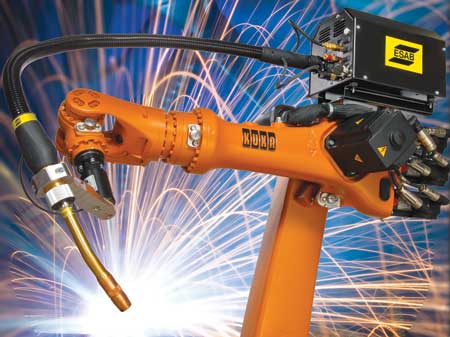
A heavy-duty I-beam profiler is a vastly different beast than a standard flatbed laser. These machines are equipped with a 5-axis or 6-axis robotic cutting head and a massive rotary chuck system. In Dammam’s airport projects, architects often design terminal roofs with sweeping curves and non-orthogonal angles.
The 12kW profiler can rotate a 12-meter I-beam with absolute precision, allowing the laser head to cut bolt holes, “rat holes” for welding access, and complex miter joints on all four sides of the beam in a single pass. For the construction of hangars designed to house wide-body aircraft, the ability to cut interlocking “bird-mouth” joints into heavy H-beams ensures that the skeleton of the building fits together like a precision-engineered puzzle, reducing on-site welding time by up to 50%.
Zero-Waste Nesting: The Economics of Efficiency
Material costs constitute the largest variable in airport infrastructure. When dealing with thousands of tons of structural steel, a 5% waste margin can represent millions of Riyals in lost capital. The “Zero-Waste Nesting” capability of modern 12kW profilers is the solution to this perennial problem.
Traditional beam processing leaves “tailings”—unused ends of the beam that are too short for the machine’s clamps to hold. Advanced heavy-duty profilers used in Dammam utilize a multi-chuck system (often three or four moving chucks). This allows the machine to pass the beam through the cutting zone while maintaining a grip on the very last few centimeters of material.
Combined with sophisticated nesting software like Lantek or CypCut, the system analyzes the entire project’s “cut list.” It calculates how to fit various components—long primary rafters and shorter secondary braces—onto a single stock beam with microscopic gaps. By utilizing “common line cutting” (where one laser path serves as the edge for two parts), the machine effectively eliminates scrap, ensuring that the “remnant” is virtually non-existent.
Meeting the Specific Demands of Airport Infrastructure
Airport construction involves unique challenges that the 12kW laser is uniquely qualified to meet:
1. **Vibration Resistance:** Airport terminals are subject to constant harmonic vibrations from aircraft engines and heavy foot traffic. The precision of laser-cut bolt holes (often held to tolerances of +/- 0.1mm) ensures a “snug fit” for high-strength friction-grip bolts, which is superior to the slightly oversized holes typically produced by mechanical drills.
2. **Aesthetic Architecture:** Modern airports are architectural statements. Exposed structural steel is common. The 12kW laser produces a finish so clean that it can be painted or powder-coated immediately, with no need for grinding down jagged plasma edges.
3. **Rapid Prototyping of Brackets:** Beyond the beams themselves, airports require thousands of custom gussets, base plates, and brackets. A heavy-duty profiler can often switch between tube/beam processing and plate processing, allowing Dammam-based contractors to produce all necessary components in-house.
Environmental Resilience in the Dammam Climate
Operating high-power lasers in the Eastern Province requires addressing the local environment. Dammam’s humidity, salt air from the Arabian Gulf, and fine desert dust can be at odds with sensitive optics.
The latest 12kW systems are designed with “IP65-rated” enclosed beam paths and dual-circuit industrial chillers. The fiber delivery system is entirely solid-state, meaning there are no mirrors to align or contaminate, unlike older CO2 technology. This makes the 12kW fiber laser incredibly robust for the Dammam industrial zone, providing 24/7 uptime even during the peak summer heat, provided the power source is housed in a climate-controlled enclosure.
The Logistic Advantage: Local Fabrication for KFIA
By deploying these 12kW profilers directly in Dammam, the supply chain for airport construction is drastically shortened. Instead of ordering pre-fabricated steel from overseas—which involves long lead times and the risk of shipping damage—components can be cut “Just-In-Time.”
If an on-site change occurs at the airport construction site (a common occurrence in complex projects), the digital design file can be updated in the morning, and the corrected I-beam can be laser-cut and delivered to the site by the afternoon. This agility is the hallmark of a modern “Smart City” approach to construction.
Safety and Structural Integrity
In structural engineering for public spaces, the “Heat Affected Zone” (HAZ) is a critical concern. Excessive heat from traditional oxy-fuel cutting can alter the carbon-equivalent properties of the steel, making it brittle at the edges. The 12kW fiber laser’s speed is so high that the heat is dissipated almost instantly into the surrounding material, resulting in a negligible HAZ. This preserves the metallurgical integrity of the I-beam, ensuring that the airport’s structural frame meets the most stringent international safety codes (such as AISC or Eurocode standards).
Conclusion: Setting a New Standard in the Eastern Province
The 12kW Heavy-Duty I-Beam Laser Profiler is more than just a cutting machine; it is a catalyst for a more efficient, sustainable, and technologically advanced Saudi construction industry. As Dammam continues to grow as a pivotal hub for global aviation and logistics, the ability to produce zero-waste, high-precision structural steel will be the defining factor in completing projects on time and under budget.
For the engineers and contractors tasked with building the future of Dammam’s aerospace infrastructure, the move to 12kW fiber technology is no longer optional—it is the baseline for excellence. By embracing zero-waste nesting and the raw power of the fiber laser, the Kingdom is not just building airports; it is engineering a legacy of industrial efficiency that will stand for decades.