
Technical Field Report: High-Power Laser Integration in Structural Steel Fabrication
1. Project Overview and Regional Context
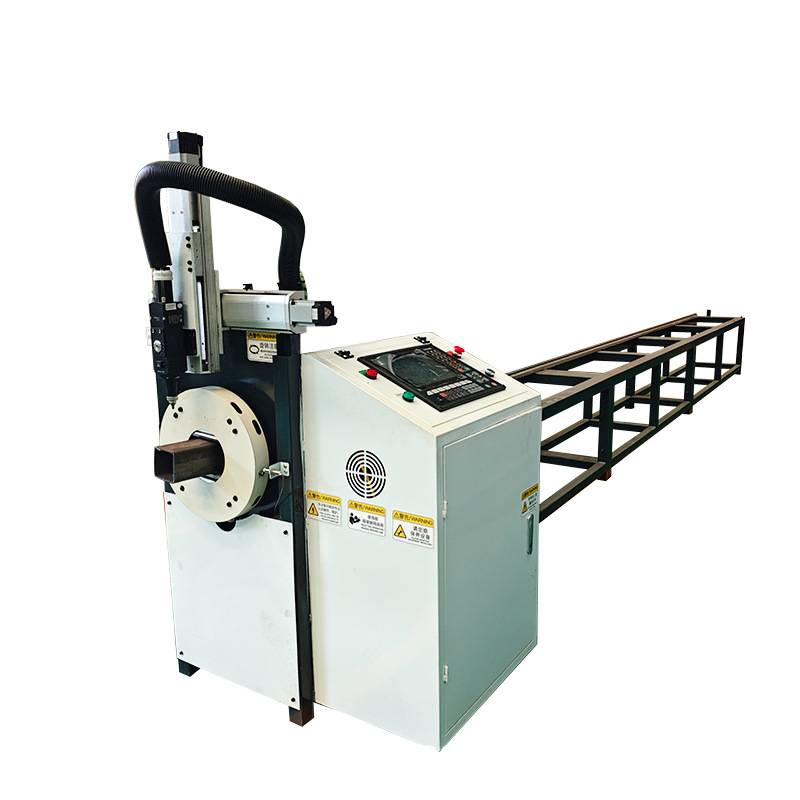
The following report evaluates the operational deployment of a 12kW Heavy-Duty I-Beam Laser Profiler equipped with a 5-axis ±45° beveling head within the industrial corridor of Edmonton, Alberta. Given Edmonton’s status as a logistics and energy hub, the demand for high-capacity storage racking systems has surged. These systems require structural integrity capable of sustaining high static loads and resisting the seismic/thermal fluctuations characteristic of the Canadian climate.
Traditional fabrication of heavy-duty racking—typically utilizing hot-rolled I-beams (W-shapes) and heavy-walled HSS (Hollow Structural Sections)—has historically relied on mechanical sawing, plasma cutting, and manual radial drilling. This report analyzes the transition to 12kW fiber laser technology, focusing on the synergy between high-wattage photonics and automated structural processing to eliminate secondary operations.
2. The 12kW Fiber Laser Source: Energy Density and Kerf Dynamics
The integration of a 12kW Ytterbium (Yb) fiber laser source represents a significant leap in power density over the previous 4kW–6kW industry standards. In the context of Edmonton’s heavy-gauge steel requirements (often exceeding 16mm to 25mm in flange thickness), the 12kW source facilitates a high-pressure nitrogen or oxygen assist-gas cutting environment that achieves superior “dross-free” finishes.
From a metallurgical perspective, the 12kW source minimizes the Heat Affected Zone (HAZ). In structural racking, a wide HAZ can lead to localized embrittlement, particularly near bolt-hole patterns and connection nodes. The high feed rates achievable at 12kW—even on heavy I-beam webs—ensure that the thermal input is concentrated, preserving the mechanical properties of the ASTM A36 or CSA G40.21 grade steel commonly utilized in Albertan fabrication shops.
3. ±45° Bevel Cutting: Solving the Weld Preparation Bottleneck
One of the primary engineering challenges in storage racking is the preparation of beam-to-column connections. Standard 2D cutting requires secondary beveling via manual grinding or oxy-fuel torches to create V, Y, or K-groove profiles for full-penetration welds.
The ±45° 5-axis oscillating head on the I-beam profiler allows for the simultaneous execution of the cut and the weld prep. Technical advantages include:
- Precision Geometry: The system maintains a constant focal distance while traversing the complex topography of an I-beam (flange-to-web transitions).
- Volumetric Accuracy: In racking systems where uprights must withstand 50,000+ lbs of vertical load, the precision of the bevel ensures uniform weld volume, reducing the risk of internal voids or lack of fusion.
- Countersinking and Notching: The ability to bevel at ±45° enables the creation of complex interlocking notches (tab-and-slot architecture), which self-jig during assembly, significantly reducing the reliance on expensive welding fixtures.
4. Application in Storage Racking Fabrication
Storage racking in the Edmonton region often serves heavy industrial equipment, requiring “super-heavy” racking profiles. The 12kW profiler handles the three main components of these systems with high efficiency:
4.1 Upright Frames (Columns)
Uprights require precise, repetitive perforation patterns for beam connector seating. Traditional punching can cause material deformation around the hole. The 12kW laser maintains hole circularity tolerances within ±0.1mm, ensuring that safety pins and connectors seat perfectly without field-side reaming. The ability to bevel the base of the upright allows for superior penetration of the baseplate-to-column weld, critical for overturning moment resistance.
4.2 Load Beams (C-Channels and I-Beams)
For heavy-duty applications, load beams are often I-beams rather than roll-formed C-channels. The profiler’s ability to process a 12-meter raw beam in a single pass—performing end-trimming, bolt-hole cutting, and ±45° beveling—reduces the “part-in-process” time by an estimated 70% compared to a conventional saw-and-drill line.
4.3 Seismic Bracing and Splice Plates
In high-density racking, diagonal bracing must be notched to fit flush against the uprights. The 5-axis laser executes complex “fish-mouth” cuts and compound miters on I-beam ends that were previously impossible without CNC milling or manual fitting.
5. Automation and Structural Synergy
The “Heavy-Duty” designation of this profiler refers not just to the laser power, but to the material handling kinematics. The system utilizes a multi-chuck rotation assembly (typically 3 or 4 chucks) to stabilize the I-beam, compensating for “mill-twist” and “camber” inherent in long-span structural steel.
Automatic Compensation: High-precision touch probes or laser scanners map the actual profile of the I-beam before the cut begins. If an I-beam has a slight bow—common in Edmonton’s outdoor-stored steel inventory—the software adjusts the cutting path in real-time. This ensures that a bevel cut on the flange remains consistent relative to the web’s centerline, maintaining structural symmetry.
Nesting and Material Yield: Advanced CAM software for structural lasers allows for “common line cutting” even with beveled edges. In a high-volume racking project, improving material yield by 5–8% through optimized nesting on 12-meter beams results in significant cost mitigation on raw tonnage.
6. Efficiency Gains and ROI in the Edmonton Market
The Edmonton labor market remains competitive, with high demand for skilled welders and fitters. By utilizing the 12kW laser’s ±45° beveling capability, the “fitter” stage of fabrication is largely bypassed. Parts arrive at the welding station with high-precision fit-up and pre-cut weld grooves.
Comparative Throughput Analysis:
– Conventional Method: Sawing (10 mins) + Drilling (15 mins) + Manual Beveling (20 mins) + Layout (10 mins) = 55 minutes per beam.
– 12kW Laser Method: Integrated Loading/Cutting/Beveling/Unloading = 8.5 minutes per beam.
This 6x increase in throughput allows local fabricators to bid on larger infrastructure and warehousing projects with tighter lead times, effectively outcompeting shops relying on traditional mechanical processing.
7. Technical Constraints and Mitigation
While the 12kW system is highly capable, the thickness of the I-beam flange presents a challenge for “pierce-point” management. Thick-plate piercing can result in spatter that damages the protective window of the laser head. The 12kW system mitigates this through “Frequency-Modulated Piercing” and oil-mist application to prevent spatter adhesion. Furthermore, the high-power demand of a 12kW source requires a robust electrical infrastructure and a high-capacity chilling system, both of which must be rated for indoor operation in Alberta’s varying ambient temperature ranges.
8. Conclusion
The deployment of a 12kW Heavy-Duty I-Beam Laser Profiler with ±45° bevel technology marks a paradigm shift for the Edmonton storage racking sector. By merging high-power fiber laser dynamics with 5-axis structural kinematics, fabricators can achieve a level of precision and speed that was previously unattainable. The elimination of secondary weld preparation and the ability to compensate for material irregularities ensure that the resulting steel structures meet the highest safety and quality standards while significantly reducing the total cost of fabrication.
Final assessment: The system is highly recommended for facilities processing over 500 tons of structural steel per month, where the ROI is realized through labor reduction and the elimination of downstream assembly errors.
















